
The Little Fossil That Disappeared for Two Decades
Let me share something wild with you.
There's a creature roaming around southern Brazil roughly 240 million years ago — right after Earth's worst catastrophe had finally ended. We're talking about the mass extinction that killed off 96% of marine life and 70% of land vertebrates. The planet was still getting back on its feet, recovery mode fully activated.
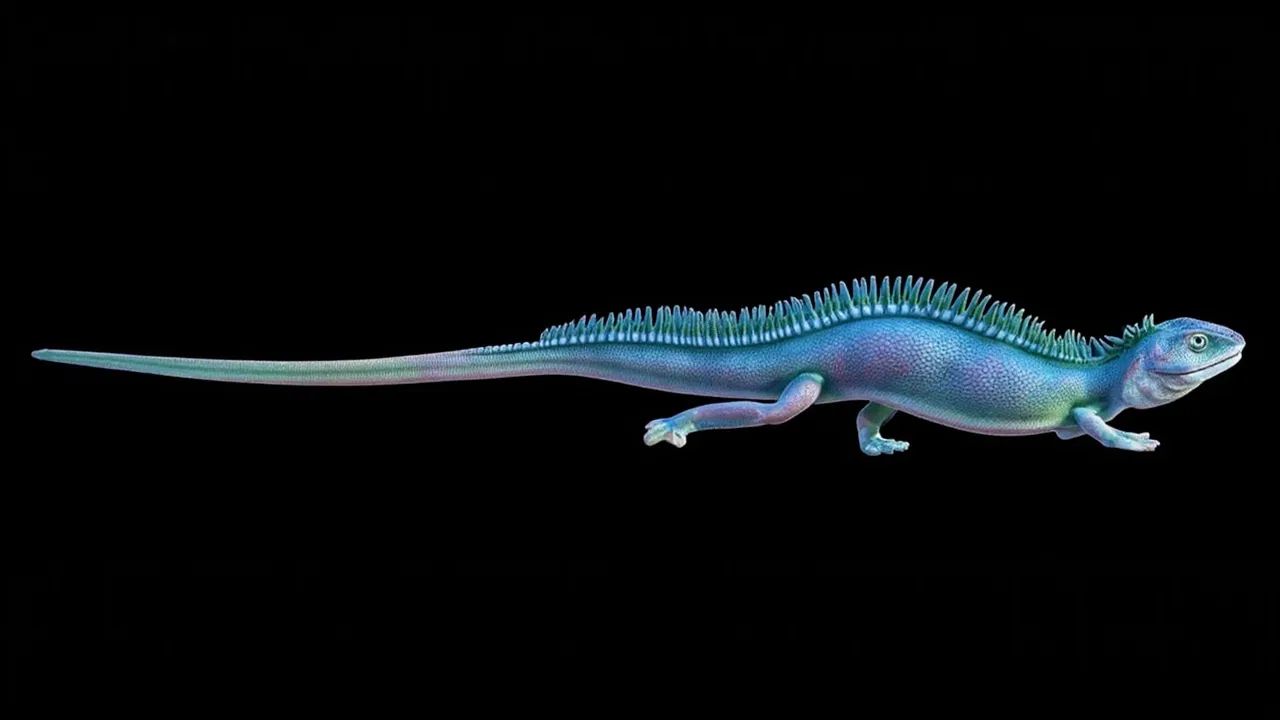
And in those Triassic forests? A modest little predator, roughly the size of a small alligator, living its life. Not a dinosaur. Not a crocodile. Something adjacent to both — a four-legged carnivore testing out survival strategies while the world around it was still figuring things out.
That creature is now called Silescelida acristata — which translates to something like "silent leg without a crest." The name is almost poetic when you hear the whole story.
Why Should You Care?
You might be wondering what makes this worth your attention. Fair question.
Here's the answer: archosauriformes.
This is the evolutionary family that eventually produced archosaurs — the lineage that gave us T. rex, modern crocodiles, and birds (yes, birds are literally living dinosaurs). When Silescelida was alive, the ancestors of these iconic animals were still in their infancy, still experimenting with different body designs.
That small Brazilian predator? It represents one of those experiments. Nature was essentially in prototype mode, trying out configurations that would later become standard equipment for Earth's dominant land animals.
The Leg Bone Story
Here's where things get genuinely fascinating for anyone who loves paleontology.
The fossil includes partial limb bones, particularly the femur (thigh bone). And that femur reveals something significant: Silescelida held its legs in a semi-erect position. Picture it halfway between how a lizard sprawls and how a horse stands — legs tucked somewhat beneath the body.
This posture offered real advantages. Less energy wasted, smoother movement, better efficiency overall. It's exactly the kind of adaptation that would later help archosaurs become the powerhouses of terrestrial ecosystems.
So this unassuming little creature was essentially running tests for body plans that would dominate the planet for hundreds of millions of years. Not bad for something the size of a small alligator.
Rewriting the Geographic History
Now here's something that got scientists genuinely excited.
Silescelida appears connected to the Euparkeriidae family — a group previously known only from fossils in Africa, Asia, and Europe. Finding a relative in South America completely shifts that picture.
These reptiles were far more geographically widespread during the Triassic than anyone suspected. The fossil record just expanded significantly.
This also reinforces something paleontologists have noticed: South America keeps punching above its weight in vertebrate evolutionary history. From the Triassic period through the dinosaur era, this continent consistently reveals itself as a crucial piece of the puzzle.
The Lost-and-Found Story
Here's the detail I find most charming.
Parts of this specimen went missing after its initial discovery — specifically, the records indicating where it was found. For over twenty years, the fossil sat in a collection, its origin story incomplete.
It wasn't until 2022 that researchers at the Pontifical Catholic University of Rio Grande do Sul rediscovered the missing information, hidden within the museum's archives.
Twenty years. Just sitting there. Waiting.
That's why the name combines "silence" with "leg" — a quiet tribute to all those years when the fossil existed but essentially vanished from scientific awareness. Makes you think about what other specimens might be hiding in plain sight in museum drawers worldwide, doesn't it?
The Bigger Picture
This discovery sticks with me because it demonstrates something important about life's history: the famous giants don't tell the whole story.
Often the most significant developments come from unassuming creatures — small animals quietly testing innovations while the world wasn't paying attention. Silescelida wasn't a fearsome apex predator or a direct ancestor of something iconic. It was just a medium-sized carnivore in a recovering world, exploring features that would eventually help its distant relatives take over.
And it waited patiently in a museum drawer for two decades until we were ready to understand what it was.
There's something moving about that, I think. The fossils aren't going anywhere. They sit quietly until we develop the questions they can answer.
Maybe that's the real message here.
Source: ScienceDaily