
When Ancient Egypt Surprises You
Picture this: You're knee-deep in routine work, hauling away rocks and mud, trying to prevent flooding near one of Egypt's most famous archaeological zones. Then, out of nowhere, you accidentally rewrite history.
That's exactly what happened to a team working near Luxor. While clearing debris to protect the area from water damage, they uncovered a tomb that nobody knew existed — and we're not talking centuries-old. This one dates back three millennia.
The lead archaeologist later described that first glimpse inside as both thrilling and nerve-wracking. Imagine standing at the entrance, heart pounding, wondering if you've just stumbled upon the discovery of a lifetime — or if you're about to find an empty, looted chamber. Turns out, luck was on their side.
Meet Paser
The wall paintings gave it away immediately. Researchers identified the tomb's owner as Paser — a high-ranking official from the Ramesside period, which spanned roughly 1292 to 1069 BC. Think Ramesses II and his famous dynasty.
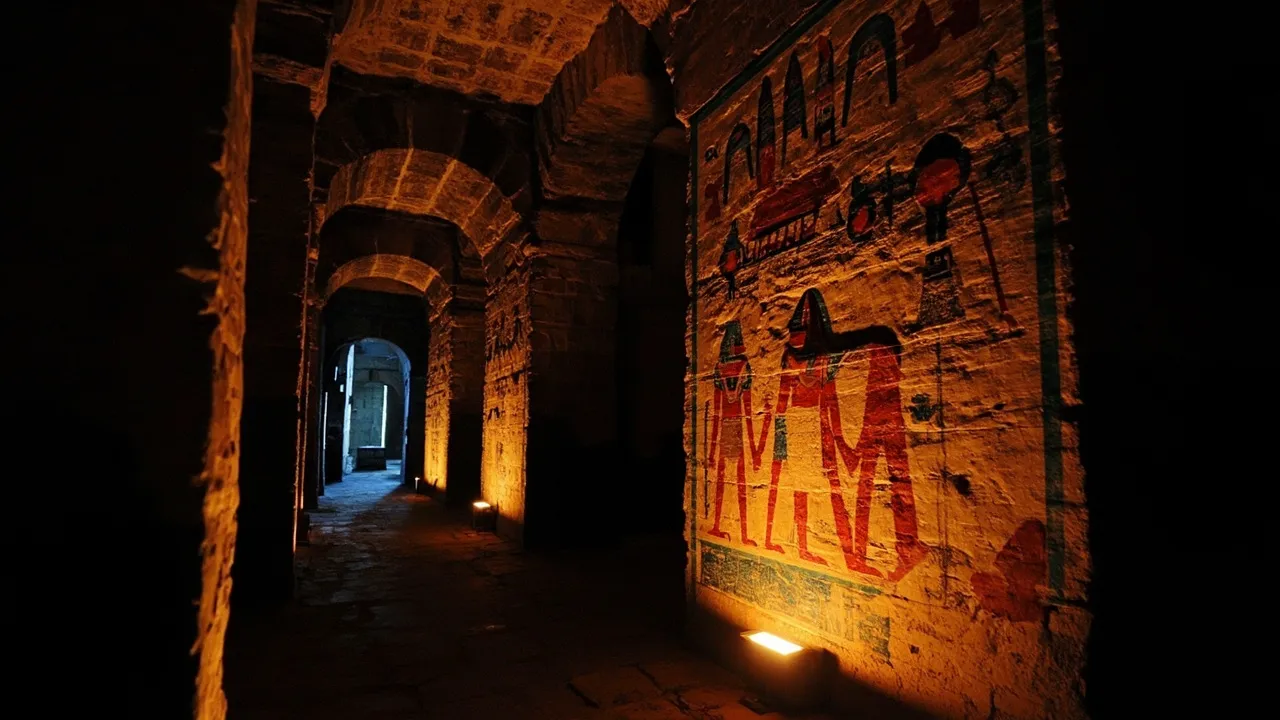
The tomb follows the traditional Theban necropolis design: an open courtyard, a carved chapel, and burial chambers below ground. But the real treasure? The artwork.
Step inside and you'd see vibrant colors still clinging to the walls after 3,000 years. Paser appears throughout, paying homage to Egyptian deities. In other scenes, he and his wife share a feast — bread, beer, fruits, roasted meat, flowers, the works. An eternal dinner party, frozen in pigment.
These aren't merely decorative. Researchers can study them for decades, extracting details about ancient Egyptian diets, fashion, and spiritual beliefs. Everything scholars want to know about daily life back then? It's all painted right there on those walls.
A Race Against Water
Here's what keeps archaeologists awake at night: they found this tomb just in time.
The site at Lower Sheikh Abd el-Qurna sits at the base of a mountain. Stunning scenery, yes — but also a flood nightmare. Climate change has made those sudden, intense rainstorms increasingly common. And water is brutal to ancient structures.
Moisture seeps in, bringing salt that crystallizes and slowly destroys paintings. Walls weaken. Eventually, everything collapses. We're talking about irreversible damage to irreplaceable treasures.
So this team isn't excavating for adventure. They're executing emergency conservation. Clearing debris, rerouting water flow, shoring up structures — fighting to save these sites before nature has its way.
Why Should You Care?
I know what you might be thinking: "That's fascinating, but what does a 3,000-year-old tomb have to do with me?"
Everything, actually. This is humanity's story. Ancient Egypt gave us writing. It produced architectural wonders we still can't replicate. Its influence ripples through every Mediterranean civilization that followed.
Every tomb lost, every painting allowed to deteriorate — we lose a piece of that narrative. We lose part of ourselves.
And there's something profound about art created when humanity was still asking fundamental questions about existence. Paser wanted to be remembered. He had his story painted so that strangers thousands of years later would see his face and know he lived.
Now, because of this discovery, they will.
The research team still faces years of cleaning and analysis ahead. Once conservation experts restore the paintings professionally, they'll likely uncover even more about Paser, his family, and possibly others who used the tomb through the centuries.
It's a desperate sprint against time. But every day they buy means another day our shared heritage survives.
Honestly? That still gets me every time.