
(markdown formatted content)
Okay, I have to be honest with you — when I first read about this discovery, I got genuinely excited. Like, "I need to tell everyone I know" excited. And here's why:
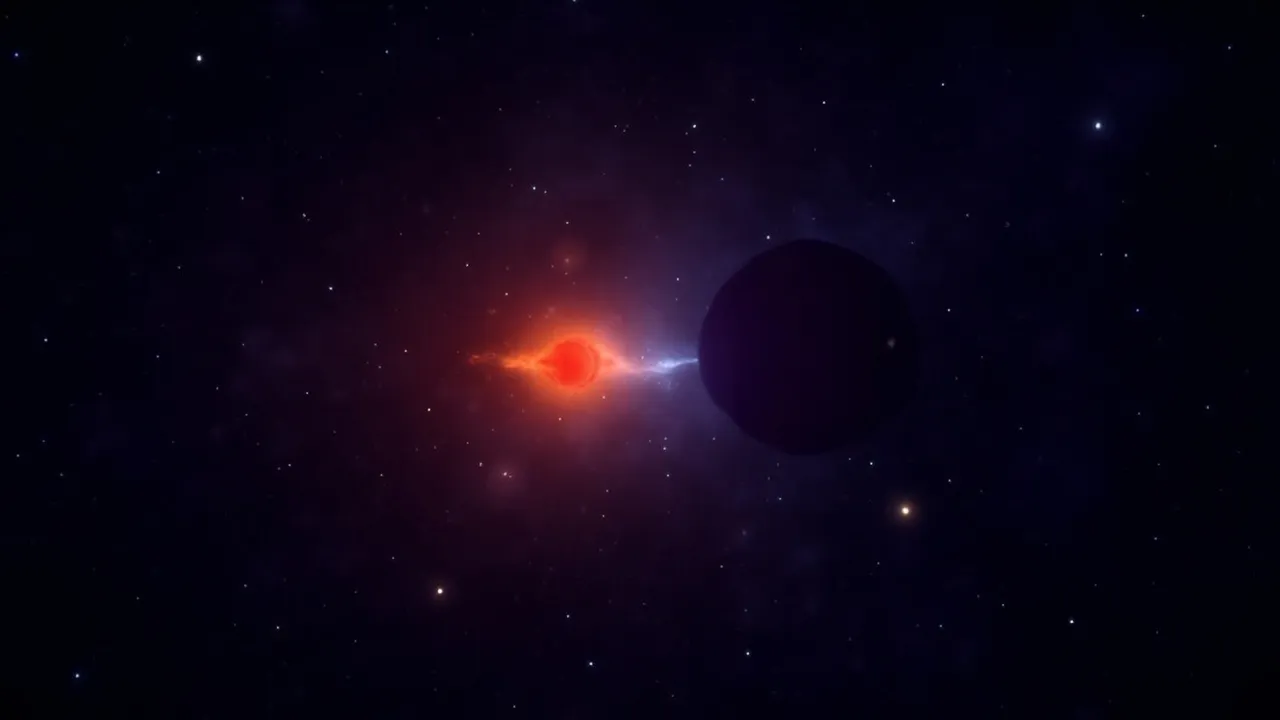
A team of astronomers, led by French scientist Miguel Montargès, just confirmed what scientists have suspected for about 100 years: Betelgeuse, that beautiful red star in Orion's shoulder that you can see with your naked eye on any clear winter night, isn't flying solo. It has a buddy.
And the story of how they found it? Absolutely delightful.
"I Jumped From My Chair"
That's literally what Montargès said when he saw the processed images for the first time. Can you picture that? A professional astronomer, probably wearing sensible shoes, casually reviewing data... and then suddenly launching out of his seat because of what he's seeing.
The thing is, scientists have theorized about Betelgeuse B existing for about a century. They thought it might explain some of the weird brightness changes they've observed in the main star over the years. But actually seeing the little sibling? That proved incredibly difficult.
Then came 2024.
Two separate studies that year made very specific predictions about where Betelgeuse B should appear. Here's the cool part: they said December 2024 would be the perfect time to spot it, because that's when the companion would be at its greatest apparent distance from Betelgeuse itself — basically as far away as it ever gets from its neighbor in our sky.
Montargès and his team pointed ESO's Very Large Telescope at Betelgeuse that December and... boom. There it was.
The Surprise Package
Now here's what makes this extra interesting. Scientists expected the companion to be about the mass of our Sun. You know, average. Unremarkable. Just a normal star doing normal star things.
But the new observations suggest Betelgeuse B is actually much bigger — about two to three times the Sun's mass. So not only did they find a star that had evaded detection for 100 years, they found one that's considerably larger than anyone predicted.
"It's remarkable that we can still discover a nearby companion, more massive and brighter than the Sun, around such a well-studied star," Montargès said. And honestly? He's right. You'd think we'd know everything about Betelgeuse by now. This thing is literally one of the brightest stars in the night sky! People have been staring at it for thousands of years!
Yet there it was, hiding in plain sight.
The Technology Behind the Discovery
The astronomers used an instrument called SPHERE, attached to the Very Large Telescope in Chile's Atacama Desert. SPHERE is incredibly sophisticated — it was originally designed to find exoplanets orbiting other stars. Its specialty is blocking out the overwhelming light of a star so that fainter objects nearby can be seen.
Think of it like this: imagine trying to spot a tiny firefly hovering next to a spotlight. SPHERE essentially puts a digital blindfold on the spotlight so you can finally see the firefly.
And this isn't the first time someone thought they'd caught a glimpse of Betelgeuse B, either. Previous observations with the Gemini North Telescope in Hawaii had provided some hints. But these new VLT images? They're the clearest confirmation yet.
But Wait — There's More Drama
Remember a few years ago when Betelgeuse mysteriously dimmed and everyone freaked out because "OMG it's about to explode"? Yeah, that was wild. Some people genuinely thought the red supergiant was getting ready to go supernova — which would be an absolutely spectacular (and safe, for us) cosmic fireworks show.
Turns out, it was just dust. A big cloud of it, temporarily blocking some of Betelgeuse's light. Montargès himself had studied that event with the VLT and figured out the dust explanation.
Well, now there's another piece of the puzzle to consider: could this newly discovered companion star influence Betelgeuse's behavior? Could it affect how the red supergiant evolves? Could it play a role in what happens when Betelgeuse eventually does go supernova (because eventually, it will)?
Scientists want to investigate all of that now. The question Montargès posed is genuinely fascinating: could Betelgeuse B be affecting its giant neighbor in ways we're only just beginning to understand?
One More Thing...
The scientists aren't declaring victory just yet. They want to observe the companion again in about a year, when it should appear on the opposite side of Betelgeuse — exactly where its predicted orbit says it should be.
But Montargès seems pretty confident. "There is very little space left for doubt," he said.
And honestly? Neither is there. What a time to be alive and watching the stars.
There's something deeply wonderful about this story. In an age when it feels like we've discovered everything, when it seems like all the secrets have been found, along comes a discovery like this. One of the most observed stars in the entire sky, and we've been missing its companion this whole time.
It reminds me that the universe is still full of surprises. Still full of things waiting to be found. Still, after all these centuries of stargazing, capable of making an astronomer literally jump from his chair.
And personally? I think that's absolutely beautiful.
Source: https://www.sciencedaily.com/releases/2026/08/260827010514.htm