
Mountains That Can't Make Up Their Mind
Alright, pull up a chair. I recently stumbled onto something that made me rethink everything I thought I knew about how our planet works, and I have to share it with you.
Italy's Apennines — you know, those stunning peaks that trace down the country's boot like a natural backbone — have been giving scientists a serious headache for years. Here's the puzzle: most mountain ranges follow a pretty predictable recipe. Tectonic plates collide, the Earth's crust gets compressed and folds upward, and boom — you've got mountains. Think of pushing dough together and watching it dome up in the middle.
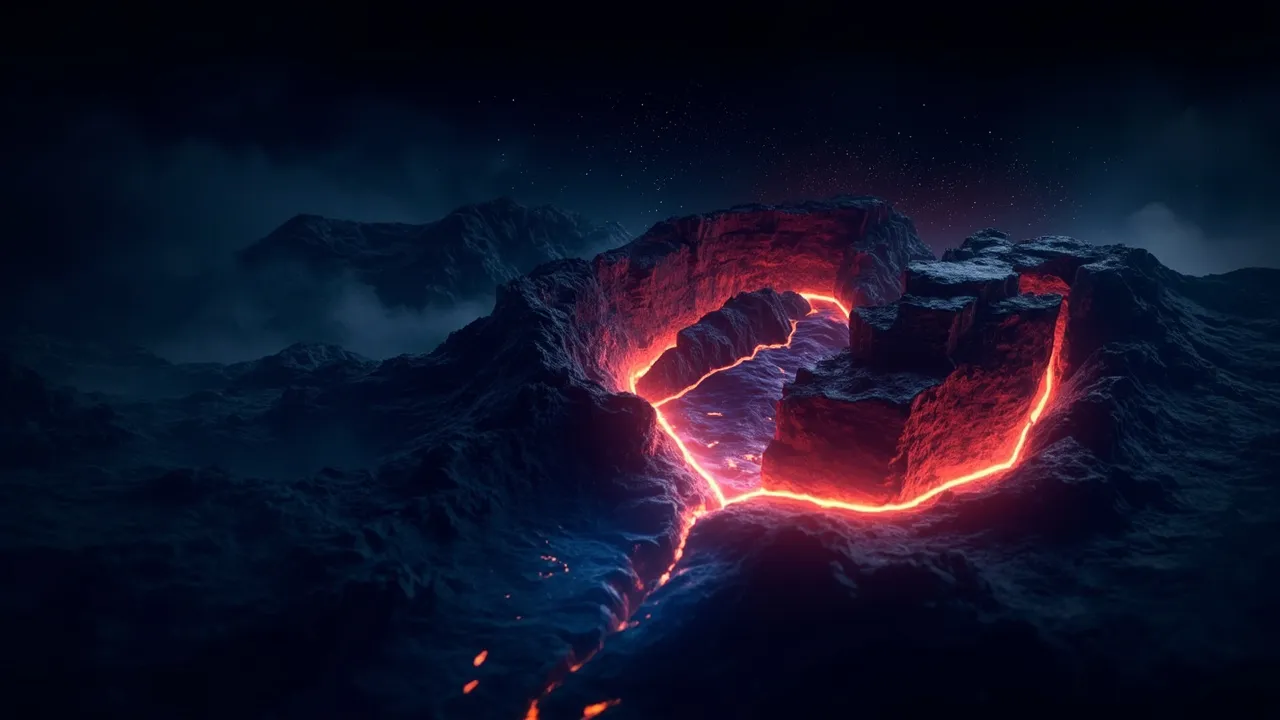
But the Apennines? They're rebels. Some stretches of these mountains are slowly crushing together while others are tearing themselves apart. Picture holding a blob of Play-Doh where your left hand squeezes inward while your right hand pulls outward simultaneously. That's essentially what tectonic forces are doing to this Italian mountain chain right now.
Geologists believed they'd cracked the case years ago. Then along came a fresh study in the journal Geology that basically said, "Hold on — we're missing a huge piece of this puzzle."
What's Happening Underground?
Italy occupies one of the most geologically restless spots on the planet. The country straddles where the massive Eurasian plate meets the smaller Adria microplate. These two giants are in a constant slow-motion collision, grinding past each other endlessly. No wonder Italy shakes so often — it's consistently among Europe's most earthquake-prone areas.
For decades, researchers blamed something called "slab rollback" for the Apennines' strange dual personality. The theory goes like this: when an oceanic plate sinks into the Earth's mantle, it can drag the surface downward behind it, creating valleys and pulling crust apart.
This new research, however, argues that slab rollback only explains part of what's occurring. According to the scientists, around two million years back, another process kicked into gear: delamination.
Delamination: Earth's Layered Peel
Let me make this crystal clear. Imagine Earth's interior as a multilayered cake — except this cake never stops moving and transforming.
Delamination is what happens when the bottom layers of that cake (the lower crust and lithosphere underneath) start peeling away from the upper layers. Picture separating the flaky layers of a biscuit — except this separation happens miles underground and unfolds over millions of years.
The research team describes it as an "unzipping" phenomenon. They've mapped out the details, and here's what really caught my attention: they discovered a 500-kilometer zone of overlapping crust that marks what they're calling the "hinge" of this geological zipper.
On one side of this hinge, the crust stretches apart at roughly 4 millimeters annually. On the other side? It's compressing at about 2 millimeters per year. I hear you — that's painfully slow. But add up millions of years, and you've got enough movement to completely transform entire mountain systems.
Why Should Any of This Matter to You?
Here's the practical angle: the more we understand how these mountains are changing, the better we can predict and prepare for earthquake hazards in the region. Italy has suffered some truly devastating seismic events, and every piece of the tectonic puzzle we solve helps protect communities living there.
But honestly? I just find this absolutely captivating. Miles beneath our feet, the planet is quietly peeling itself apart and rebuilding, layer by layer. It's the kind of reality that simultaneously makes you feel tiny and fills you with wonder.
The research suggests this unzipping process might have actually begun around 10 million years ago during the late Miocene. So this isn't some new development — it's been unfolding for ages. We simply lacked the technology and theoretical framework to recognize what was happening until now.
Wrapping This Up
Next time you see photos of Italy's stunning peaks or imagine yourself wandering through Tuscan vineyards, pause and consider this: you're looking at a landscape still very much under construction. Mountain ranges that took eons to form are simultaneously being squeezed and stretched by forces operating far beyond what we can directly observe.
Pretty incredible, don't you think? We inhabit a world that simply refuses to remain static — even when everything appears perfectly calm from where we're standing.