
The Molecule Behind Your Mood Might Also Be Talking to Your Heart
Let me hit you with something that genuinely surprised me when I first came across it: that same chemical your doctor targets when prescribing antidepressants like Prozac or Zoloft? Turns out it's also having conversations with the tiny gate inside your heart that keeps your blood going where it should.
Yeah, I had to sit with that one for a minute too.
What's the Mitral Valve and Why Should You Care?
Let me back up for a second and make sure we're on the same page about what we're actually discussing.
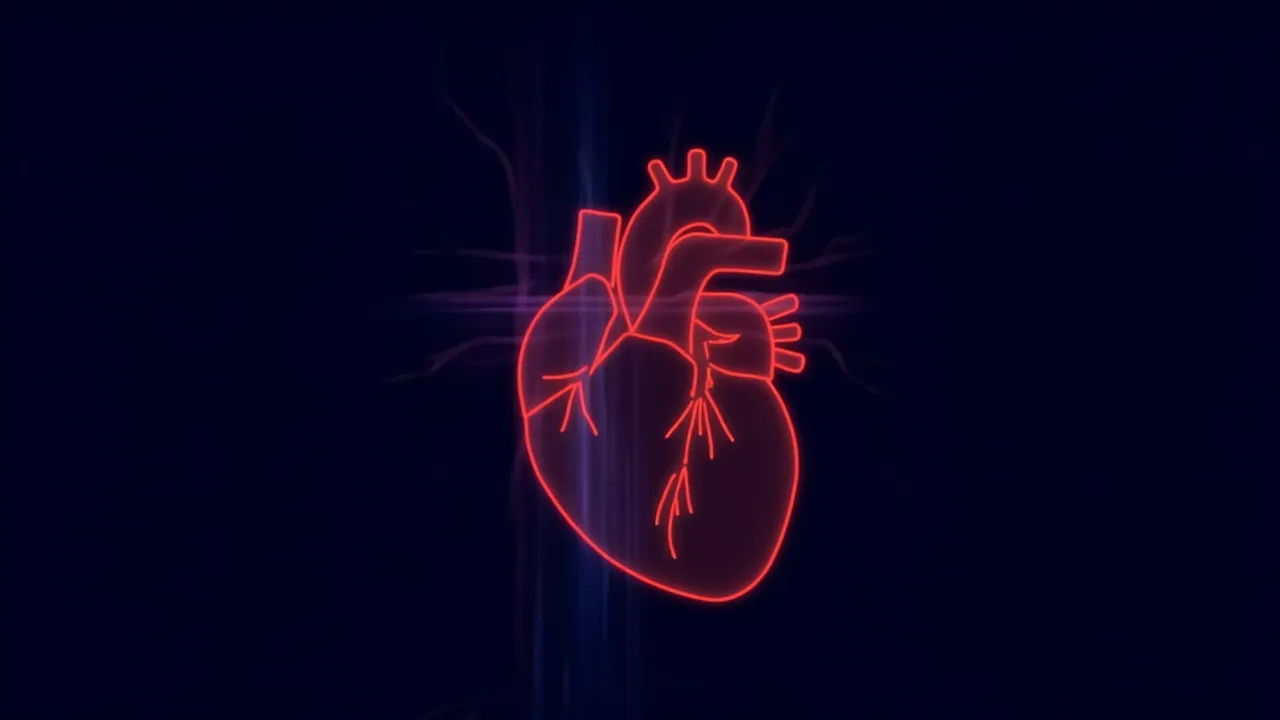
The mitral valve sits between two chambers on the left side of your heart. On one side, you've got the left atrium—that's where oxygen-rich blood arrives after its trip through your lungs. On the other side is the left ventricle—the strong muscular chamber that pumps all that oxygenated blood out to your whole body.
Every single beat, your mitral valve needs to close tight. Think of it like a one-way door. Open when blood flows forward from atrium to ventricle, sealed shut the moment the ventricle contracts. No backflow allowed.
When this valve works properly, you don't think about it twice. When it starts to fail? That's where things get complicated.
The condition is called degenerative mitral regurgitation, or DMR for short. The valve tissue thickens, stretches, or loses its shape. Instead of closing completely, it leaks. Blood ends up flowing backward into the upper chamber instead of forward where your body actually needs it.
The tricky part? Early on, most people don't feel anything wrong. No obvious symptoms until damage has really built up. But over time, that extra workload on your heart raises pressure toward your lungs and can eventually contribute to heart failure or atrial fibrillation—scary stuff.
Right now, medications can help manage symptoms and prevent complications, but they can't actually reverse the damage. Once degeneration gets bad enough, surgery to repair or replace the valve becomes the only real option.
So What Does Any of This Have to Do With Serotonin?
Here's where the Columbia University research gets genuinely fascinating.
A team led by Dr. Giovanni Ferrari from Columbia and Dr. Robert J. Levy from Children's Hospital of Philadelphia decided to investigate something pretty creative: whether the serotonin transporter (SERT, if you want the technical term)—the same protein that antidepressants work by inhibiting—might be involved in valve degeneration.
Think about how SSRIs work. They block the transporter's ability to reabsorb serotonin, which leaves more of that feel-good chemical floating around in your brain. That's the whole mechanism behind their mood-lifting effects.
But what if that same mechanism had unexpected effects on heart valve tissue?
The researchers dug into data from over 9,000 patients who'd undergone mitral valve repair or replacement surgery for DMR. They also examined around 100 mitral valve tissue biopsies in the lab.
What they found was eye-opening: patients taking SSRIs tended to require valve surgery at a younger age than patients not on these medications. That pattern showed up clearly in the clinical data.
Quick Reality Check Before Anyone Freaks Out
I want to pause here because this matters.
This research does not prove that SSRIs cause mitral valve disease. What it shows is an association—people on these medications seemed to reach the point of needing surgery earlier. That's a fundamentally different thing from proving the drugs are actually driving disease progression.
The researchers themselves are careful about this distinction. The patient data couldn't establish cause and effect. People who take SSRIs might differ from those who don't in all kinds of ways beyond their medication—lifestyle factors, underlying health conditions, you name it.
What the study does suggest is that serotonin signaling seems to play some role in how valve tissue behaves. In patients whose valves were already degenerating, reduced serotonin transporter activity appeared to correlate with more aggressive disease progression.
Why This Goes Beyond the Headlines
Here's my take on why this research matters beyond the immediate medical angle.
First, it underscores just how ridiculously interconnected our bodies are. We like to put serotonin in a neat little box labeled "mood chemical" and think of our gut as just for digestion. But biology doesn't work in tidy categories. The same molecule influencing your mental state might be chatting with tissues you'd never expect.
Second, this research could eventually help us predict which patients might develop more aggressive valve disease. If we understand the serotonin pathway better, maybe we can identify high-risk individuals earlier and monitor them more closely.
Third—and this one's important for the millions of people on SSRIs—any clinical implications would need years of careful research before anyone should consider changing their treatment approach. The risks of untreated depression are very real and well-documented. We're absolutely not at the point where anyone should stop their medication based on this.
The researchers themselves seem to view this as a starting point for understanding mechanisms, not a signal to change clinical practice tomorrow.
The Bottom Line
Science works in interesting ways. Someone spotted an intriguing pattern, asked a creative question, pulled together data from multiple institutions, and uncovered something surprising. Now the real work begins: figuring out what this means, how it actually functions, and whether it could eventually help patients.
Your mitral valve might not get as much attention as the heart itself, but it performs critical work every single moment of your life. Understanding why it sometimes fails—and what factors might speed up that failure—could genuinely change how we approach valve disease down the road.
And the next time someone brings up serotonin, maybe you'll think about that little one-way gate in your chest, keeping your blood flowing in the right direction.
Pretty remarkable, when you think about it.