
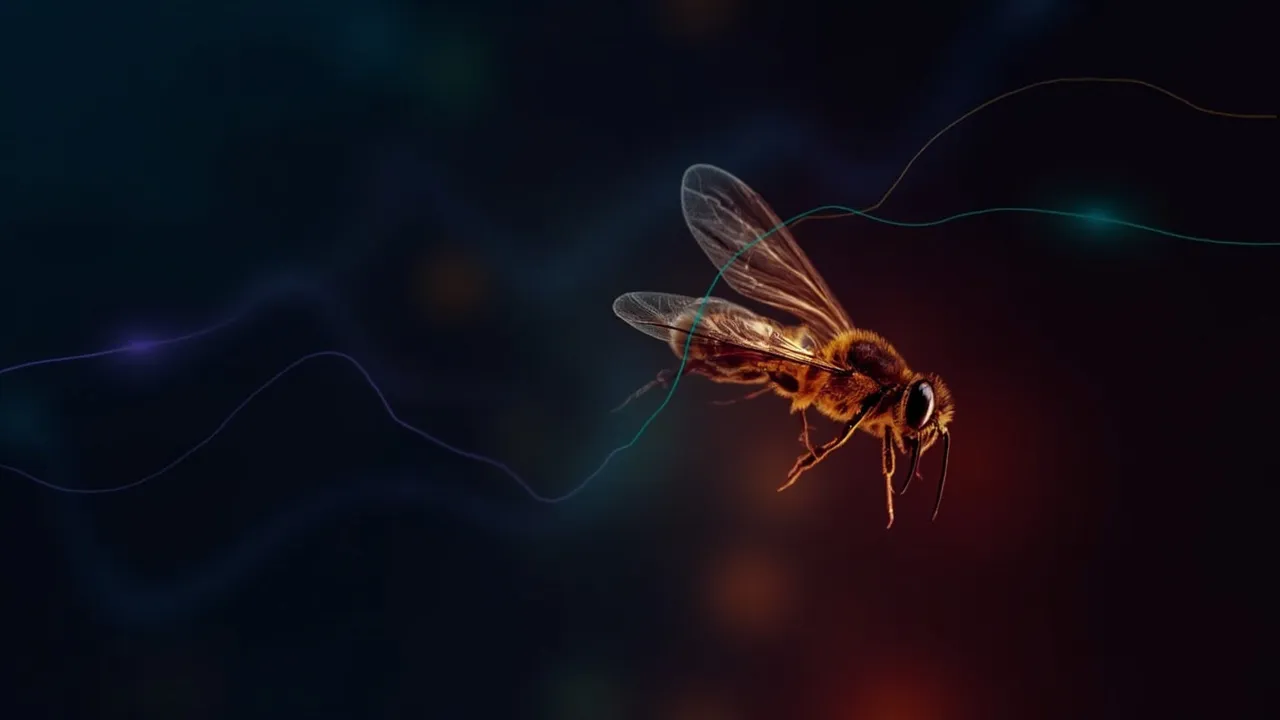
- Introduction hook
- Explain the research finding
- The nanocolony experiment
- What this means for bees
- My commentary/opinion
- Why this matters for food security
- Future questions
The Queen's Hidden Survival Secret
Okay, I need to tell you about something I just learned, and honestly? It's kind of breaking my heart a little.
You probably know that bees are in trouble. Colony collapse disorder, pesticides, habitat loss — it's a rough time to be a bee. But here's what's been bothering scientists: even when we try to protect bees from pesticides, the colonies keep declining. Why?
New research from the University of California, Davis, might have part of the answer. And it's both fascinating and deeply unsettling.
The Worker Bee Shield
Here's what we thought we knew: worker bees act as the hive's first line of defense. They collect pollen, bring it back to the hive, and filter out harmful substances before anything reaches the queen or the babies. It's a pretty elegant system, honestly.
But it turns out this protection has limits.
When researchers exposed honeybee colonies to the pesticide methyl parathion over time, something unexpected happened. On day one, worker bees filtered out about 95% of the pesticide. Pretty impressive, right?
By day ten? That number dropped to 86%.
That's still a lot of filtering, but it means the workers' capacity was being overwhelmed. The pesticides were building up. And when the workers couldn't keep up anymore, the queen had to fend for herself.
A Mother's Terrible Choice
Here's where it gets intense.
The researchers discovered that when queens are exposed to pesticides over time, they accumulate in their bodies. And when the workers can't filter everything out anymore, the queen has her own defense mechanism: she transfers those toxic chemicals into her eggs.
Yes, you read that right. She poisons her own offspring to protect herself.
The scientists call this "maternal offloading," and it's the first time anyone's documented it in honeybees. Lead researcher Angela Encerrado-Manriquez explains it this way: when the worker filtration capacity gets overwhelmed, "queens have their own defense. Maternal offloading allows them to shunt the toxic burden to their eggs."
The Nanocolony Experiment
How did they figure this out? The research team built what they call "nanocolonies" — tiny experimental systems that recreate key hive functions. Each one held a queen and about 60 worker bees in a special container.
They fed the bees pollen and food contaminated with the pesticide (at environmentally realistic levels, not lethal doses). The pesticide was tagged with a low-level radioactive marker so researchers could track exactly where it went.
The tracking technology was incredibly sensitive. Scientists at Lawrence Livermore National Laboratory used something called biological accelerator spectrometry, or BioAMS, which can detect pesticide markers at extremely low concentrations. This let them follow the chemical journey through the entire hive system.
Why This Matters More Than You Think
Here's the thing that keeps me up at night about this: queen bees are the only ones in the entire colony who can lay eggs that become workers. A healthy queen produces 1,500 to 2,000 eggs every single day. She literally keeps the colony alive.
And honeybees? They pollinate about one-third of the world's food crops. Apples, almonds, blueberries, cucumbers, strawberries — you name it. Without bees, our food system as we know it falls apart.
So when researchers talk about "a slow creeping effect of chemical accumulation" that might lead to "delayed colony collapse," we should all be paying attention.
The Troubling Implications
Senior author Sascha Nicklisch puts it this way: "When pesticides accumulate to the extent that the queen bee has eggs that are so loaded they may no longer develop properly, there could be a tipping point."
Think about that for a second. We're not just talking about bees dying immediately from pesticide exposure. We're potentially talking about a slow-motion catastrophe where queens keep producing eggs, but those eggs are increasingly compromised. The colony looks fine on the surface, but it's quietly deteriorating from the inside.
And here's what really gets me: this process might be invisible to beekeepers until it's too late. By the time you notice the population declining, the damage could be baked in.
What Comes Next
The researchers have a lot of questions left to answer. How long can queens keep this up before they're overwhelmed? What happens to the eggs that receive all these chemicals? Are some pesticides worse than others for this process?
These are important questions, and the research team is planning to dig deeper.
But in the meantime, I keep thinking about that image of the queen — the mother of the entire hive — essentially sacrificing some of her offspring to survive. It's a survival strategy that speaks to the impossible pressures these creatures are under.
What Can We Do?
This is where I get a little personal, because honestly, this research makes me angry. Not at the scientists — they're doing incredible work. But at the system that keeps putting bees in this position.
Pesticides exist to protect crops. I understand that. But if the net effect is slowly killing off the pollinators those crops depend on... isn't that a problem?
The researchers mention that their findings could inform "integrated-pest-management planners" — people figuring out how to protect crops while minimizing harm to bees. Maybe this means being more careful about when pesticides are applied, or developing bee-safe alternatives.
But honestly? I think we need bigger thinking than just adjusting application schedules. We need to rethink our relationship with the insects that literally feed us.
I'm not a bee expert. I'm just someone who thinks these tiny creatures are doing the most important work on the planet, and we owe them better than slow poisoning.
What do you think? Does this research change how you see the bee crisis? Drop a comment below — I'd love to hear your thoughts.