
markdown formatted blog content
Okay, I'll admit it — when I first saw the headline about this discovery, I did a double-take. A real-life dragon named after Syrax? From House of the Dragon? Scientists, you have my attention.
Researchers from Chulabhorn Royal Academy and Kasetsart University were doing field work in the high mountain forests of western Thailand when they stumbled upon something extraordinary. Tucked away in Mae Wong National Park, at elevations above 1,300 meters, they found a lizard unlike anything they'd seen before. After some careful examination and DNA testing, they confirmed: this was a brand new species.
So What's in a Name?
The researchers christened it Acanthosaura syrax, which rolls off the tongue about as easily as "dracarys" — though hopefully without the fire consequences.
Now, here's where it gets really fun. They didn't just pick Syrax randomly. In the fantasy series, Syrax is Queen Rhaenyra Targaryen's dragon, known for three distinctive traits: her striking yellow coloring, her relatively small size compared to other dragons, and — most interestingly — her unusually high egg production.
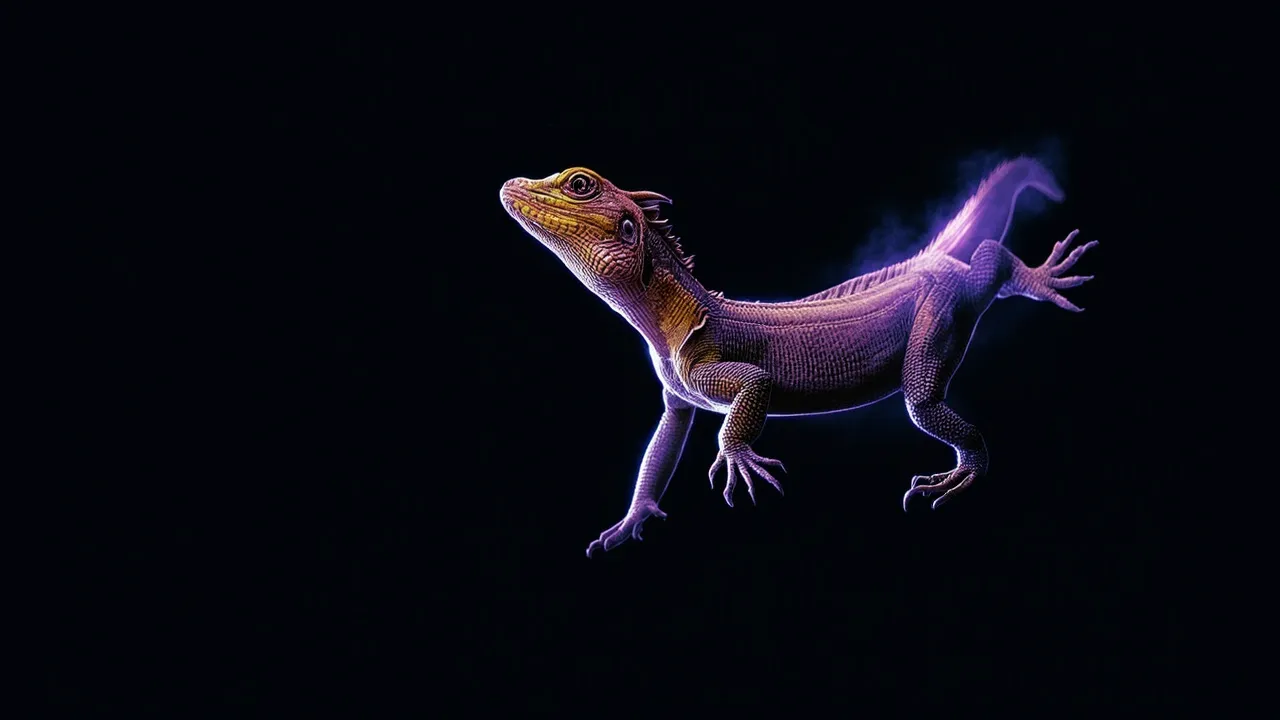
Turns out, the lizard matches all three. The new species has a gorgeous yellowish-green coloration, ranks among the smallest in its genus, and produces notably large clutches of eggs for its body size. The researchers even proposed "Syrax mountain horned dragon" as its common English name. How cool is that?
More Than Just a Pretty Face
But this little dragon isn't just winning points for the fantasy connection. It's also scientifically fascinating.
For starters, it has the smallest neck and back crest scales ever documented in its genus (which is called Acanthosaura — say that five times fast). It also lacks the black eye patch that many of its relatives have, instead sporting a distinctive dark collar marking.
The DNA analysis confirmed what the researchers suspected: this little guy is genetically distinct from its closest relatives, including Acanthosaura lepidogaster, and from every other recognized species in the group. With this discovery, the genus now has 23 recognized species.
A Dragon in Need of Protection
Here's where the story takes a slightly melancholy turn. The Syrax mountain horned dragon appears to live in only a narrow zone of high-altitude forest. The rugged mountain landscape naturally separates its populations, which is both fascinating from an evolutionary perspective and concerning for conservation.
The research team is pushing for stronger protection of these high-elevation forests in Mae Wong. They suggest that A. syrax could serve as a flagship species — you know, one of those charismatic creatures that gets people excited about protecting an entire ecosystem. It would be joining some pretty prestigious company: the Asian forest tortoise, Oldham's leaf turtle, and the Indochinese tiger also call this region home.
Why This Matters (Yes, Even to Non-Nerds)
Look, I get it — not everyone is into Game of Thrones or fantasy dragons. But here's why this discovery matters to everyone:
First, we're still finding new species. In a world that can sometimes feel fully mapped and explored, that's a beautiful reminder that nature still has secrets to share with us.
Second, every species matters in its ecosystem. This little lizard plays a role in its mountain forest home, and losing it could have ripple effects we can't even predict.
And third? Sometimes science gets to be fun. Scientists got to name a lizard after a beloved fictional dragon, and that joy is contagious. It makes conservation feel less like a chore and more like an adventure.
So here's to you, Acanthosaura syrax. You might not breathe fire or fly (well, you probably glide a bit, but that's not quite the same), but you're still pretty legendary in my book.
Source: ScienceDaily, August 2026 Study published in: ZooKeys (open-access journal)