
GATHERING EYES ON THE PRIZE: WHAT THE LATEST NEUROSCIENCE BREAKTHROUGH REVEALS ABOUT SEEING
Let me tell you about something that sounds like science fiction but is actually happening in a London lab right now.
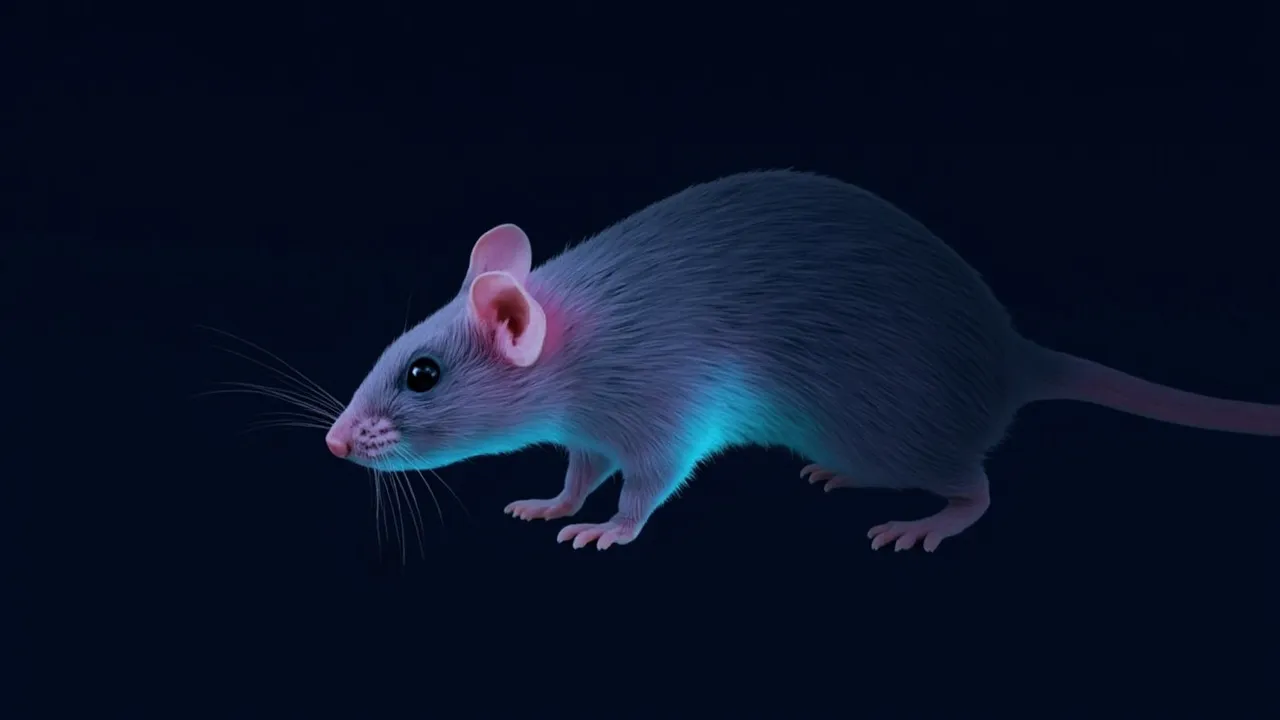
Researchers at University College London have figured out how to watch what a mouse sees — by listening to its brain cells.
Here's how it works in plain terms: they stick tiny electrodes into the visual processing center of a mouse's brain, record the firing patterns of individual neurons, run that data through a machine learning system, and out pops a rough recreation of the video playing on the mouse's screen. The resolution isn't perfect yet, but it's recognizable — enough to tell what the mouse was watching.
What's really interesting is the scale of this work. Most brain-reading studies rely on fMRI machines, which measure blood flow across entire brain regions. It's a bit like trying to follow one conversation in a crowded stadium by listening to the general roar. This approach is completely different — they go down to individual neurons, each one firing with its own specific signal about what the brain is processing. It's like putting a microphone directly on the speaker.
The algorithm itself comes from an earlier competition called the 2023 Sensorium Competition, which was essentially a contest among brain-decoding programs. But here's the part that really got my attention: during the actual test, they showed the mouse a completely new video clip — something the system had never seen before. And it still managed to reconstruct it. That means the algorithm isn't just memorizing and spitting back what it's already stored. It's actually learned to translate neural activity into visual information on the fly. That's a whole different ball game.
Dr. Joel Bauer, the study's lead author, put it simply: their goal was to find "a better way of investigating how the brain interprets what we see."
And that's where things get really interesting, because this challenges how most of us think about vision. We tend to imagine seeing as passive — light bounces off stuff, hits your retina, and your brain just records it like a security camera. But that's not what's happening at all. Your brain is constantly making choices about what to emphasize, what to ignore, and how to piece together an internal picture of reality. It's less like a camera and more like an overworked editor who decides what goes in the final cut.
This research gives scientists a way to measure exactly how much our brain's representation differs from what's actually in front of us. What does a mouse's brain think is important? What does it filter out? How does its internal "video" compare to ours?
The team admits their reconstructions have plenty of room for improvement — better resolution, wider visual field coverage. But the fact that it works at all cracks open a door to something bigger. Someday we might actually compare how a dog, a cat, an eagle, and a human all see the same sunset. The physical world doesn't change — but the experience of it, happening inside each brain, could be completely different.
That's not just cool science. That's a whole new way of understanding what it means to be a conscious being looking out at the world.
And honestly? That gets me pretty excited.
Source: https://www.sciencedaily.com/releases/2026/09/260914102449.htm