
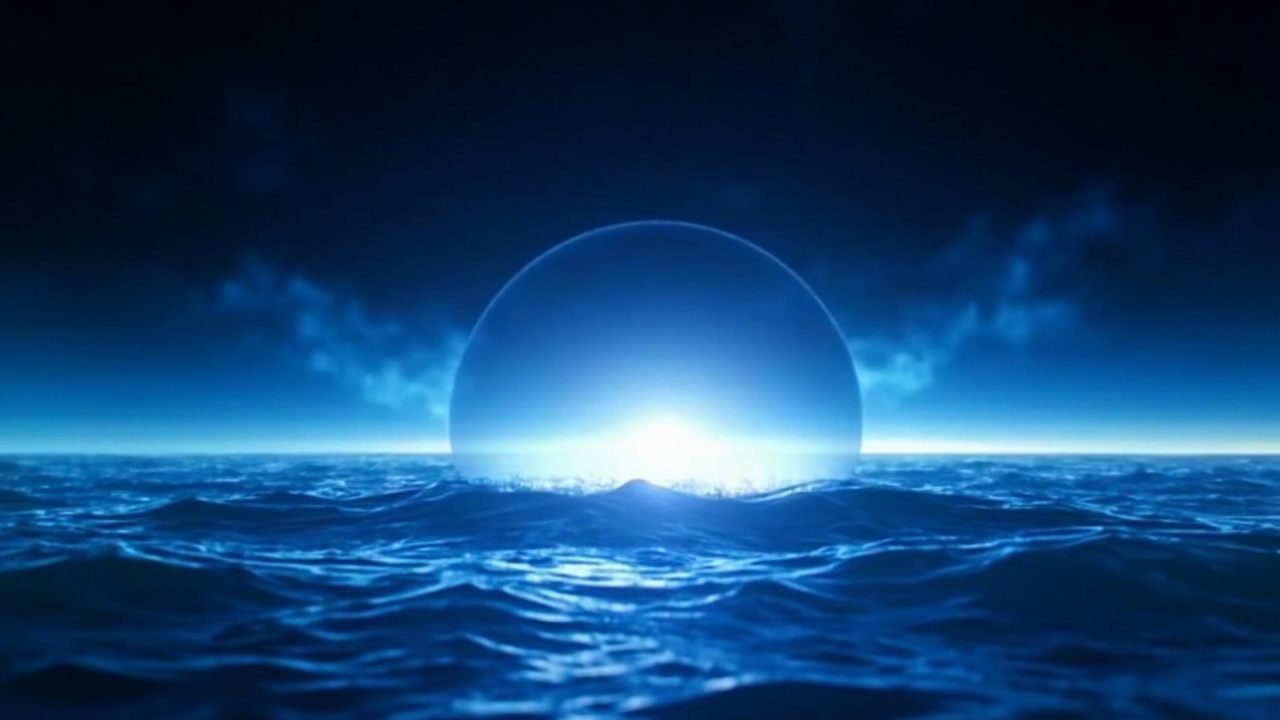
Okay, I'll admit it—I'm a bit of a space nerd. I've spent countless hours scrolling through photos from the James Webb Telescope, mesmerized by galaxies millions of light-years away. But you know what? Sometimes I think we're so busy looking up that we forget how much wonder is happening right here on our own planet.
Take the ocean, for instance. We think we know it pretty well, right? It's the big blue thing covering 70% of Earth's surface. We swim in it, fish from it, and pollute it way more than we should. But here's the thing—scientists literally say we know more about Mars than we do about our own ocean floor. And if that doesn't make you want to dive deeper (pun absolutely intended), I don't know what will.
The Magic of Milky Seas
Now, here's where things get really interesting. Imagine you're a sailor in the middle of the night, somewhere in the vast Indian Ocean. The stars are out, the water is calm, and then—wait, is that moonlight reflecting off the water? No... the moon is on the other side of the sky. So why is the entire ocean around you glowing white?
This, my friends, is what sailors have called "milky seas" for at least 400 years.
One Navy report from 1980 described it as looking like those glow-in-the-dark plastic stars you'd stick on a kid's ceiling. Another captain in 1849 said it looked like "a boundless plain of snow, or a sea of quicksilver." Can you even imagine? Sailing through what looks like a river of milk under a canopy of stars. That would be absolutely magical.
The Science Behind the Glow
Here's where it gets a little more concrete—and also a little more frustrating for scientists. In 1985, researchers actually got lucky and caught one of these events in action. They took water samples and found a whole lot of tiny luminous bacteria called Vibrio harveyi. So at least we know what is making the light.
But here's the million-dollar question: why do these bacteria suddenly decide to put on a massive light show all at once, covering areas sometimes as big as Iceland?
That's the part nobody can explain yet.
And honestly, I find that incredibly humbling. We can sequence the entire human genome, land a rover on Mars, and create AI that writes poetry—but we can't figure out why some bacteria decide to throw a rave in the middle of the ocean.
Why Should We Care?
You might be thinking, "Okay, cool ocean mystery, but why does it matter?" Fair question. Here's why it matters, at least to me:
First, these events might tell us something important about ocean health. Could milky seas be a sign of a thriving ecosystem? Or are they a warning sign of something going wrong? We genuinely don't know.
Second—and this is the part that gets me excited—these glowing bacteria represent some of the most basic life forms on Earth. Bioluminescence was probably happening in organisms that were among the first to develop life on our planet. If we can understand how and why this happens, maybe it teaches us something about the origins of life itself.
And finally, Steven Miller, a scientist who's been chasing milky seas for decades, put it beautifully: "What might milky seas teach us about searching for other, similar forms of basic life in the universe?"
I love that question. We're out there looking for biosignatures on distant planets, but we haven't even figured out all the biosignatures right here on Earth.
The Hunt Continues
The good news is that scientists aren't giving up. NASA's satellites are now tracking these events from space, which is pretty incredible when you think about it—we can see the glow of bacteria covering thousands of square miles from 500 miles above Earth. Researchers have also compiled a database of historical sightings and are working on algorithms to predict when and where these events might occur next.
So while milky seas remain one of nature's beautiful mysteries, at least we're getting better at knowing where to look.
The Bigger Picture
Here's what I keep coming back to: our planet is so full of wonders we haven't explained yet. We walk around thinking we have it all figured out, that there's nothing left to discover. But then something like milky seas comes along and reminds us just how much we still don't know.
I think that's beautiful, actually. There's something comforting about the fact that in 2025, with all our technology and knowledge, we can still look up at the stars, look down at the ocean, and say, "We have no idea why that happens."
Maybe it keeps us humble. Maybe it keeps us curious. And maybe, just maybe, the answer to some of our biggest questions is floating around in a glowing patch of seawater somewhere in the Indian Ocean, waiting for us to figure out what it's trying to tell us.
For now, I'll keep dreaming about what it would be like to sail through a milky sea myself someday. Has anyone got a boat?
SOURCE: https://www.popularmechanics.com/science/environment/a71789704/milky-seas