
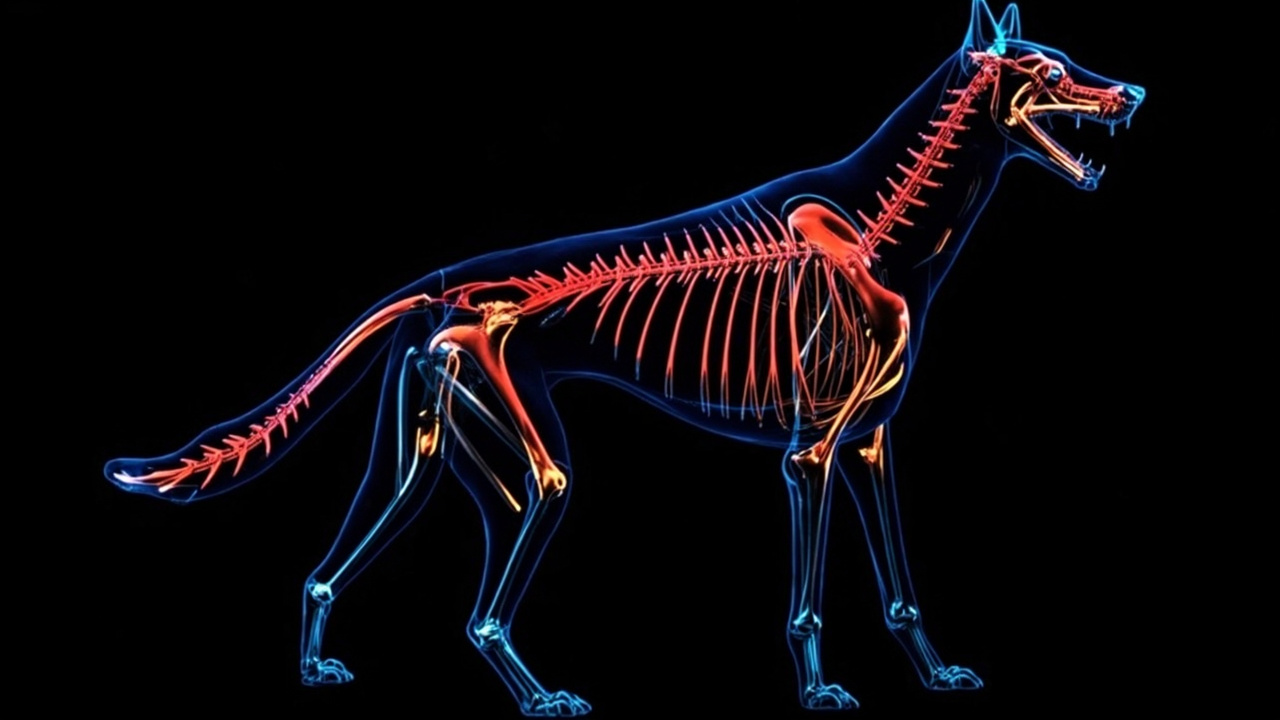
🐺 What Were Wolves Doing on This Tiny Island?
Okay, I need to tell you about something that completely boggled my mind when I came across it.
Imagine a small island in the Baltic Sea — we're talking just 2.5 square kilometers, barely a speck on the map. This place is called Stora Karlsö, and it's completely isolated. No native land mammals have ever lived there. Zero. It's just seabirds, seals, and a lot of cold ocean water.
Now imagine finding wolf bones there. Wolf bones that are roughly 5,000 years old.
Here's the thing: wolves aren't exactly known for their swimming abilities. They're not going to paddle across the open sea to set up camp on some random rock. So how did these wolves end up on an island they had absolutely no business being on?
Simple answer? Humans brought them there. By boat. Thousands of years ago.
The Cave That Holds Secrets
These wolf remains were discovered in a cave called Stora Förvar on Stora Karlsö. Now, this cave wasn't just some random shelter — archaeological evidence shows it was a hotspot for seal hunters and fishers during the Neolithic and Bronze Ages. We're talking about ancient communities who made their living from the sea.
So picture this: ancient fishermen pulling up to this tiny island in their boats, and what's sitting there waiting for them? A couple of wolves.
How do you even wrap your head around that?
These Wolves Were Eating Like... Well, Like Humans
Here's where the story gets really wild.
Researchers did some isotope analysis on these wolf bones — basically, they looked at the chemical signatures preserved in the bones to figure out what these animals were eating. And the results? The wolves had been munching on seals and fish. The same stuff the humans living on the island were eating.
Now, wild wolves typically hunt deer, moose, and other land animals. They're not exactly known for their seafood preferences. So these wolves weren't just surviving on the island — they were being fed by people. They were eating human food, probably scraps and fish guts that the fishermen didn't want.
That's a pretty intimate relationship if you ask me.
Smaller Than Your Average Wolf
But wait, there's more.
These ancient island wolves were also noticeably smaller than your typical mainland wolf. Combine that with the marine diet and the fact that they ended up on an island with no natural wolf population, and you've got a picture that looks a lot like... well, something pretty close to early domestication.
One of the wolves also had surprisingly low genetic diversity. And if you've ever studied evolution or genetics, you know what that typically means: isolated populations, or animals that have been bred in captivity. In the modern world, we see this in domesticated dogs, livestock, and even crops.
Finding this in an ancient wolf population? That's significant.
This Doesn't Fit the Domestication Story We Know
Here's where things get really thought-provoking.
For decades, scientists have generally assumed that wolves became dogs through a gradual process — wolves started scavenging near human camps, got bolder over time, and eventually evolved into the loyal companions we know today. It's a neat story, and it makes sense.
But these island wolves don't fit that narrative.
They weren't transitioning into dogs. Genetic testing confirmed they were 100% wolf, with zero dog ancestry. Yet they were clearly living alongside humans, eating human food, and existing in a place they could only have reached because people put them there.
So what were they? Tame wolves? Captive wolves? Some early experiment in wolf management that didn't quite lead to full domestication?
The researchers don't have all the answers yet, and honestly, that's what makes this so exciting.
What Were Ancient People Thinking?
This discovery has made me think about our ancestors in a completely different way.
Here's what gets me: thousands of years ago, before written history, before metal tools, before any of the civilizations we learn about in school — these ancient people were loading wolves onto boats and bringing them to a tiny island. Why?
Were they keeping them as working animals? Guards? Companions? Some kind of early experiment in animal management that we never knew about?
Pontus Skoglund from the Francis Crick Institute put it this way: this discovery raises the possibility that humans were able to keep wolves in their settlements and found value in doing so.
Found value in doing so.
That phrase has stuck with me. These weren't just random encounters between humans and wolves. Something intentional was happening. Something deliberate.
Why This Matters
Here's my take on why this discovery matters so much:
We've always thought of dog domestication as this unique, singular event — probably somewhere in Asia or Europe, thousands of years ago, where wolves first became dogs. It's framed as this one-time transformation that happened in one place and then spread.
But these island wolves suggest something more complex. They suggest that humans all over the place, in different environments, might have been experimenting with wolves in different ways. Some of those experiments led to full domestication. Others... maybe just led to strange, isolated populations of fed, managed wolves that never quite became dogs.
It's not one story. It might be many stories.
And honestly? That makes the whole thing even more fascinating.
What This Tells Us About Our Past
I keep coming back to that image: ancient fishermen, thousands of years ago, pulling up to an island with a wolf in their boat.
What did they see when they looked at that animal? What did they hope to gain from keeping it around? And what would they think if they knew that, 5,000 years later, we'd be digging up its bones and trying to understand their choices?
We like to think of ancient humans as simple, focused purely on survival. But this discovery — wolves on an island, eating fish, smaller than normal, genetically isolated — tells a different story. These were people who were curious, who experimented, who found value in relationships with wild animals.
Maybe that's how it always worked. Maybe before we ever turned wolves into dogs, we were already trying to understand them, manage them, keep them close.
And that, to me, says something pretty remarkable about human nature.
We have always wanted to be friends with the wolves.
Source: ScienceDaily