
This Little Guy Was Hiding in Plain Sight for Nearly 200 Years
Okay, I have to admit — until I stumbled onto this research, I didn't know pangolins could get any more fascinating. Turns out, I was very wrong.
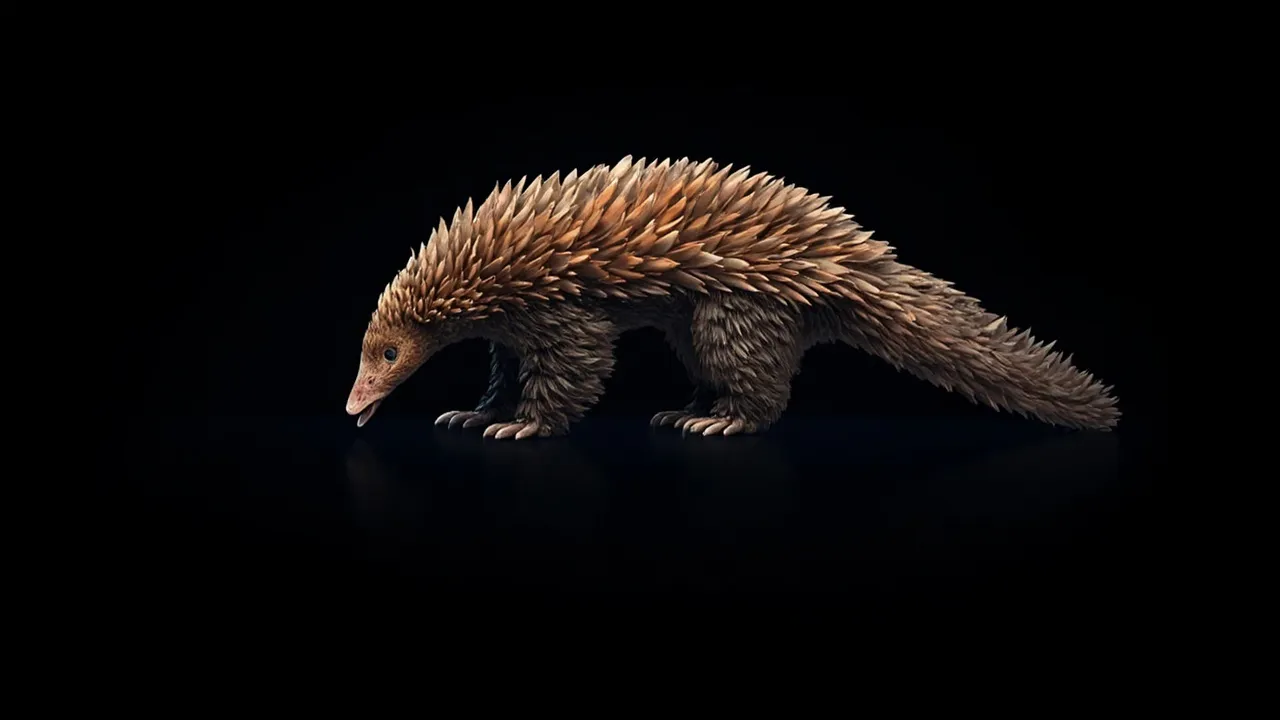
These strange, scaly creatures already look like something nature cooked up on a creative Tuesday. Imagine a cross between an anteater and a medieval dragon, and you've basically got a pangolin. They've got powerful claws, impossibly long tails, and bodies covered in overlapping scales that make them look like walking pinecones. Honestly, if you told me they were recently arrived from another planet, I might believe you.
But here's what's been haunting me about this story: one of these species has been right under our noses — or more accurately, right in the Himalayan foothills — and we had no idea it was different. Until now.
The Case of the Mistaken Identity
For years, pangolins living in the mountains of Nepal, India, Bhutan, and Myanmar were grouped together with their Chinese cousins. Scientists figured they were all the same species, just hanging out in different zip codes.
But a team of researchers, led by folks from the Field Museum and collaborators across multiple countries, suspected something was off. Their instincts said these mountain-dwelling pangolins had been evolving separately for a very long time — long enough to become their own distinct species.
In 2025, another team actually named what they thought was a new species: Manis indoburmanica, or the Indo-Burmese pangolin. Problem solved, right?
Not so fast.
Turns out, there was already a name for this creature floating around in scientific literature — one that had been largely forgotten. The species Manis aurita was first described way back in 1836. Over time, it got demoted to just a subspecies of the Chinese pangolin and faded into obscurity.
So when the researchers stumbled upon this old name, they had a head-scratching question on their hands: was aurita the same thing as indoburmanica, or were they actually looking at two completely different species?
The DNA Detective Work
Here's where things get really cool.
The research team needed to figure out the true relationship between these names. And the answer wasn't hiding in the mountains of Nepal — it was sitting in a museum drawer in London.
The Natural History Museum had preserved a Manis aurita specimen collected all the way back in 1836. That's nearly 190 years old. The researchers asked the museum's team if they could somehow extract DNA from this ancient sample.
No pressure, right?
But here's the thing about museum collections — they're basically time capsules. And the NHM team pulled it off. They successfully sequenced DNA from this century-old specimen.
The results? Modern Himalayan pangolin samples matched aurita. This meant the animals that had just been named indoburmanica in 2025 were actually the same species that had been described way back in 1836. Under the rules of scientific naming, the oldest valid name wins.
So Manis aurita it is. The Indo-Burmese pangolin name? Retired.
Why Does This Matter So Much?
You might be thinking: "Okay, that's a neat historical footnote, but who cares what we call a pangolin?"
Trust me — this matters enormously.
Pangolins are in serious trouble. They're considered the most trafficked mammals on Earth. Those beautiful scales that make them look so otherworldly? They're the reason poachers hunt them relentlessly. In some cultures, pangolin scales are believed to have medicinal properties, which drives an illegal trade that puts these animals on the fast track to extinction.
And here's the thing: when authorities intercept illegally traded pangolins, they need to know which species they're dealing with. Different species live in different places. If you know the species, you can narrow down where the animal was probably taken from. That information helps wildlife crime investigators track down trafficking networks.
As Anderson Feijó, one of the study's authors, put it: "We can't protect what we do not know."
This discovery gives law enforcement a clearer picture. It gives conservationists better data. And it gives the Himalayan pangolin — Manis aurita — a fighting chance.
Meet the Himalayan Pangolin
So what makes this newly (re)confirmed species different from its Chinese cousin?
According to the researchers, the Himalayan pangolin is a bit bigger overall, with a longer tail and smaller ears. In fact, the species name aurita actually references those distinctive ears — it comes from Latin for "eared."
The two species also live in completely different neighborhoods. The Chinese pangolin (Manis pentadactyla) is found mainly in, you guessed it, China. The Himalayan pangolin hangs out in the mountain foothills across Nepal, northern India, Bhutan, and Myanmar.
For animals facing poaching pressure, knowing exactly who's living where is absolutely critical for conservation planning.
What Made Me Smile
There's something about this story that just warms my heart.
It took five years of research, international collaboration, and the efforts of scientists working across multiple institutions to untangle this taxonomic puzzle. And a huge part of the solution came from a nearly 200-year-old museum specimen — a preserved reminder that sometimes the answers to modern questions are hiding in the past.
The researchers themselves called this "the ultimate, most thrilling piece of the puzzle." And I love that they feel that excitement. Because science at its best isn't just about fancy equipment and cutting-edge technology — sometimes it's about looking at something that's been sitting in a drawer for generations and realizing it holds a secret we've been missing.
The Himalayan pangolin was hiding in plain sight, misnamed and misunderstood, for almost two centuries. Now that we've found it again, let's make sure we do everything we can to protect it.
These little scale-covered oddballs deserve to stick around.
Source: ScienceDaily