
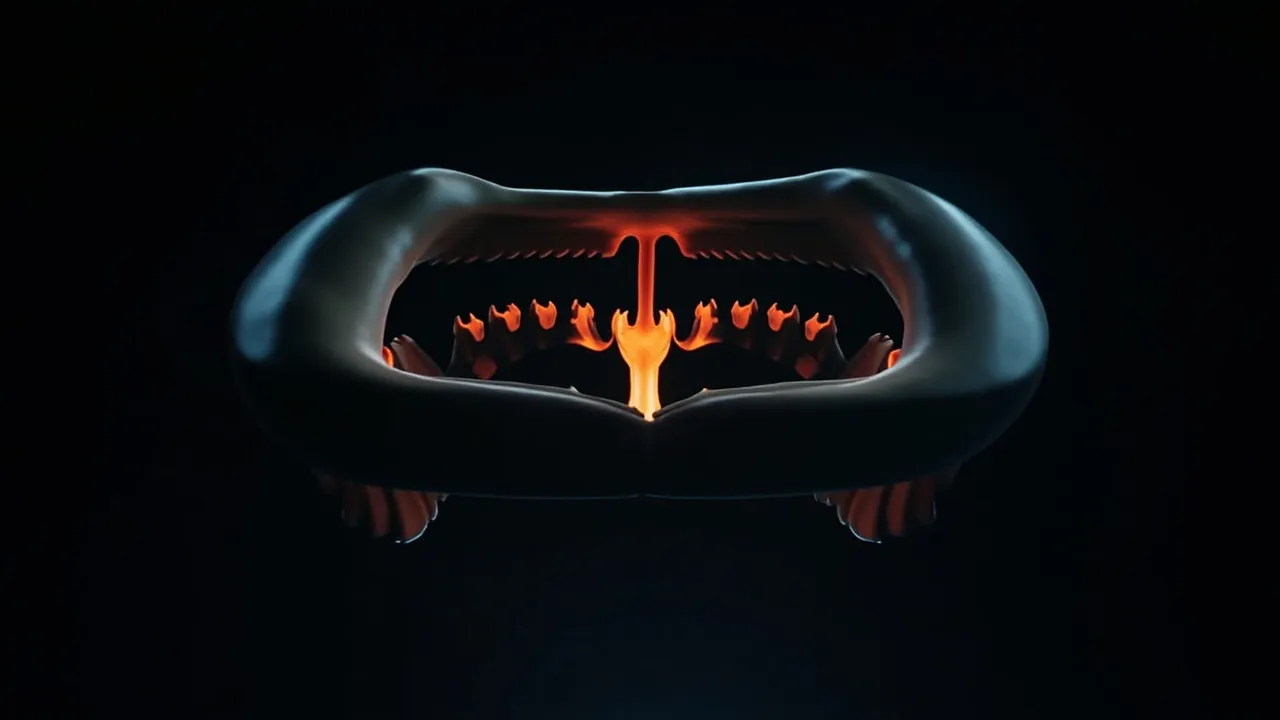
The Megalodon Discovery That Was Hiding in Plain Sight
Can we pause for a moment? Paleontologists recently uncovered massive Megalodon backbone fragments that had been sitting unnoticed in a museum storage room. Not uncovered from fresh digs. Not retrieved from some remote excavation site. Just gathering dust. For years. Like that container in the back of your fridge you keep meaning to throw out.
The legendary monster shark we call Megalodon (now formally known as Otodus megalodon—because scientists apparently can't resist a good rebranding) cruised through our oceans somewhere between 15 and 3.5 million years ago. But here's what really gets me: we're not talking about merely large sharks. These were giant freaking sharks. Estimates suggest they reached around 79 feet in length. Picture a semi-truck with a full trailer, then add another 20 feet.
For Reference
The infamous shark from Jaws? That fictional terror measured about 25 feet. The upgraded, "bigger equals scarier" version that appeared in the 1998 sequel? Roughly 35 feet. An actual Megalodon encountering those would basically think, "Aww, how adorable. Is that a juvenile?"
What Exactly Was Found?
The rediscovery centers on spinal bones from an 11-million-year-old Megalodon unearthed in Denmark. Here's something fascinating about sharks: aside from their teeth and jaws, their entire skeletal structure consists of cartilage, which decays pretty easily. That's why solid shark fossils are uncommon treasures.
These specific vertebrae span about 23 centimeters (roughly 9 inches) across—making them the biggest Megalodon spinal bones ever documented. Originally, these specimens were supposedly lost during a museum relocation in 1989, surviving only through old photographs and museum records. Then someone recently stumbled upon a couple of them in storage, incorrectly labeled and completely ignored.
After proper examination, researchers combined their findings with existing data and concluded that newborn Megalodons came into this world at around 12 feet long. Twelve. Feet. At birth. And these animals potentially survived nearly a century. Imagine being an ancient fisherman (theoretically, since humans evolved millions of years after these creatures vanished) and watching one grow from "serious concern" to "why did I ever leave my cozy cave."
How Do Museums Misplace Entire Dinosaurs?
This whole saga raises a question: how frequently does this sort of thing occur? Apparently, more often than you'd expect.
Museum collections are absolutely enormous. London's Natural History Museum alone houses something like 80 million items. Eighty. Million. When your inventory reaches those numbers, misplacements become practically inevitable. Sometimes specimens end up in the wrong cabinet, the wrong room, or occasionally an entirely different building.
Throughout history, fossils have disappeared through various dramatic circumstances:
- Wars destroy everything: The original Spinosaurus collection was obliterated during an Allied bombing of Munich back in 1944. Earlier, Bristol's fossils were lost to Axis air raids in 1940.
- Seas aren't always friendly: In 1916, a cargo vessel transporting dinosaur remains from Alberta to Britain was sunk by a German submarine. Researchers still have no idea exactly what specimens went down with that ship.
- Natural disasters: In 2018, portions of Brazil's National Museum caught fire, annihilating countless specimens.
And sometimes things just deteriorate. Paleontologist Edward Cope documented what might have been an enormous dinosaur bone in 1877 that was so delicate it likely disintegrated on some shelf and was quietly discarded as worthless debris.
I've heard colleagues share similar tales—discovering dinosaur skulls improperly stored among items labeled "miscellaneous stones." Paleontology apparently has its share of paperwork problems.
Why This Actually Matters
Here's what resonates with me about this story: science isn't exclusively about finding entirely new things. Sometimes it's about uncovering what we've forgotten we possessed. These Megalodon vertebrae, now examined with contemporary methods, are revealing deeper understanding about how these spectacular creatures developed and lived their lives.
Megalodon will likely forever fascinate us. It represents an era when our seas teemed with apex predators the dimensions of city buses. And now we're learning that even our most respected scientific establishments occasionally misplace puzzle pieces.
But honestly? That's fine. Science moves slowly. Turns out, museum storage has patience too.