
Wait, Bacteria Have Memories? The Science That's Blowing Our Minds

Wait, Bacteria Have Memories? The Science That's Blowing Our Minds

<p>Scientists have discovered that bacteria aren't just tiny biological machines—they can actually learn from experience, remember past events, and even pass those memories down to their offspring. It's a finding that makes us humans feel a lot less special about our supposedly unique ability to recall the past.</p>

Okay, I need to tell you about something that genuinely kept me up at night after I first read about it. Apparently, bacteria—those microscopic creatures we've spent decades trying to kill with antibiotics—might have memories. Like, actual memories. And they can pass them along to their children. Which is honestly either amazing or terrifying, depending on how you look at it.

So What Exactly Did They Find?

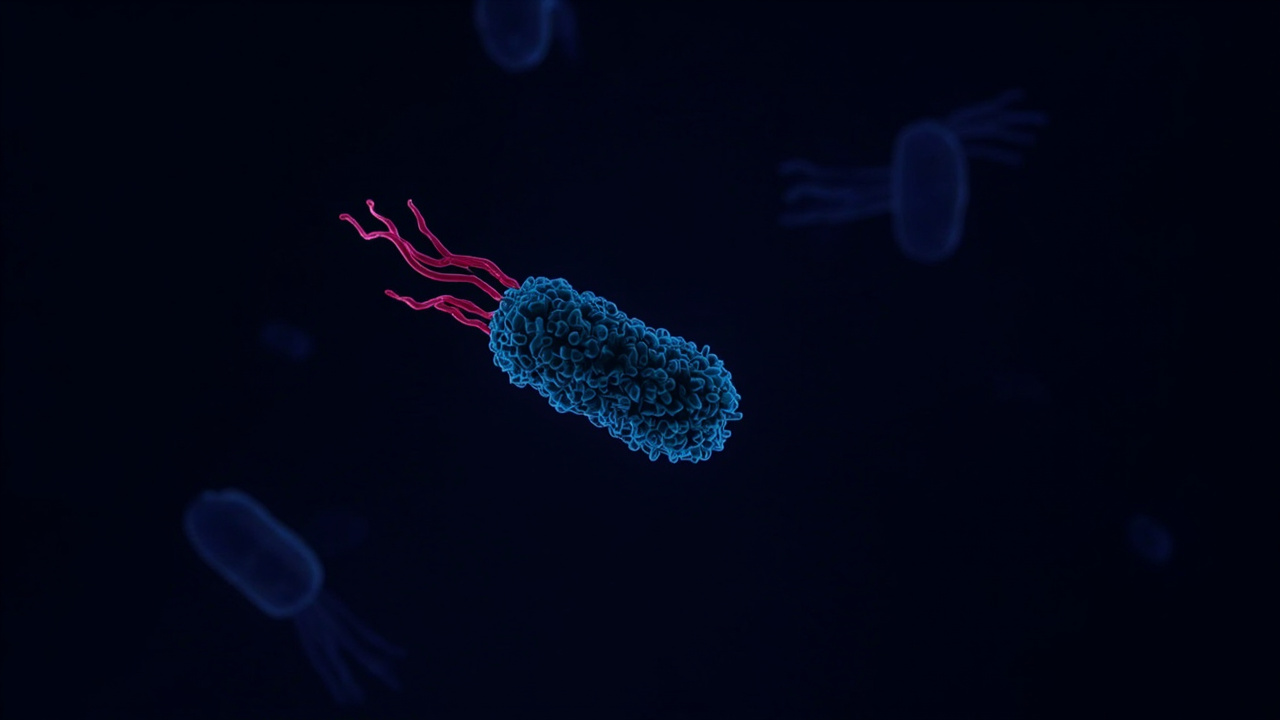
Researchers at Carnegie Mellon and Georgia Tech have been studying E. coli bacteria (you know, the ones hanging out in your gut) and discovered something pretty wild. These little single-celled organisms aren't just reacting to what's happening around them right now—they're making decisions based on their past experiences.

The scientists exposed bacteria to fluctuating nutrient conditions and watched what happened. Here's the cool part: the bacteria didn't just respond to the current environment. They seemed to "remember" what had happened before and use that information to adapt. One of the researchers, Josiah Kratz, put it this way: "The cell isn't just responding to the input from the environment at a given time, it's actually making decisions based off of its past history."

Now, when I first read that, my brain went straight to the question you might be asking yourself right now: wait, does this mean bacteria are conscious?

The Memory Thing Gets Weird

Here's where it gets really interesting. When bacteria encounter stress—like not having enough food—they produce certain biomolecules that change how their proteins work. These changes can then be passed down to daughter cells and even granddaughter cells. So future generations inherit memories about environments they never actually experienced.

Think about that for a second. A bacterium's great-great-grandchild somehow "knows" about a hardship that happened before it was even conceived. That's basically the bacterial equivalent of being born with your grandmother's trauma. (Okay, maybe not exactly, but you have to admit it's giving that energy.)

This actually has some pretty serious real-world implications. If bacteria can learn and remember, then they might also be able to anticipate threats—like antibiotics. And that brings us to the antibiotic resistance problem, which is honestly one of the scariest issues facing modern medicine.

Why This Matters for Antibiotics

Let's be real: antibiotic resistance is already a massive global health concern. If bacteria aren't just randomly mutating to survive our drugs, but actually learning and adapting based on past experience, that changes everything about how we need to approach treating bacterial infections.

Kratz puts it bluntly: "If we really want to have a better understanding and better control over eradicating bacterial populations, we're going to need to also take into account what they've experienced in the past."

So maybe the bacteria that survived your last round of antibiotics aren't just the lucky mutants—they might be little generals who remember the battle and are preparing for the next one.

But Are They Actually Thinking?

Now, before we start worrying about whether bacteria are secretly plotting against us, let's pump the brakes a little. Some scientists propose what's called the "Cellular Basis of Consciousness" theory—that even the tiniest organisms might have some form of awareness. And they argue that associative learning and memory formation are fundamentally cognitive processes.

But here's the thing: consciousness is one of those topics where experts can't even agree on a definition. When researchers talk about bacterial "memories," they're not necessarily talking about thoughts or feelings or any of the stuff that comes with human consciousness.

As Kratz himself notes, "If you define memory as a persistence of information across time, that doesn't require consciousness or even intelligence."

So maybe the most accurate way to think about it is this: bacteria are incredibly sophisticated information-processing systems. They're not sitting around contemplating the meaning of life, but they are definitely doing more than just mindlessly surviving. They're learning. They're adapting. And now we know they can remember.

What Does This Mean for Us?

Honestly, I find this stuff both humbling and exhilarating. We've spent so long thinking of bacteria as simple life forms—just little chemical machines going about their business. But the more we look, the more complex their behaviors seem to be.

And here's the thing that really gets me: if bacteria can learn and remember, what else out there is quietly doing the same thing? What other "simple" organisms are hiding surprisingly sophisticated cognitive abilities?

The researchers didn't set out to philosophize about consciousness. They just wanted to understand how E. coli manages to survive in such a wide range of environments. But sometimes the biggest discoveries come from asking seemingly simple questions.

Maybe the line between "simple" and "complex" life isn't as clear as we've always thought. And maybe—just maybe—our memories aren't as uniquely ours as we'd like to believe.

Either way, I think we can all agree that bacteria just became a lot more interesting at parties.


SOURCE: Popular Mechanics

bacteriamemoryscienceantibioticsmicrobiologyconsciousnessresearchbiology