
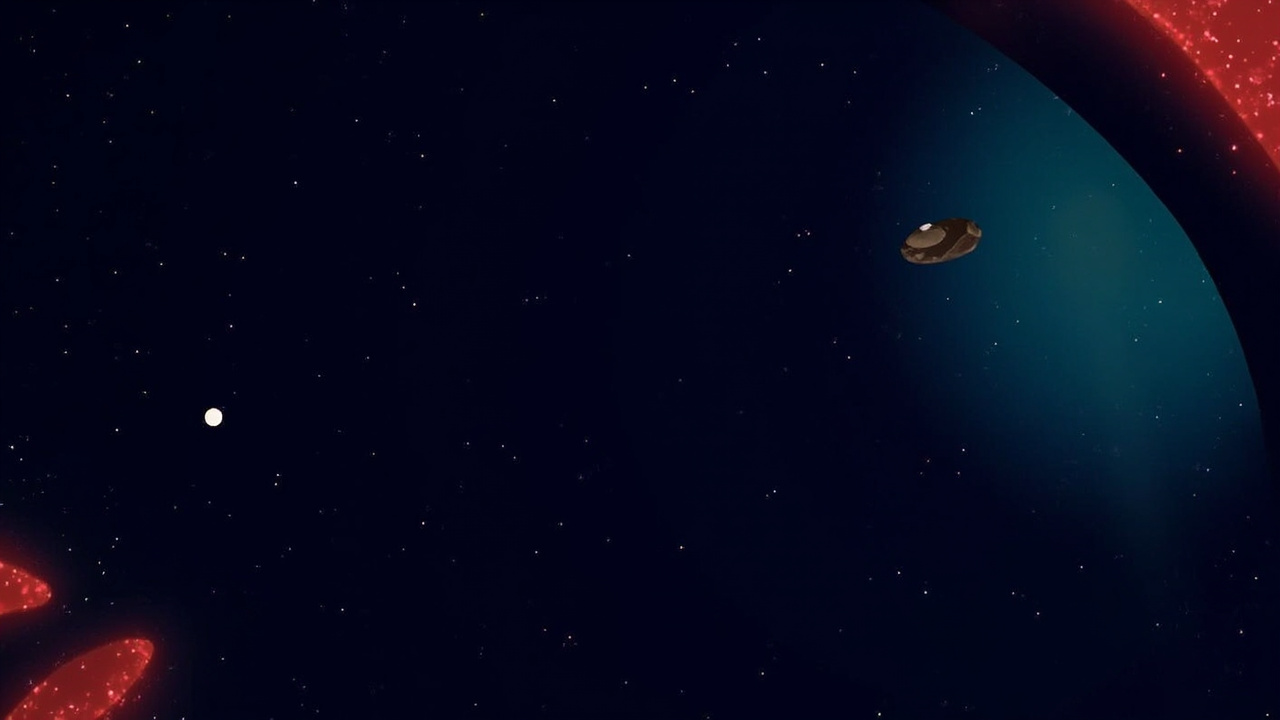
Let's be honest: when most of us picture an asteroid hitting Earth, we think of extinction-level disasters. The dinosaurs got wiped out by one, right? So it's pretty wild to think that these same violent space rocks might have actually sparked life on our planet.
That's exactly what researchers at the Southwest Research Institute are suggesting, and I'm genuinely excited about this research. Here's the deal: about 4.5 billion years ago, Earth was getting constantly bombed by asteroids. We already knew this — scientists call it the "Late Heavy Bombardment." But what we didn't fully appreciate until now is what those impacts actually did to our young planet.
The research team ran sophisticated computer simulations to figure out what happened beneath Earth's surface when these space rocks slammed into us. And here's where it gets interesting: each collision didn't just blast apart rock on the surface. It shattered the crust underground, creating this intricate network of cracks and pathways. Think of it like someone taking a hammer to a solid chocolate bar — suddenly there are all these channels and openings where nothing existed before.
Now, why does this matter for life? Well, those cracks let water circulate through the hot interior of the planet. This created what's called hydrothermal systems — essentially, underground hot springs. The researchers compared it to what we see at Yellowstone National Park today, but on a scale that's absolutely mind-blowing. According to their models, a single large asteroid impact during this period could have generated 100 times more hydrothermal activity than all of Yellowstone combined.
Let that sink in for a second.
These hydrothermal environments are crucial because they're exactly the kind of places where scientists think the chemistry for life could have gotten started. You've got hot water, you've got minerals from fractured rock, you've got energy from the heat — it's like a natural chemistry lab. And this wasn't a one-time thing. Over millions of years, with impact after impact, these systems were constantly being created and re-created across the planet.
One thing that really got me about this research is how the team calculated that by about 4.3 billion years ago, the upper 5 miles of Earth's crust was likely highly permeable — meaning water could flow through it easily. And this permeable zone stuck around until about 3.5 billion years ago. That's nearly a billion years of prime hydrothermal real estate!
I love this kind of science because it completely flips the narrative. We spent so long thinking of asteroid impacts as purely destructive events. But on early Earth, they might have been one of the most important creative forces our planet experienced. Without those ancient collisions, we might never have had the right conditions for life to take hold.
The researchers are quick to point out that more work needs to be done to fully understand these ancient environments. But the modeling they've done gives us a solid foundation for exploring how life might have actually begun here — or even on other worlds. If this process worked on Earth, could it have happened on Mars? Europa? Enceladus?
Pretty amazing stuff to think about while you're enjoying your morning coffee. Our existence might literally owe a debt to some very well-timed cosmic impacts.