
The Queen Who Kept Her Cool (Literally)
Picture this: It's 1959, and a French archaeologist named Michel Fleury is carefully opening an ancient stone sarcophagus in the basement of the Basilica of St. Denis in Paris. This is no ordinary tomb—it's the final resting place of Queen Arnegunde, a Merovingian queen from the 6th century.
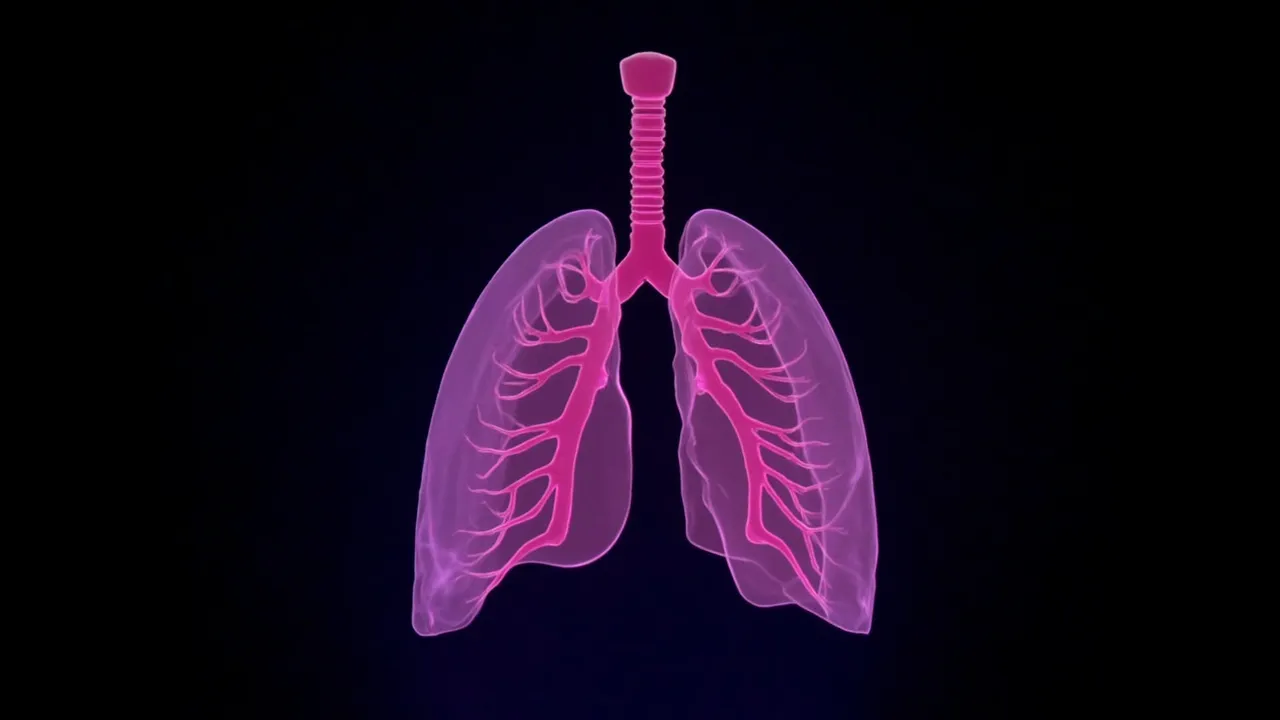
What Fleury found was... mostly bones. After 1,400 years, soft tissue usually doesn't stand a chance. But here's where things get weird: tucked among the skeletal remains was one of her lungs. Still there. Still mummified.
I don't know about you, but I find this absolutely wild. We're not talking about an Egyptian pharaoh carefully wrapped in dozens of pounds of natron salt. This is a Frankish queen whose burial was significantly less... intensive. And yet, somehow, a single lung said "nope, I'm staying."
Who Was This Woman, Anyway?
Queen Arnegunde was kind of a big deal in her day. She was one of six wives of King Clotaire I—yes, six, because apparently one wasn't enough for Merovingian royalty—and she mothered King Chilperic I of Neustria. She lived from around 515 to 580 CE, which was actually pretty impressive for the era. The average life expectancy back then? Definitely not 65.
When archaeologists examined what remained, they found traces of her gorgeous wardrobe: a reddish-brown silk tunic fastened with gold braid, a violet silk blouse, and a delicate veil adorned with gold and garnet cloisonné pins. She was buried with gold and silver jewelry, including a ring that literally had her name on it—Arnegundis. I love that even in death, she wanted to make sure nobody confused her with anyone else.
Also, she wore buckled leather shoes with animal motifs. Animal motifs, people. Royalty has always had interesting taste.
So Why Did Only the Lung Survive?
For decades, nobody could figure out why this lone organ persisted when everything else had long since decayed. Was it the cool, dry environment of the basilica? Some accident of chemistry? A little bit of ancient mummification magic?
Then, in 2016, a bioanthropologist named Raffaella Bianucci from the University of Turin decided to take a much closer look. And what she found is genuinely fascinating.
Using some pretty sophisticated microscopy techniques, Bianucci discovered evidence that Queen Arnegunde was artificially mummified—though not in the traditional Egyptian sense. See, after Rome conquered Egypt, the art of preservation spread. But the Franks didn't just copy-paste the Egyptian methods. They adapted.
Instead of removing the internal organs (a classic move in Egyptian mummification), the Frankish embalmers took a different approach. They infused the body with a mixture of resins, herbs, and plant materials—delivered through the mouth. Think of it like giving the body an internal preservation cocktail.
But here's the really interesting part: the researchers found that Queen's copper alloy belt played a role too. The metal from her ornate belt actually interacted with the embalming substances, creating chemical reactions that may have helped preserve that lung. High concentrations of copper ions and copper oxide were found in the preserved tissue.
Nature and circumstance working together across 14 centuries. That's kind of beautiful, isn't it?
Why Lungs, Though?
You might be wondering: of all the organs, why lungs? What makes them so special?
It turns out lungs have a biological advantage. Compared to other soft tissues, lungs have fewer epithelial cells—the kind of cells that contain lysosomes, which basically accelerate tissue breakdown after death. Fewer lysosomes means slower decomposition. Who knew breathing organs had this hidden talent?
So between the artificial embalming, the copper belt chemistry, the cool basilica environment, and the lung's natural resistance to decay, Queen Arnegunde's respiratory system got lucky in ways her other organs didn't.
What This Tells Us About Ancient Royal Burials
Here's what really gets me about this discovery: it shows us that Frankish royalty took death very seriously. Mummification wasn't reserved for Egyptians—it was a status symbol for elite Franks too, adapted from Roman techniques after their empire's fall.
This wasn't just about keeping the body intact for some afterlife journey. It was about legacy. About memory. About ensuring that when future generations dug around in these tombs, they'd find something that still spoke of power and prestige.
Queen Arnegunde has been talking to us for 1,400 years. And now, thanks to modern science, we're finally starting to understand what she's saying.
Not bad for a woman who died before antibiotics, electricity, or the printing press were even twinkles in humanity's eye.