
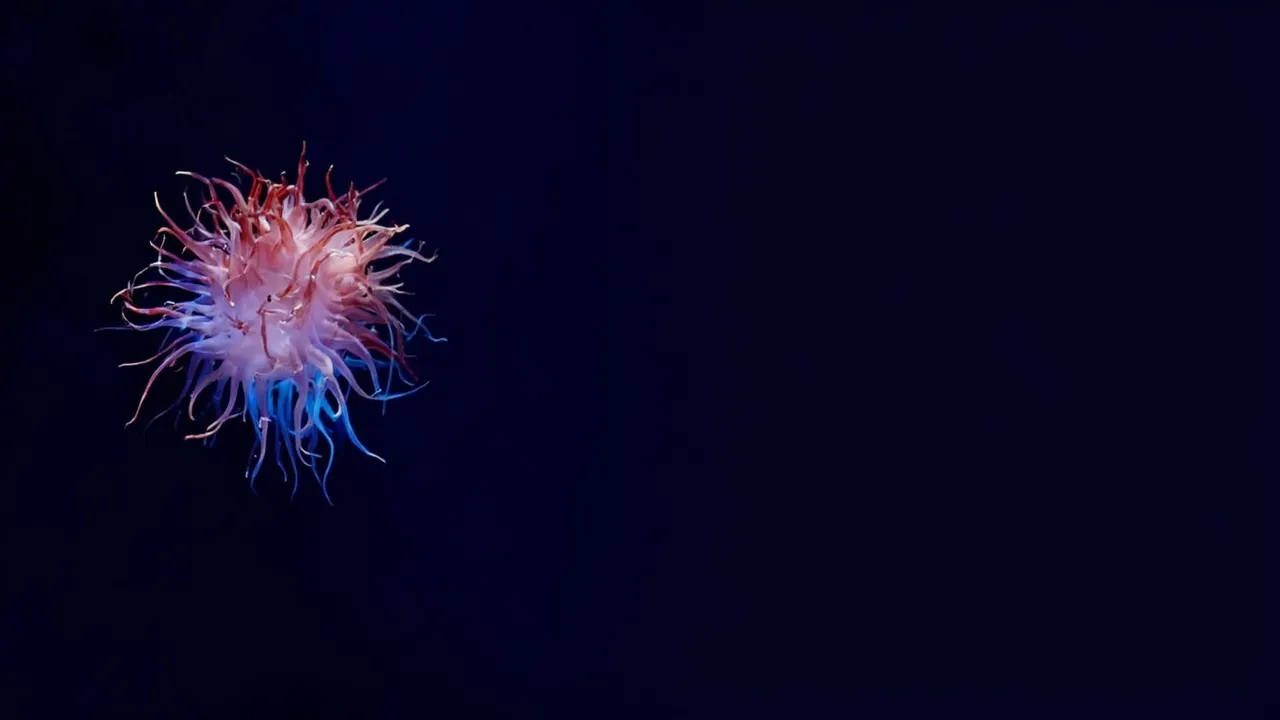
What Do Sea Anemones and Humans Have in Common?
Okay, I need to tell you about something that genuinely made me stop and stare at my screen for way too long. You know sea anemones? Those weird, beautiful flower-like creatures that attach themselves to ocean rocks and don't have a single brain in their bodies? Turns out, they might hold the secret to how we built ourselves.
Yeah, I know. That's a lot to process.
The Family Tree Gets Complicated
Let me back up and explain why this is such a big deal. When scientists categorize animals, they usually split them into two major groups based on how their bodies are organized. You've got Cnidarians—that's sea anemones, jellyfish, and corals—and then you've got Bilaterians, which is basically everything else with a front and back, a left and right side. Fish, birds, dogs, and yes, humans like you and me.
For a long time, scientists assumed these two groups built their bodies in completely different ways. After all, a sea anemone grows outward from a central point like a flower blooming. We bilaterians, on the other hand, build ourselves from head to toe along a clear axis—think belly to back, or front to back.
But here's where it gets interesting.
The "Blueprints" Might Be Older Than We Thought
A team of researchers at the University of Vienna made a discovery that's turning evolutionary biology on its head. They found that sea anemones use a technique called BMP shuttling to shape their bodies—and that's the exact same technique humans use.
So what's BMP shuttling? Let me try to explain it simply. Your body has these molecular messengers called bone morphogenetic proteins (BMPs). During development, these little guys tell your embryonic cells where they are in the body and what kind of tissue they should become. When BMP levels are low, cells know to form your central nervous system. Moderate levels signal "make a kidney." High levels tell cells to become belly skin.
It's like your cells are playing a sophisticated game of hot and cold, guided by these protein signals. And here's the wild part—scientists discovered that sea anemones use the exact same signaling system, complete with something called Chordin acting as a shuttle to move BMPs around the body.
Why This Matters So Much
The implications are pretty staggering. If sea anemones and humans both use BMP shuttling to build bodies, it means this mechanism is incredibly ancient. These two animal groups split apart somewhere between 600 and 700 million years ago—long before anything resembling a complex organism existed.
As researcher David Mörsdorf put it, this mechanism "pops up over and over again in very distantly related animals," making it a strong candidate for something our very earliest ancestors already knew how to do.
Of course, science always leaves room for doubt. The researchers acknowledge that it's possible—though unlikely—that both groups evolved this technique completely independently. But if they share this genetic tool, the more exciting explanation is that our last common ancestor, way back in the primordial soup, already had this body-building instruction in its playbook.
What Does This Mean For Us?
Here's where I get a little philosophical. We're talking about a sea creature without a brain, a heart, or anything even remotely resembling our complex anatomy. Yet at the molecular level, we're reading from the same instruction manual.
It makes you wonder what other ancient secrets are hiding in creatures we barely pay attention to. The brainless sea anemone might seem like one of the simplest animals on Earth, but maybe "simple" was exactly what our shared ancestor needed to be. Maybe the blueprint for everything that came after—fish, dinosaurs, dogs, humans—was written in those ancient waters, waiting for us to discover we were all along family.
I don't know about you, but I think I'm going to look at sea anemones a little differently next time I see one at the aquarium. They're not just pretty ocean decorations—they're carrying a piece of our oldest biological heritage, hidden in their radially symmetric, brainless, utterly alien little bodies.
Pretty cool, right?
Source: Popular Mechanics