
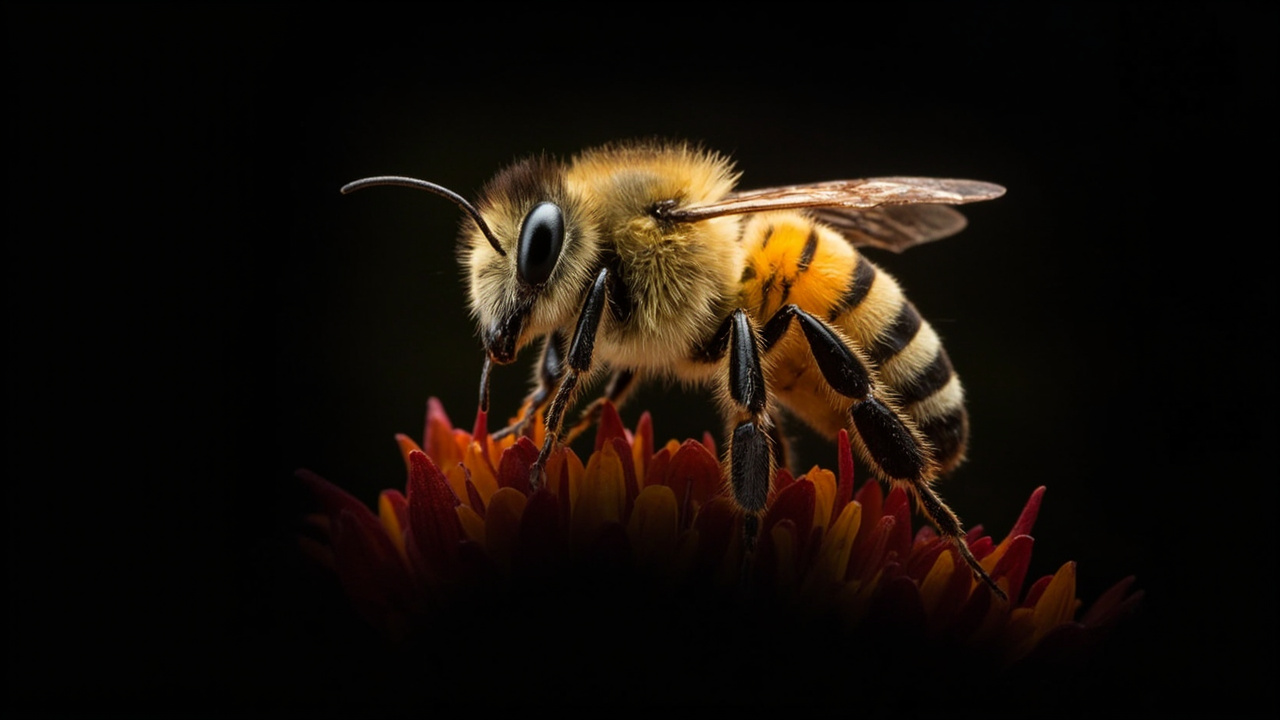
Okay, confession time: I used to think queen bees had a pretty sweet deal. Like, they just got fed some fancy bee food and suddenly became the ruler of thousands? Seemed almost too easy.
Turns out, I was dead wrong—and so were the scientists who've been studying this stuff for years.
A team of researchers just published findings in Nature that completely flip our understanding of how honeybee queens are made. And honestly? The real process is way cooler than the simplified version we all learned in school.
So What's the Big Deal?
Here's the background: all honeybees start from nearly identical eggs. Worker bees and queen bees? Same starting point. Same DNA, practically the same baby larva.
The difference was supposed to come down to one thing: royal jelly. That special secretion worker bees feed to developing larvae? People figured that was the magic ingredient that turned some lucky babies into royalty.
But this new research? It shows nutrition is only part of the story.
The Royal Crib
It turns out queen bees are raised in specially designed nursery chambers that researchers are now calling "royal cribs" (how cute is that?). These aren't just random cells in the honeycomb—they're carefully constructed environments with their own unique properties.
Think of it like the difference between a regular baby crib and some kind of high-tech developmental chamber. Queen cells have a distinct peanut shape and are built from wax that's physically and chemically different from the stuff regular worker bees are raised in.
The wax is less dense, more flexible, and apparently better at holding onto heat and moisture. Scientists tested this by raising queen larvae in cells made from queen wax versus regular wax—even when feeding them the exact same food, the larvae in standard wax cells were more likely to die and grew into smaller queens.
So yeah, the house matters. A lot.
Meet the Baby Bee Builders
Here's where it gets really interesting. The researchers discovered there's a specific group of worker bees responsible for building these royal chambers. They call them "queen cell builders," and they're generally younger than other workers in the hive.
These little construction workers don't just passively make wax, either. They're actively collecting materials from all over the hive and bringing them back to modify and enrich the queen cells. The team actually tracked this by adding harmless graphite to regular honeycomb and watching it show up, darkened, in queen cells later on.
While they're doing this construction work, these bees also maintain higher body temperatures—almost like they're running a climate control system for the developing queens. And their bodies actually change physiologically while they're doing this work. Their biological pathways for wax production activate differently.
It's genuinely organized. Like, suspiciously organized for what we usually think of as simple insects.
What Does This Mean for Us?
Boris Baer, one of the researchers from UC Riverside, put it this way: the old idea was that you just take an egg, put it in a queen cell, feed it royal jelly, and get a queen. What they're finding is that there's "an entire machinery behind this process."
I love that phrasing. There's an entire system, an entire team of specialized workers, and a carefully designed environment all working together to raise royalty.
To me, this is exactly why science is so cool. We think we understand something, then we look closer and realize we've barely scratched the surface. These tiny creatures that fit on your fingertip have this whole sophisticated infrastructure for raising new queens that we never even knew existed.
And here's why this matters beyond just being fascinating: honeybees are incredibly important for pollination and agriculture. If we're going to help protect them, we need to actually understand how their colonies function. Every piece of the puzzle we uncover—queen cells, specialized workers, the chemistry of bee development—helps us see the bigger picture.
So next time someone tells you "oh, it's just about the royal jelly," you can school them with the real story. Queen bees aren't born—they're raised by a dedicated royal support system that would make any human parenting team proud.
Source: https://www.sciencedaily.com/releases/2026/06/260623083101.htm