
(markdown formatted content)
The Universe's Most Dramatic Standoff
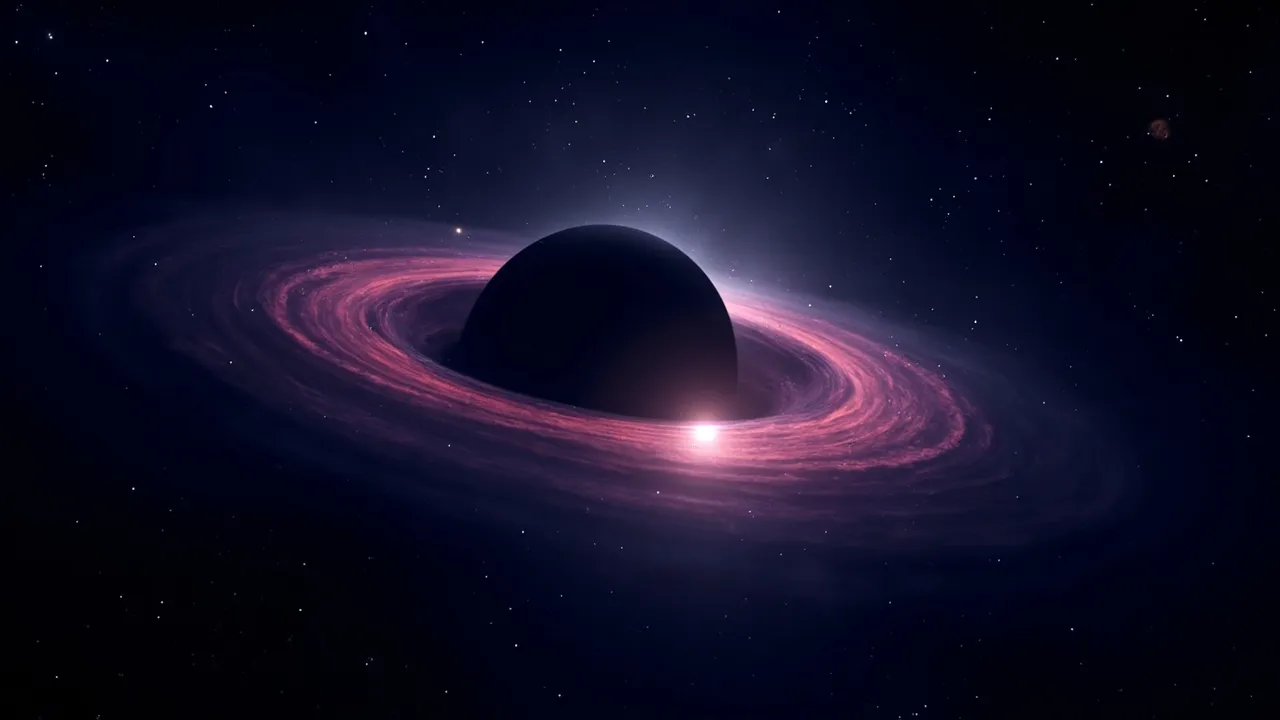
Picture this: a massive black hole, millions or billions of times heavier than our Sun, sits quietly at the center of a galaxy. It's invisible by nature. But when an unlucky star wanders too close, things get very interesting.
The black hole's gravity pulls harder on the side of the star closest to it than on the far side. That difference in pull—called tidal forces—can stretch and distort the star like taffy being pulled apart. Sometimes, this ends badly for the star. Sometimes... it doesn't.
Here's the thing that got astronomers scratching their heads. Some stars survive their first close encounter with a black hole. They don't get completely shredded. Instead, they lose just a chunk of their outer layers, then sling back around for another pass. And another. Scientists call these "repeating partial tidal disruption events," but I'll just call them cosmic near-misses.
The Puzzle That Baffled Scientists for Two Years
Now here's where things get weird. When astronomers watch these repeat offenders, they expected the star to put on a similar light show each time it swung past. After all, it's the same star, the same black hole, roughly the same dance move.
But that's not what happened.
Of the roughly 10 repeating systems we've spotted so far, four of them have been getting progressively dimmer. Each return trip produces less light than the last. That's... not supposed to happen.
Well, that's not entirely true. You'd think that if the star loses material each time, there'd be less stuff falling into the black hole, so the flares would fade. And logically, that makes sense. But when researchers tried to simulate this in computers, the models kept predicting something different: even with less material falling in, the flares should stay roughly the same brightness.
"We were puzzled by this for two years," said Ananya Bandopadhyay, a doctoral student at Syracuse University who led the new research. Two years of models that just wouldn't match reality.
Enter: The Star That Can't Stop Spinning
The breakthrough came when Bandopadhyay and her team realized they were missing something crucial. The black hole isn't just yanking material away from the star—it's also giving the star a cosmic spin-up, like a parent spinning their child around on a merry-go-round.
After each close pass, the star comes out rotating faster than before. This faster spin actually changes how the debris falls back. Think of it like this: if you toss a ball straight up, it falls back down in a certain time. But if the ball is spinning really fast while going up, something about its behavior changes.
With rapid rotation, even smaller amounts of stripped material return to the black hole more concentrated and quickly. That concentrated delivery maintains a bright flare, roughly the same brightness each time.
So to explain the fading flares we actually see? The star must have already been spinning quickly before its first encounter. A head start, if you will.
What This Tells Us About the Universe
Here's why I find this genuinely exciting: we're not just learning about black holes anymore. We're learning about stars—their hidden properties, their histories, the things we can't directly measure but can now infer from watching them interact with these cosmic giants.
The research, published in The Astrophysical Journal, suggests that some of these near-miss survivors might have been spinning like cosmic tops long before they ever wandered close to danger. And that spin history determines whether future passes are dramatic and bright or quiet and fading.
It's a reminder that in astronomy, sometimes the most important clues come not from what you expected to find, but from what's missing. The missing brightness told us something crucial about what's happening behind the scenes.
Now, doesn't that make you look at the centers of galaxies a little differently? All those invisible black holes, quietly spinning up stars and shaping their fates in ways we're only beginning to understand.