
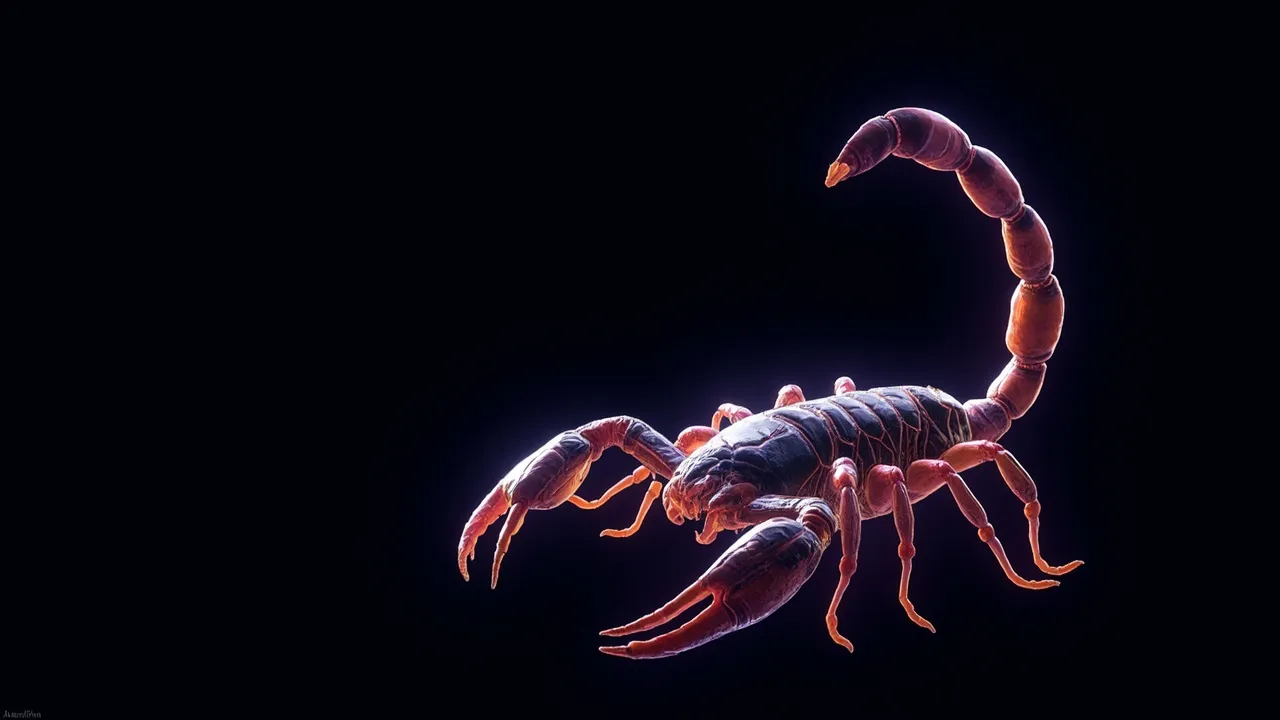
Okay, I need you to picture this with me.
It's 415 million years ago. You're standing on land—except there's no land ecosystem to speak of. No trees. No forests. Just... small, scrappy plants and fungi doing their best to cling to the ground. The oceans are where the action is.
And yet, somehow, something the size of a large dog—or honestly, probably bigger than most dogs you'd see today—was strutting around like it owned the place.
Meet Praearcturus gigas. Yeah, I'm just as unsettled as you are.
Wait, How Did I Not Know About This?
Here's what gets me: these fossils have been sitting in museum collections for over 150 years. One hundred and fifty years! Just chilling in drawers, waiting for someone to take a second look.
The original identification in 1871? Scientists thought this thing was some kind of giant crustacean. A weird woodlouse relative. Which, honestly, doesn't even make sense once you actually look at it, but hey, science moves slowly and those Victorian-era paleontologists were working with incomplete material.
It wasn't until researchers from The University of Manchester and the Natural History Museum decided to revisit these old specimens with modern techniques that the truth came out. And what a truth it is.
This wasn't just any fossil. It was the largest scorpion ever discovered.
A Meter-Long Nightmare
Let's just... sit with this number for a moment.
One meter. That's about three feet, give or take. With pincers over 16 centimeters long.
I don't know about you, but I'm already feeling my skin crawl. Modern scorpions are already plenty scary at a few inches long. Now imagine one that could probably look you dead in the knee.
And here's what really gets me: this thing wasn't some late arrival to the arthropod party. Praearcturus showed up at least 50 million years before we thought giant arthropods were even possible.
See, the conventional wisdom has always been that ginormous insects and scorpions came along during the Carboniferous period, when forests pumped so much oxygen into the atmosphere that everything grew comically huge. It's why you see all those terrifying illustrations of helicopter-sized dragonflies in dinosaur books.
But Praearcturus didn't need those conditions. It was already enormous in a world with relatively low oxygen and simple plant life. That completely flips the script on our understanding of how these creatures got so big.
So Why Was It So Huge?
Great question, and honestly? Researchers aren't entirely sure, but they have some fascinating ideas.
One possibility is that Praearcturus simply had the opportunity. There weren't many large predators competing for resources, so our giant scorpion friend could grow and grow without much pushback. Ecological opportunity, they call it. Basically, there was an empty niche waiting to be filled, and Praearcturus filled it by eating everything it could get its claws on.
Another clue? The fossils show some features that look suspiciously like those found in aquatic creatures. Those flap-like structures on its abdomen? They resemble what we see in modern lobsters and other crustaceans.
This has led scientists to wonder if Praearcturus split its time between water and land—maybe hunting in shallow waters where prey was abundant and larger, then venturing onto shore. That could explain how it grew so big when terrestrial ecosystems were still in their infancy.
A Glimpse Into the Past (Literally)
What's really struck me about this discovery is how it connects to something bigger: the moment when life was first figuring out that land wasn't so bad after all.
The Early Devonian was a transitional period. The boundary between sea and shore was fuzzy. Animals were experimenting, trying new things, testing limits.
Praearcturus might represent that exact moment of experimentation—or it might even show an ancestor that went back to the water after earlier land-dwelling relatives. Either way, it's giving us a window into a world that's so different from ours that it's almost impossible to fully comprehend.
No forests. No complex ecosystems. Just a planet finding its footing.
And roaming across it? A meter-long scorpion that would've absolutely dominated its environment.
Why This Matters
You might be wondering why any of this matters. I get it—we're talking about bugs that died out hundreds of millions of years ago.
But here's the thing: every discovery like this rewrites our understanding of life on Earth. We keep finding out that the "rules" we thought were firm—oxygen levels driving bug sizes, terrestrial ecosystems only becoming complex later—are more like loose guidelines.
Praearcturus tells us that life was more adaptable, more creative, and more surprising than we ever imagined. And honestly? In a time when we're constantly reminded of how much we still don't know, I find that pretty hopeful.
Plus, come on. A giant scorpion from before trees existed? That's just objectively cool.
If you want to read the original research, you can find it here.