
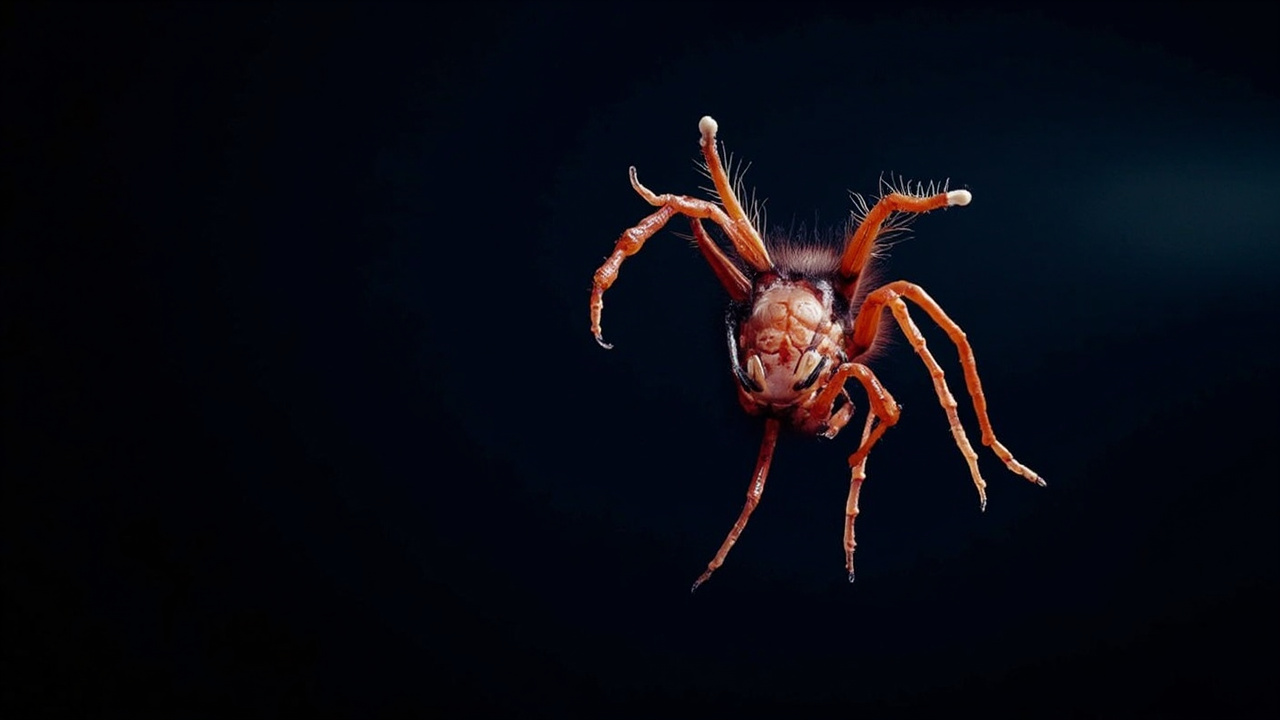
The Zombie Fungus Finally Has Its Own Nightmare
So picture this: I'm scrolling through research papers, minding my own business, when I stumble across something that makes me actually laugh out loud. And no, it's not a cat video.
You know The Last of Us? That TV show about a fungus turning people into mindless zombies? Most of us figured that was pure fiction—nightmare fuel for entertainment purposes only.
Except... it's not.
The Real Horror Show
Ophiocordyceps is the actual name of this nightmare-inducing organism. This fungus has figured out how to infect ants, colonize their brains, and basically turn them into unwitting spore-dispensing machines. The ant climbs to the highest point it can find, clamps down with its mandibles, and then explodes with fungal spores. Nature's own little horror movie, playing out in forests around the world.
It's genuinely terrifying. The kind of stuff that makes you grateful for your own immune system.
But here's what nobody tells you about this story.
Enter the Monster Slayer
Scientists in Malaysia recently uncovered something beautiful in the middle of all this horror: a brand new fungus that's basically the zombie fungus's worst nightmare.
They called it Pleurocordyceps cornusynnemata. (Honestly, whoever named it probably had a great afternoon.) The "cornus" part refers to those wild horn structures sticking out of it—yeah, it looks like something from an alien planet.
So what's this horned little hunter do? It sneaks right into the zombie fungus that's already infected an ant, burrows directly into the Ophiocordyceps tissue, and feeds on it from the inside.
The zombie fungus, the thing that's evolved to be the ultimate manipulator, just became prey.
Let that sink in for a second.
Nature's Own Checks and Balances
Here's what really gets me about this: hyperparasitism—the scientific term for "parasites that eat other parasites"—isn't some recent development. This whole dynamic goes back to the Jurassic period. We're talking hundreds of millions of years of this underground arms race happening in forests everywhere.
During this single research project alone, scientists found three different species of fungus-hunting fungus in Malaysia. Turns out that region is basically paradise for these hyperparasites—26 different species already documented in the area.
Wait, This Helps Farmers?
Okay, but here's where it gets practical. Some of these fungus-hunting organisms are being weaponized—peacefully, legally—against crop diseases.
One species called Coniothyrium minitans specifically targets a pathogen responsible for white mold in agriculture. Growers are using it as a natural alternative to chemical fungicides.
So the same biological horror show playing out inside ant brains? It's helping farmers grow healthier crops.
The Big Picture
I genuinely love this story because it captures something important about how the world actually works. Yeah, there are terrifying parasites. Yes, there are mind-controlling fungi. The natural world can be genuinely horrifying.
But it's also full of systems that keep those horrors in check. Everything has a predator. Everything has competition. The world is stranger and more balanced than we usually give it credit for.
Sometimes the most satisfying thing in nature is watching the predator become prey—even if that predator is a brain-controlling fungus that sounds like it escaped from a horror film.
Anyway, time to go appreciate the fact that my body temperature and immune system have evolved beyond any of this nonsense. Small mercies, people. Small mercies.