
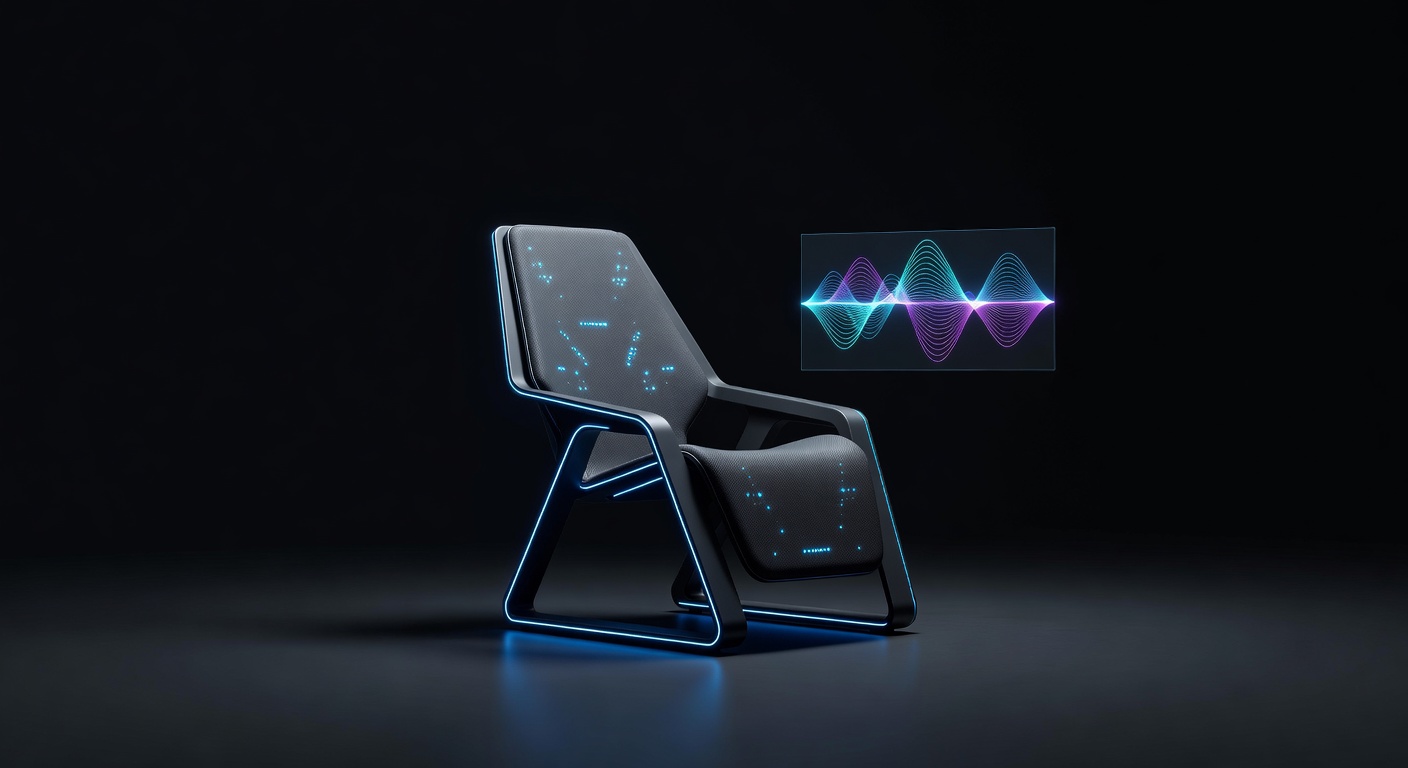
The Meditation Chair That's Got Everyone Talking
Imagine being able to achieve the mental clarity of a Buddhist monk, the stress relief of a spa day, and the zen vibes of a sensory deprivation tank—all without leaving your living room. Sounds dreamy, right? Well, one company thinks they've cracked the code with a chair that supposedly does exactly that.
What's So Special About This Chair, Anyway?
The Aiora chair, created by UK-based designer David Wickett, looks pretty unassuming at first glance. It's got that mid-century modern aesthetic that would fit nicely in any hipster's home office. But when you actually sit in it? That's where things get interesting (allegedly).
According to Wickett, who has a PhD in biomedical engineering, the chair creates a sensation of weightlessness through clever pressure distribution. Instead of your body sinking into cushions in the usual way, the chair spreads weight evenly across your body and shifts your center of mass horizontally. The end result feels kind of like floating in one of those sensory deprivation tanks—you know, the ones filled with salt water where people float around in the dark.
The idea is that by removing these external sensory inputs, your brain naturally turns inward, creating that meditative state we all crave.
The Brain Science Behind the Buzz
Here's where it gets sciency. Wickett's company released a white paper (basically a detailed research summary) claiming that the chair produces a distinctive EEG pattern—that's the electrical activity your brain produces. Specifically, they say it shows decreased slow-wave activity and increased fast-frequency activity, which supposedly mirrors the brain patterns of long-term Buddhist meditators.
If true, that would be seriously cool. And there's definitely something appealing about the idea that meditation benefits (less anxiety, lower stress, better immune function) could be accessed just by sitting down.
But Here's the Catch (And It's a Big One)
This is where I need to be real with you: the scientific community is pretty skeptical, and for good reasons.
Willoughby Britton, a psychiatry professor and clinical psychologist at Brown University, basically said the emperor has no clothes. She pointed out that the white paper reads more like marketing material than actual science. And she's right—the research hasn't been properly tested with a control group, hasn't been peer-reviewed by independent scientists, and hasn't been published in a legitimate scientific journal.
Those are pretty fundamental steps in science, by the way. When you want people to believe your claims, you can't just run tests yourself and publish your own results. You need other scientists to verify your work, poke holes in it, and make sure you're not fooling yourself.
The EEG Problem
There's another issue too. Even if the chair does produce those specific brain patterns, that doesn't automatically mean it produces meditation. Similar brain activity patterns can show up in all sorts of different mental states. You can't just look at a brain scan and definitively say "yep, that person is definitely meditating." The mind is way more complicated than that.
The Price Tag Reality Check
And then there's the elephant in the room: the chair costs between £5,000 and £9,000 (roughly $6,700 to $12,000). That's a lot of money to invest in something that's basically an "expensive experiment," as one expert put it.
For comparison, you could take a week-long meditation retreat, hire a meditation coach for months, or join a sensory deprivation tank studio membership for less than one of these chairs costs.
What's Next?
To be fair, Wickett says he's working on more rigorous research with proper controls and statistical analysis. That research is apparently underway and awaiting peer review. So maybe in a year or two, we'll have actual scientific backing for these claims.
Until then? This chair remains a fascinating idea that's ahead of its evidence. It might feel amazing to sit in—plenty of users seem to enjoy it—but whether it actually triggers "altered states of consciousness" remains a big question mark.
The Bottom Line
The Aiora chair is the kind of product that makes you want to believe in it. The concept is compelling, the design looks nice, and honestly, a chair that helps you relax is never a bad thing. But science doesn't work on vibes and marketing claims—it works on reproducible evidence.
If you've got $10k burning a hole in your pocket and you're curious, hey, maybe you'll be an early adopter who helps settle this question. For the rest of us? Let's wait for the peer-reviewed studies before we start saving up.
Source: https://www.popularmechanics.com/science/a70974449/chair-alters-consciousness