
The Sun God Nobody Expected
Picture this: it's the year 220 CE, and Rome's religious world is in chaos. A teenage priest from Syria has just become emperor, and his mission is bold—make everyone worship a sun god represented by a meteorite that fell from the sky.
His name was actually Sextus Varius Avitus Bassianus (try saying that three times fast), but he'd become known to history as Elagabalus, taking his name from the deity he was obsessed with. This wasn't your typical Roman emperor move. While Rome had a whole pantheon of gods to work with, Elagabalus wanted to put Elagabal, the Syrian sun god, at the absolute top.
The centerpiece of this worship wasn't a golden statue or anything you'd typically expect. Nope—it was a black meteorite that people genuinely believed fell from heaven. During summer celebrations, this sacred rock would be paraded through the streets in elaborate processions. Wild stuff, right?
The Mystery of the Vanishing Temple
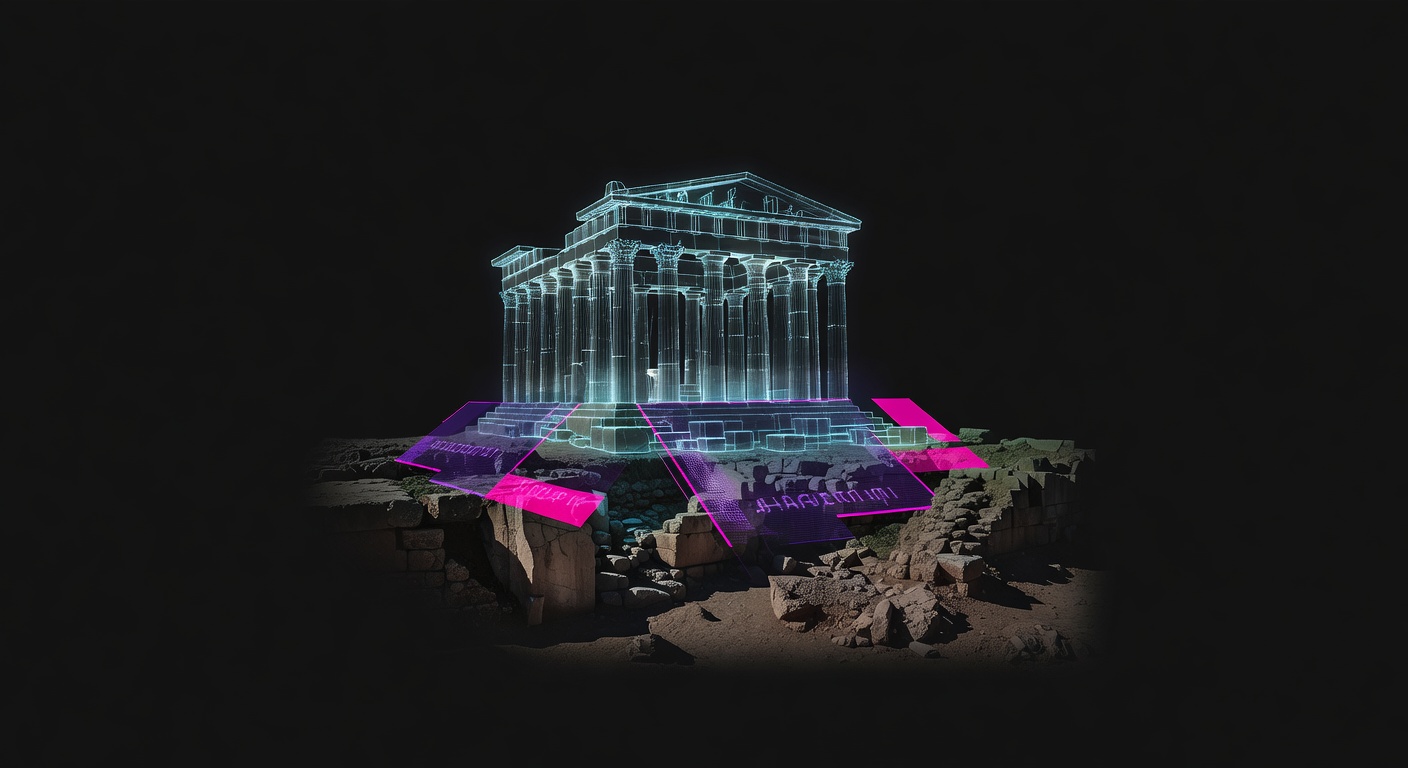
Here's where it gets really interesting. In Elagabalus's hometown of Emesa (modern-day Homs, Syria), a massive temple was built to honor the sun god. This wasn't some small shrine—it was THE religious center of Syria at that time. People came from everywhere to worship at this monument.
Then... it just disappeared.
Well, not actually disappeared. The best guess from historians and archaeologists is that when Christianity took over the Roman Empire, this pagan temple got converted into a church. And then when Islam arrived and reshaped the region, it probably became something else entirely. The leading theory? The remains of the Temple of the Sun are actually buried underneath the Great Mosque of al-Nuri, which is still standing in Homs today.
For decades, archaeologists couldn't confirm this. It's not like you can just start digging under a major functioning mosque whenever you want.
The Smoking Gun
But then something unexpected happened. During restoration work on the Great Mosque, workers found something at the base of one of the columns—an inscription. And not just any inscription. It was written in ancient Greek.
This is the detail that changes everything.
When restoration crews kept looking, they found another inscription on the same column. Archaeologist Maamoun Saleh Abdulkarim from the University of Sharjah examined both of them and realized they were probably leftovers from the pagan temple that used to stand there.
The inscriptions are absolutely bonkers. One describes a warrior king so fierce that he's compared to a tiger and storm winds. The text reads like ancient propaganda written by someone who'd had way too much coffee: "He soars in the sky to crush the warring barbarians... He instantly transforms into a tiger, facing the foe... His royal power is derived from the god of war during the day."
The second one? It describes the king as "the round image of the universe" who conquered everyone through skilled chariot driving. Both were clearly trying to make Elagabalus sound like a god himself.
Why This Actually Matters
This isn't just "oh cool, old writing." This evidence suggests that the legendary Temple of the Sun—something archaeologists have been hunting for—might genuinely be sitting right underneath the Great Mosque. These Greek inscriptions wouldn't have just randomly appeared; they're too specific to the cult of Elagabal.
What's especially cool is how this discovery shows us something historians have long debated: how did ancient cities actually transition between religions? It wasn't some sudden switch. Christianity didn't replace paganism overnight. Instead, according to Abdulkarim, there was a gradual blending where old pagan practices got repurposed and incorporated into Christian traditions. Then Islam did something similar, taking the existing infrastructure and adapting it.
Emesa is like a perfect case study of how religions layer on top of each other in the same physical space.
The Real Story Here
What I find genuinely fascinating is how this discovery reminds us that archaeology isn't just about dramatic digs in empty deserts. Sometimes the most important finds are hidden in plain sight, literally beneath buildings that people walk past every day. It took a renovation project and a careful archaeologist looking at old text to unlock a centuries-old mystery.
Plus, there's something poetic about it. A teenage emperor tried to make his religion the center of the Roman world. He failed spectacularly—his reign only lasted four years. But nearly 1,800 years later, the temple he built is still there, still sacred to people, just wearing different clothes.
The Temple of the Sun might not have survived in the way Elagabalus imagined, but it survived nonetheless.