
The Day We Finally Figured Out How to Breathe
Here's something wild: every single breath you're taking right now is powered by an evolutionary invention that's nearly 300 million years old. And we just figured out exactly how it started.
A team of scientists studying a perfectly preserved, mummified reptile has cracked the code on one of life's most important adaptations—the ability to breathe using your rib cage. It might not sound dramatic, but this discovery is genuinely game-changing for understanding how animals conquered life on land.
Meet Captorhinus: The Tiny Fossil That Changed Everything
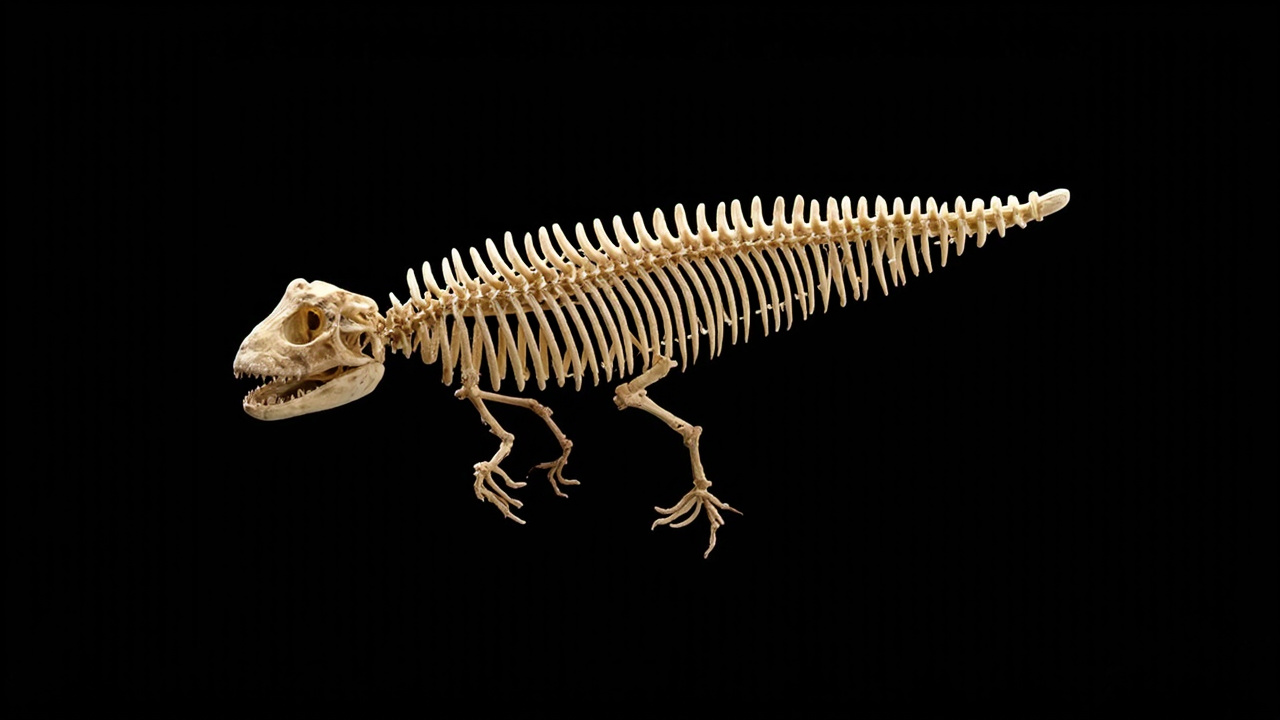
Imagine a creature that looks kind of like a modern lizard, but somehow smaller. That's Captorhinus aguti—a little reptile that lived about 289 million years ago and died in a cave system in Oklahoma. For hundreds of millions of years, it just sat there in the rocks. Then scientists found it, and realized they'd stumbled onto something extraordinary.
Here's where it gets really cool: this wasn't just bones. The fossil preserved everything. The researchers could see actual skin, calcified cartilage, and—get this—traces of proteins that are almost 100 million years older than any other proteins scientists have ever found in fossils. It's like finding a time capsule that actually kept things fresh.
How Do You Preserve Something for 289 Million Years?
The location matters a lot here. Richards Spur, Oklahoma has some seriously unique underground conditions. Oil seeps and oxygen-free mud basically created a perfect preservation system—kind of like nature's own vacuum seal. Everything got locked down before it could decay, and what we got was a three-dimensional mummy. The fossil even shows the creature in its final resting position, with one arm tucked under its body.
This kind of preservation is stupidly rare. Most fossils are just bones. Having skin and soft tissues preserved like this? That's the fossil jackpot.
Using Space-Age Technology to Look at Ancient History
The researchers didn't just crack open the rock and hope for the best. Instead, they used neutron computed tomography (fancy CT scans designed for fossils) at a specialized facility in Australia. This let them see through the rock without damaging anything, like they were using X-ray vision on a 289-million-year-old creature.
What they found was mind-blowing. As the lead researcher, Ethan Mooney, described it, he started seeing "thin and textured" structures wrapped around the bones. Then boom—there was skin, complete with scales arranged in an accordion-like pattern with concentric bands. It looked basically identical to what you'd see on modern worm lizards that are still alive today. Same design, hundreds of millions of years later.
The Discovery That Explains How We Breathe
But the real prize was deeper than the skin. By studying three different Captorhinus specimens, scientists pieced together something incredible: the complete rib-based breathing system of an early reptile. They found segmented sternums, sternal ribs, and all the connections linking the ribcage to the shoulder girdle.
For the first time ever, scientists could actually see and reconstruct how the earliest amniotes (that's the group including reptiles, birds, mammals, and you) breathed.
Before and After: Why This Matters
Before this respiratory system evolved, amphibians had a different game plan. They breathed through their skin and also used mouth and throat movements to push air into their lungs. It worked—and lots of amphibians still do it today. But it's kind of limited. You can't be super active with that system. You get tired easy.
The rib-cage breathing system? Total upgrade. Your muscles pull your ribs outward, your chest expands, air rushes in, and you can get way more oxygen with every breath. That efficiency? It was huge. It meant early reptiles could be more active, explore more territory, and generally kick ass at survival in a way that other creatures couldn't.
As the research team put it: it was a game changer. This innovation basically unlocked the secret code for reptiles to dominate land ecosystems. Without it, we might not be here.
Why This Discovery Matters Today
Finding a 289-million-year-old creature is cool. Finding one this well-preserved is amazing. But understanding that this fossil shows us the exact moment when breathing technology got a major upgrade? That's genuinely significant. It's not just natural history trivia—it's the origin story of how your own body works.
Every time you take a deep breath, you're using an evolutionary technology that first showed up in a tiny, lizard-like creature hanging out in ancient Oklahoma caves. Not bad for something that died before the dinosaurs even showed up.