
markdown formatted blog content
The Ghost Ship That Won't Stop Leaking
Imagine diving down to explore an old shipwreck, expecting to find a haunting piece of history, and instead discovering it's actively poisoning the ocean around it.
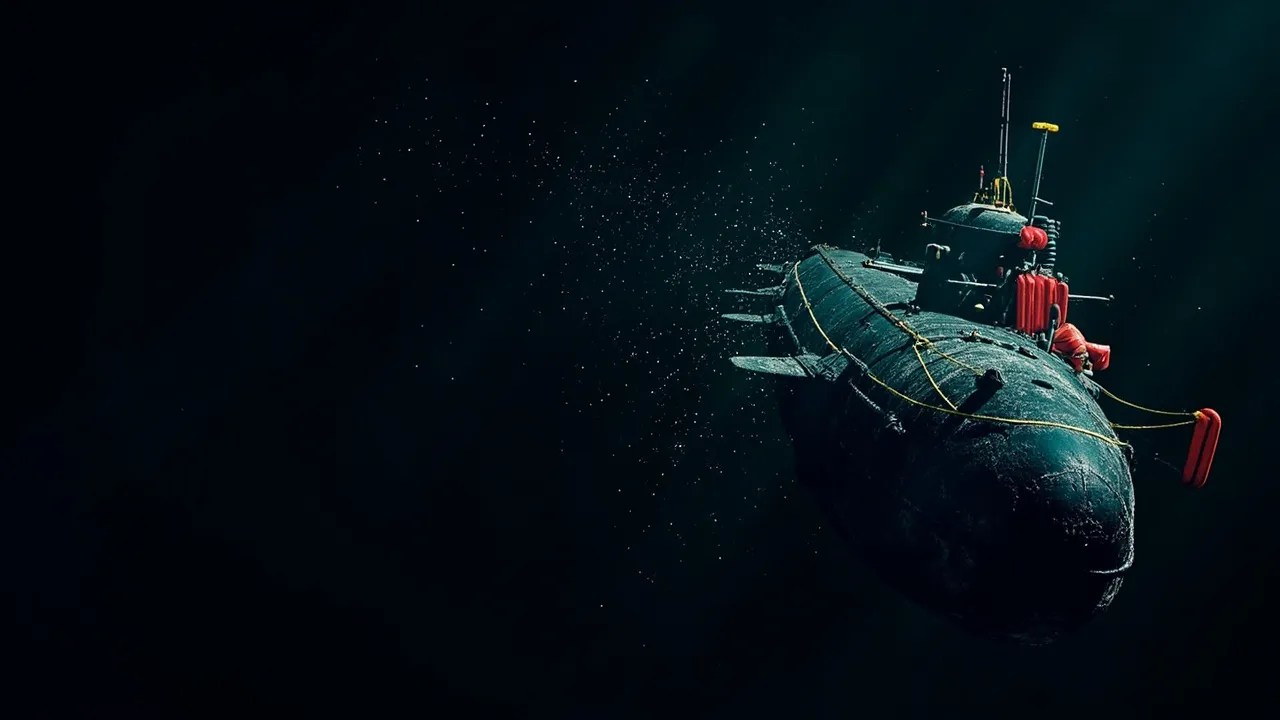
That's exactly what researchers found with the UC-30, a German submarine that met its watery grave in April 1917. This wasn't just any old wreck, either — it's still leaking TNT into the sea, more than a century after it sank.
Let me be honest: this story kind of blew my mind when I first came across it. We usually think of pollution as something happening right now, in our modern world. But it turns out some of the most persistent environmental problems are sitting on the ocean floor, left behind by wars that ended generations ago.
A Submarine That Almost Made It Home
The UC-30's final voyage reads like a tragedy with an almost cruel sense of timing. The submarine had been heading toward Ireland on a mission but ran into engine trouble. With mechanical problems plaguing the vessel, the crew made the decision to turn back toward Germany.
They were so close to safety. The submarine was near Rømø, practically in friendly waters, when disaster struck. On April 19, 1917, the UC-30 hit a British mine and sank in seconds. All 27 crew members perished.
What makes this wreck particularly dangerous is its cargo. The submarine was carrying 18 mines and six torpedoes. That's an enormous amount of explosive material, and most of it is still aboard the wreck.
For nearly a hundred years, nobody even knew where the UC-30 lay. Danish diver Gert Normann Andersen finally discovered the wreck in 2016, and what he found would set off a chain of scientific investigation.
What Happens When a Century-Old Bomb Starts Leaking?
Here's where things get really interesting — and a little unsettling. Researchers from Aarhus University, led by Professor Katrine Juul Andresen, decided to investigate the wreck as part of a larger project called NorthSeaWrecks. They wanted to know if all that explosive material was actually affecting the surrounding environment.
Working with navy divers (because, understandably, civilian diving isn't allowed near a wreck packed with live explosives), the team collected samples from all over the submarine and the surrounding seabed. They tested water, sediment, starfish, and mussels living on and near the wreck.
The results were clear: TNT is definitely leaking out.
"We found traces of TNT in the wildlife, the seabed, and the water column," Professor Andresen explained. "Pollution is definitely occurring."
The contamination isn't massive — it's not like an oil spill or a chemical factory dumping waste. But it's real, ongoing, and will likely get worse as the wreck continues to deteriorate. The longer the submarine sits on the seafloor, the more its hull breaks down, and the more explosive material gets exposed to seawater.
Why the North Sea Is Basically a Underwater Bomb Cemetery
Here's some context that puts this problem in perspective. During World War I, both Germany and Britain were locked in a desperate naval arms race, and the North Sea was the ultimate battlefield.
Germany couldn't match Britain's surface fleet, so submarines became their great equalizer. Meanwhile, both sides deployed naval mines by the thousands. Researchers estimate around 190,000 mines were laid in the North Sea during WWI alone.
The region also saw the Battle of Jutland, the largest naval battle in history, where more than 25 ships went down and nearly 10,000 sailors lost their lives.
All of this warfare left the North Sea floor littered with wrecks. Many still contain munitions, explosives, and all manner of hazardous materials. The UC-30 is just one of thousands.
In fact, Professor Andresen's research found that Danish waters alone contain 10,127 confirmed wrecks. Around 15 percent of these date from the World War eras — roughly 1910-1920 and 1940-1945. That's an enormous number of potential pollution sources sitting on the seafloor.
So Why Can't We Just Clean This Up?
You'd think the solution would be obvious: send down some divers, retrieve the explosives, and neutralize them safely. Problem solved, right?
Unfortunately, it's far more complicated than that.
Germany has actually been leading the charge on this issue. They've invested significant funding into recovering explosives from wrecks and old munitions in the Baltic Sea. After World War II, the Allies dumped tons of ammunition into the ocean to keep it out of dangerous hands. Decades later, that decision is coming back to haunt us.
"Retrieving explosives from wrecks is very costly," Professor Andresen notes. And that's an understatement. We're talking about technically complex operations in challenging underwater environments, often at significant depths, dealing with unstable munitions that have been sitting in saltwater for eighty years.
But there's another problem: you can't just blow things up.
Detonating underwater munitions might seem like a quick fix, but it often makes things worse. The blast disperses contaminants through the surrounding water, potentially spreading the pollution much further than it would have spread naturally.
"It depends on the area where the wreck and munitions lie," Andresen explains. "Currents and seabed morphology play a major role." Every wreck is a unique situation requiring careful analysis.
What Does This Mean for Our Oceans?
Here's the thing that keeps me up at night about this story: this isn't a solved problem. The UC-30 is actively polluting the ocean right now. There are over 10,000 wrecks in Danish waters alone, many containing hazardous materials. And we don't have a clear, cost-effective plan for dealing with most of them.
The European Union's Water Framework Directive requires countries to maintain good environmental status in their waters. But how do you achieve that when century-old shipwrecks are slowly leaching chemicals into the sea?
Research like Professor Andresen's is crucial — it's helping authorities understand the scope of the problem and what risks these wrecks actually pose. But understanding the problem and solving it are two very different things.
The Bigger Picture
I find myself thinking about this story in the context of our broader relationship with the ocean. We often treat it as a dumping ground, somewhere out of sight and out of mind. Whether it's World War II munitions or modern plastic pollution, the sea has been collecting our waste for centuries.
The UC-30 is a window into this mindset — a reminder that decisions made in wartime (or in peacetime, for that matter) can have consequences that stretch far beyond our own lifetimes.
This submarine sank over a hundred years ago. Its crew died hoping their sacrifice meant something in the grand struggle of the war. And now, long after the last veteran has passed away, the vessel they crewed is still making its presence felt — just not in the way anyone expected.
At least now, thanks to researchers willing to dive deep into uncomfortable questions, we know what's happening down there. That's the first step toward figuring out what, if anything, we can do about it.
For now, the UC-30 sits on the North Sea floor, its hull slowly corroding, its deadly cargo slowly escaping into the water. A century-old tragedy that refuses to end.