
The Great Pyramid Puzzle Nobody Could Solve
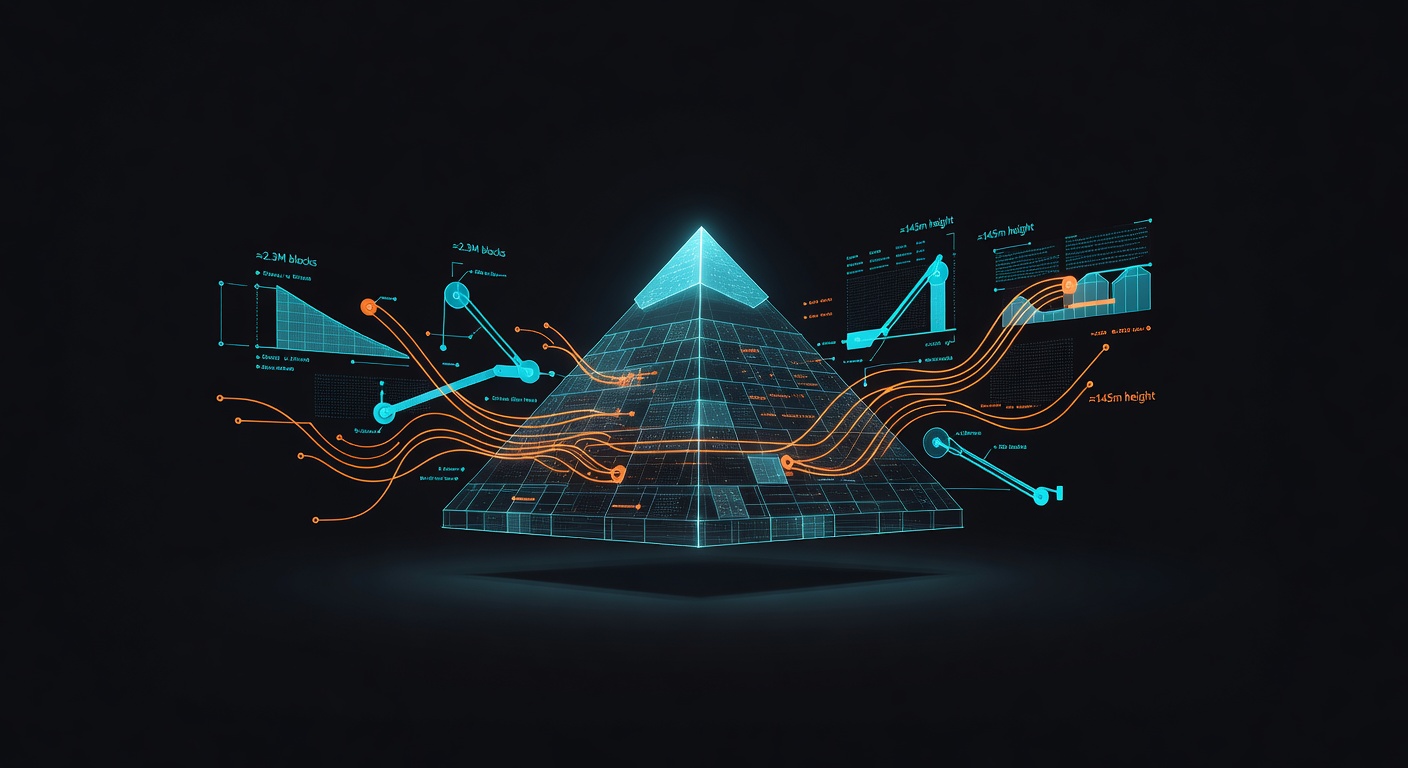
Every time I visit a museum or watch a documentary about the Great Pyramid, I'm struck by the same thought: how on earth did people do this thousands of years ago? We're talking about moving 2.3 million blocks of limestone and granite—each one weighing as much as a car—up a structure that reaches 481 feet into the sky. That's basically a 48-story office building made entirely of giant rocks.
For decades, archaeologists have debated the answer. Some theories were wild (yes, people seriously suggested aliens). But one popular idea stuck around: they probably used ramps. Seems logical, right? The problem? Nobody could ever prove it, and the math didn't quite add up.
When the Theory Looked Suspicious
Enter Vicente Luis Rosell Roig, a computer scientist who decided to actually test whether these ancient construction theories would've worked in real life. His conclusion? The standard ramp theories had major problems.
Imagine a single ramp spiraling up the side of the pyramid. Sounds good in theory. But here's the catch: if only one team could go up at a time pushing massive blocks, construction would crawl at a snail's pace. And if multiple teams tried simultaneously, they'd crash into each other on a narrow ramp. Plus, when the pyramid was finished, there'd be this giant ramp sticking off the side. But archaeologists have never found a trace of one. Not a single piece of evidence.
So where did it go?
The Brilliant "Hidden Ramp" Idea
This is where Rosell Roig had his lightbulb moment: what if the ramp was built inside the pyramid structure itself?
Think about it. Imagine a spiral ramp winding up through the interior of the pyramid as it's being constructed. Workers haul blocks up this internal ramp, placing stones as they go. Once they reach the top and complete the pyramid, they simply cover the ramp from top to bottom with more stone blocks. Poof—the ramp vanishes. Problem solved.
It's almost absurdly elegant. The evidence literally sealed itself away.
Let's Do the Math (the Computer Way)
But would this actually work? That's where the algorithm comes in. Rosell Roig created a computational model to figure out if an internal spiral ramp could realistically speed up construction without compromising the pyramid's structural integrity.
Here's what he needed to account for:
- The pyramid contains roughly 2.3 million blocks
- The whole thing was built in about 27 years
- That means ancient workers had to place approximately one block every three minutes
- The blocks weighed around 2.5 tons each
- Ancient Egyptians didn't have cranes, pulleys, or wheeled carts—just copper tools, sledges, ropes, and ingenuity
The algorithm tested different angles and spiral configurations to find the sweet spot. A ramp that's too steep? Workers can't haul heavy blocks up it. A ramp with too many spiral turns? It compromises the pyramid's integrity. Goldilocks had to find the "just right" solution.
What the Ancient Papyri Tell Us
Here's something cool: we're not just speculating. Ancient Egyptians actually left records. The Wadi al-Jarf Papyri documents the construction logistics from the perspective of a cargo manager named Merer. These papyri show that workers transported blocks during Nile floods—basically using the river as a delivery highway. Different teams had hieroglyphic nicknames (one team even had a lion symbol).
This wasn't random chaos. It was organized labor with multiple teams working simultaneously.
The Genius of the Spiral System
Rosell Roig's model suggests that with a properly angled spiral ramp (about 7-9 degrees, if you want to be specific), multiple teams could work at the same time without getting in each other's way. Team A pushes blocks up one section while Team B places blocks in another section. Team C hauls blocks from the harbor.
Wet sand on the ramp reduced friction, making it easier to drag loaded sledges. This wasn't primitive—it was smart engineering.
At the optimal angle, workers could maintain that impossibly tight schedule: one block placed every three minutes for nearly three decades straight.
Why This Actually Matters
I love this solution because it's not about aliens or lost technology or magic. It's about recognizing that ancient humans were clever problem-solvers who worked with their environment and constraints. They understood physics, logistics, and teamwork.
Rosell Roig's work shows something important: sometimes the answer to a mystery isn't hidden in some exotic location. It's hidden in plain sight—literally built into the solution itself.
The Great Pyramid still stands after 4,600 years, silently keeping its secrets. But thanks to computer science and logical thinking, we're getting closer to understanding how it whispered them into existence.
No aliens required.