
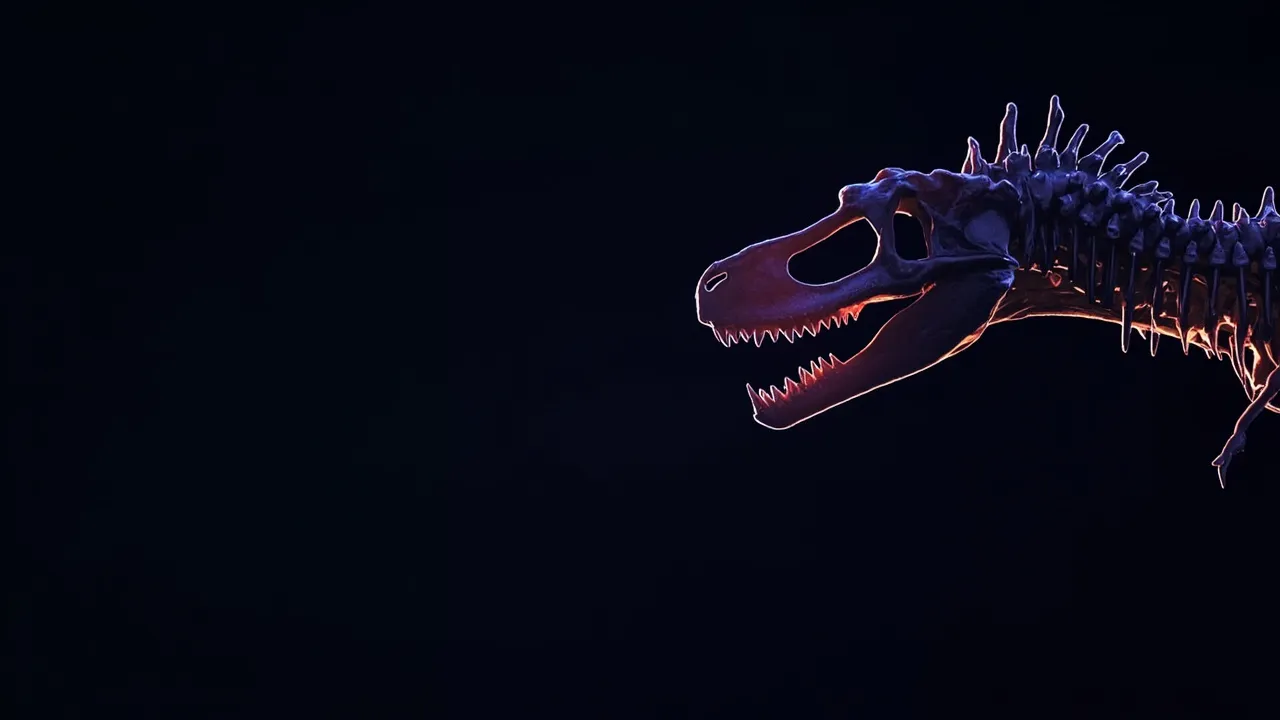
[markdown formatted content]
Okay, I have to admit — the title of this research paper made me laugh out loud. "Invictabellatrix amberina." Even if you can't pronounce it, you can probably guess it's Latin for something like "unconquerable warrior." And honestly? That's pretty accurate for what we're dealing with here.
Picture this: It's 120 million years ago, and you're somehow standing on what's now the Isle of Wight (yes, Britain — this little island has a deep dinosaur history). A three-meter-long predator with huge curved claws, possibly covered in feathers, is padding through the underbrush. It spots something that looks roughly human-sized.
The terrifying part? According to the researchers who studied this dinosaur, you would have been perfectly prey for this creature. Not so much for a T. rex, which weighed many tons and would have considered you too small to bother chasing. But Invictabellatrix? That thing would have chased you down without hesitation.
Yikes.
The Fossil That Nobody Noticed
Here's what really gets me about this story. The fossil in question — just a fragment of the back of a skull — was collected way back in 1924. It ended up at the Natural History Museum in London. For almost a hundred years, it just... sat there. Forgotten in a drawer.
Can you imagine that? This little skull fragment witnessed the rise and fall of civilizations, two world wars, the moon landing, the internet, and everything else in between. All while sitting in a museum, completely overlooked by science.
The researchers at University College London finally took a second look at it recently, using modern CT scanning technology to peer inside without damaging the fossil. And that's when they realized they were looking at something genuinely new to science.
What's So Special About Megaraptorans?
Invictabellatrix belongs to a group of dinosaurs called megaraptorans, and these guys are honestly kind of mysterious. They've been found in places like Australia, South America, and Asia, but until now? Nobody had found solid evidence of them in Europe.
What made these predators different from, say, a T. rex? Here's where it gets interesting. While tyrannosaurs relied heavily on their massive skulls and bone-crushing bite forces, megaraptorans were built differently. They had relatively narrow skulls, powerful arms, and those enormous curved claws that could have reached 10 to 20 centimeters long.
Think of them as the raptors' bigger, meaner cousins — except these guys weren't bird-sized. They were proper predators, and some eventually grew to rival tyrannosaurs in overall size.
The discovery of Invictabellatrix in Britain suggests that Europe served as a kind of evolutionary highway for these dinosaurs, allowing them to spread from Asia into what would eventually become the southern continents. The researchers describe it as the "first proof" that megaraptorans took this route rather than island-hopping further south.
Why This Matters
Beyond the obvious cool factor of "new dinosaur species discovered," this find helps paleontologists piece together one of the trickiest puzzles in dinosaur evolution: how different groups spread across the ancient world.
Megaraptorans are rare in the fossil record, which makes understanding their history genuinely difficult. Every new piece of the puzzle — especially one as complete as this skull fragment — helps scientists build a clearer picture of how life on Earth evolved and migrated over millions of years.
Dr. Cassius Morrison, who led the study, put it well: "It is a real mystery that this fossil was overlooked for so long."
And he's right. The Isle of Wight is absolutely packed with dinosaur fossils. Who knows what else is sitting in collections right now, waiting for someone to take a second look?
This is why science keeps advancing — not just from new discoveries in the field, but from researchers being curious enough to revisit what everyone else has forgotten.
Maybe next time you visit a museum, take a moment to wonder what stories are hiding in those drawers.