
When a Rock Makes You Stop and Stare
Picture this: You're hiking across a hillside in Morocco, probably enjoying the scenery, when suddenly a rock catches your eye. Not because it's pretty or rare, but because something about it just feels wrong. That's what happened to Rowan Martindale back in 2016, and honestly, I love this story because it reminds us that some of the best scientific breakthroughs come from paying attention to the little things that seem out of place.
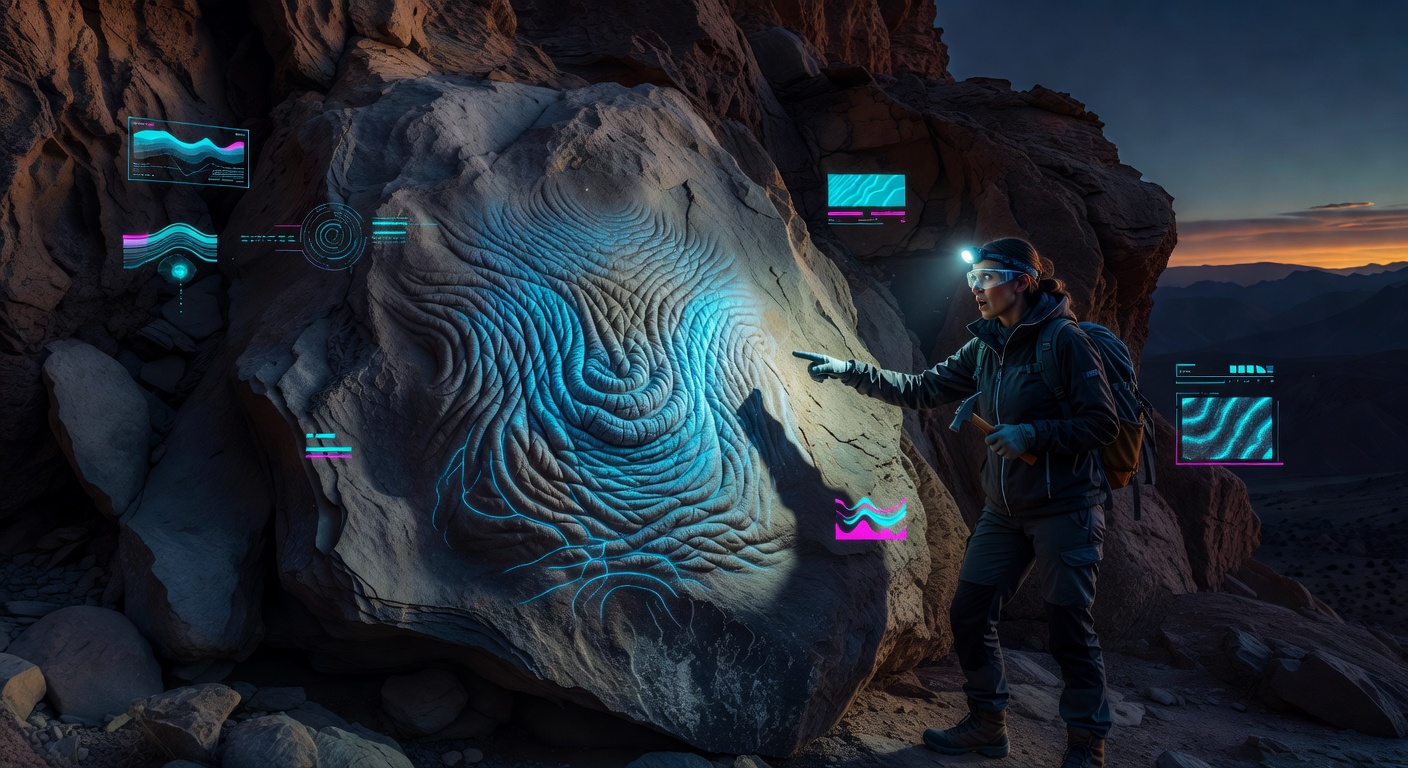
The rock was covered in wrinkles. Serious, prominent wrinkles—like you'd see on an elephant's hide. For most people, this would be a neat photo and nothing more. But Martindale is a geologist at the University of Texas at Austin, and those wrinkles immediately set off alarm bells in her brain.
Trust Your Weird Instincts
Here's the thing about expertise: it doesn't just make you smarter about your field—it gives you what scientists call a "search image." You start recognizing patterns that others completely miss. Martindale's search image was telling her that these wrinkles weren't supposed to be there.
In geology, rock textures are like a diary. They tell you what conditions were like millions of years ago—how the rocks formed, what was happening in the environment at the time, all of it. These particular wrinkles looked to Martindale exactly like fossilized microbial mats. You know, those slimy communities of microbes that grow on surfaces and leave behind distinctive patterns? Except these ones were from over 180 million years ago during the Early Jurassic period.
She had actually studied similar patterns before during grad school, so she recognized this texture immediately. But something didn't add up.
The Problem That Didn't Fit
Here's where it gets interesting: the rock layer containing these wrinkles came from deep ocean water—we're talking nearly 600 feet down, where sunlight basically doesn't exist. And according to everything scientists thought they knew, microbial mats with these kinds of wrinkle patterns should only show up in shallow, sunny waters.
The logic made sense at the time: in shallow water, microbes could use sunlight for energy, and they could hide from animals that might eat them. Deep ocean? That didn't fit the pattern. Scientists usually explained any wrinkles found in deep rocks as physical features—basically just sediment getting pushed around by underwater landslides, creating ridges and grooves.
But Martindale wasn't buying it. Those wrinkles had all the hallmarks of actual microbial activity. So she decided to dig deeper (literally and figuratively).
A Totally Different Story
What Martindale and her colleagues discovered, published in the journal Geology, was that both explanations could be right—but not in the way people thought. Yes, there was an underwater landslide. But it didn't directly create the wrinkles. Instead, it did something even more interesting: it delivered nutrients to the seafloor.
Those nutrients fed communities of microbes that didn't need sunlight at all. Instead, they survived using a process called chemosynthesis—basically, they eat chemicals instead of photons. Think of it like the difference between a solar panel and a battery. The battery doesn't care about sunlight; it just needs the right chemicals to power up.
The landslide also likely released toxic sulfur compounds into the water, which would have discouraged other marine life from moving in and disrupting the microbial communities. So you'd get this thriving ecosystem of microbes in the deep, dark ocean, creating those characteristic wrinkled patterns as they grew.
This Actually Exists Today
Here's the wild part: we see this exact thing happening in modern oceans right now. Those deep-sea ecosystems fed by chemicals instead of sunlight? They're real. One of the coolest examples is what scientists call a "whale fall"—basically, when a whale dies and sinks to the bottom of the ocean, it becomes a temporary but incredibly rich ecosystem.
The whale carcass releases all kinds of chemical nutrients. Microbes swarm to it and create thriving communities in the pitch-black depths. It's like an underwater oasis in the desert, and it shows us that life in the deep ocean is far weirder and more resilient than most people realize.
Jake Bailey, a microbiologist at the University of Minnesota who wasn't involved in this research, pointed out how important this is. "In the present," he said, "some of the largest microbial ecosystems on our planet are found in the dark ocean." The implication? If these chemosynthetic communities were common in ancient oceans, scientists may have been overlooking their fossils for decades, just because we were looking for the wrong things.
We Might Have to Reread the Rock Record
This discovery could be genuinely huge. If chemosynthetic microbial mats were more widespread in ancient oceans than we realized, then there are probably way more fossils of them out there—we've just been misidentifying them. Martindale explained it pretty clearly: "The terminology is pretty lax. Wrinkly can mean lots of things, so there's a lack of diagnostic language."
In other words, we don't even have good words to describe the difference between "wrinkles made by physics" and "wrinkles made by life." That's the kind of thing that can hide major discoveries in plain sight.
Sometimes the Best Science Starts With a Hunch
What I love about this story is that Martindale wasn't out looking for chemosynthetic microbial mats in the deep ocean. That wasn't her hypothesis. She studies ancient coral reefs and extinction events—totally different stuff. But she was in the right place, with the right training to recognize something unusual, and curious enough to follow the thread.
"It's really cool to have gone in this direction that I totally wasn't expecting," she said. And honestly? That's how a lot of the best science happens. You're not always looking for the answer; sometimes you just have to notice when something seems wrong and care enough to investigate.
So the next time you notice something that doesn't quite fit, something that makes you go "wait, that shouldn't be like that"—maybe trust that instinct. You might be looking at a revolution in your field, wrinkled rock and all.