
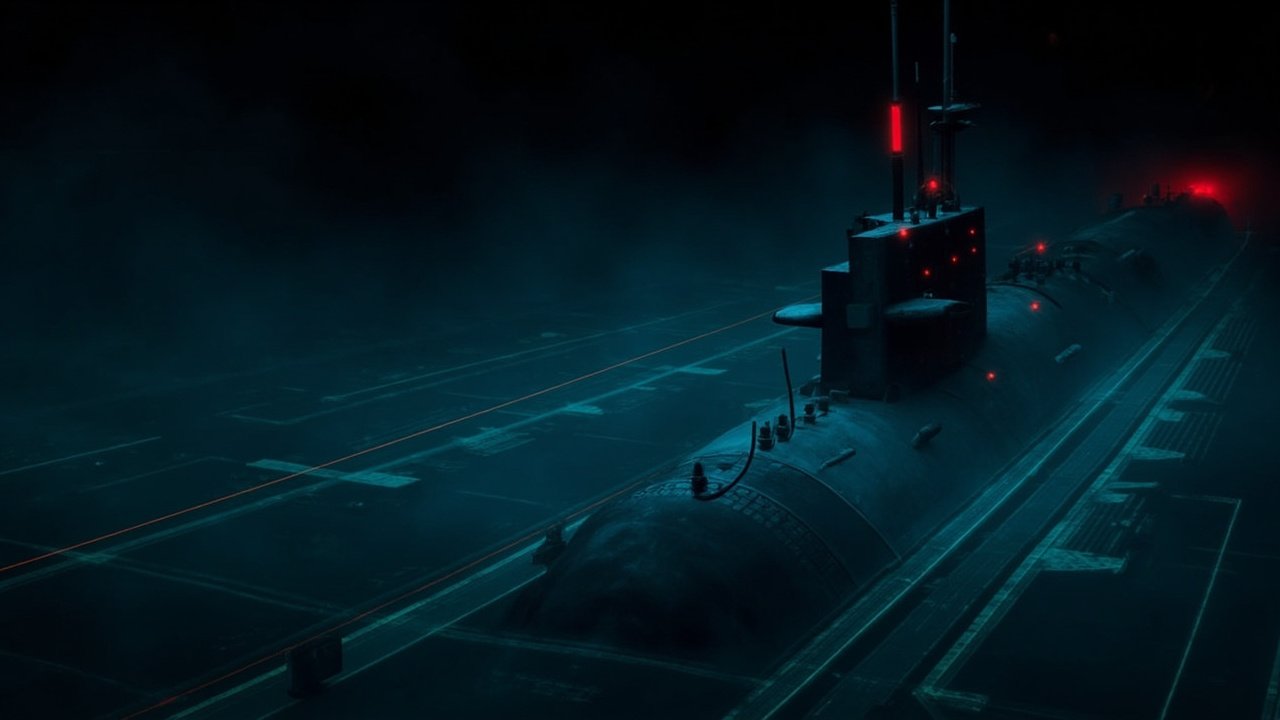
When Science Makes History (and Then Makes a Grave)
There's something deeply unsettling about finding a time capsule that's also a tomb. The H.L. Hunley represents exactly that kind of historical artifact—groundbreaking, innovative, and absolutely terrifying when you really think about what happened inside it.
The Sub That Changed Everything
Before we talk about the mystery, let's set the scene. It's the American Civil War, and warfare is about to get weird in ways nobody expected. The H.L. Hunley was humanity's first submarine to actually accomplish something—it successfully attacked and sank an enemy vessel. That's legitimately badass for a contraption that was basically a giant metal tube with hand-cranked propellers.
But here's where the story takes a turn from "cool historical achievement" to "wait, seriously?"
The Discovery That Raised More Questions Than Answers
Fast-forward to 1995. The Navy finally locates the wreck and brings it up from the ocean floor. They're probably expecting to find the crew scattered around, maybe evidence of a desperate escape attempt or a struggle. That's what makes sense, right?
Nope.
Instead, they found something infinitely creepier: every single crew member was still sitting in their position. At their stations. Like they'd been frozen in time while doing their jobs. Nobody had moved. There were no signs of panic, no desperate attempts to escape, no scramble for the hatches.
It's the kind of discovery that makes you go, "Um, okay, so what the actual heck happened here?"
The Physics of a Really Bad Day
Here's where the science gets dark. The Hunley had just successfully attached an explosive charge to the USS Housatonic (the enemy ship). The blast was powerful—powerful enough to sink a real warship. But here's the problem: the submarine wasn't very far away when it detonated.
When an explosion happens underwater, physics takes over in ways that are absolutely brutal. The shockwave doesn't just travel through water—it compresses the water itself. In a confined space like a submarine, that shockwave becomes a weapon unto itself. We're talking about an instantaneous, catastrophic pressure wave moving through a small metal tube where people are packed together.
The theory that makes the most sense? Everyone inside was killed instantly. Not by the explosion itself, but by the physics of what happens when an underwater shockwave encounters a metal hull with a bunch of human beings inside it.
Why They Stayed at Their Posts
This is the genuinely eerie part. If death came that quickly and completely, there would be no time to react. No time to move, no time to panic, no time to do anything except just... stop. The crew was doing their job one moment, and the next moment they weren't doing anything at all.
They probably didn't even know what hit them.
The Cost of Innovation
The H.L. Hunley represents this fascinating and tragic intersection of history, innovation, and human courage. These guys volunteered to get into a experimental death trap because they believed in the cause. They were testing something that had never been done before, which meant they had no idea what could go wrong.
And then everything went wrong in the most final way possible.
What This Tells Us
Honestly, this story sticks with me because it's a stark reminder that progress has always come with casualties. The people who invent new things, who push boundaries, who do things nobody's done before—they're the ones who sometimes pay the price for that innovation.
The Hunley crew didn't survive long enough to see how important their achievement would become. They didn't live to tell anyone how the attack went down. They just... stopped. All of them, together, in the dark, under the water.
It's the kind of historical mystery that makes you appreciate how far we've come, while also acknowledging how much human sacrifice happened along the way. And sometimes, when we recover artifacts from the past, what we find is less about glory and more about the real, terrible cost of change.
Pretty heavy stuff for a submarine that's been sitting on the bottom of the ocean for over a century, huh?