
When Sacred Sites Layer Over Each Other: The Mystery of Emesa's Lost Temple
Imagine walking into a building and discovering that underneath your feet lies not one, but multiple layers of religious history. That's exactly what's happening in the Syrian city of Homs (ancient Emesa), where a seemingly ordinary restoration project just uncovered something extraordinary: a Greek inscription that could rewrite our understanding of one of Rome's strangest emperors and the temples devoted to him.
The Discovery That Started It All
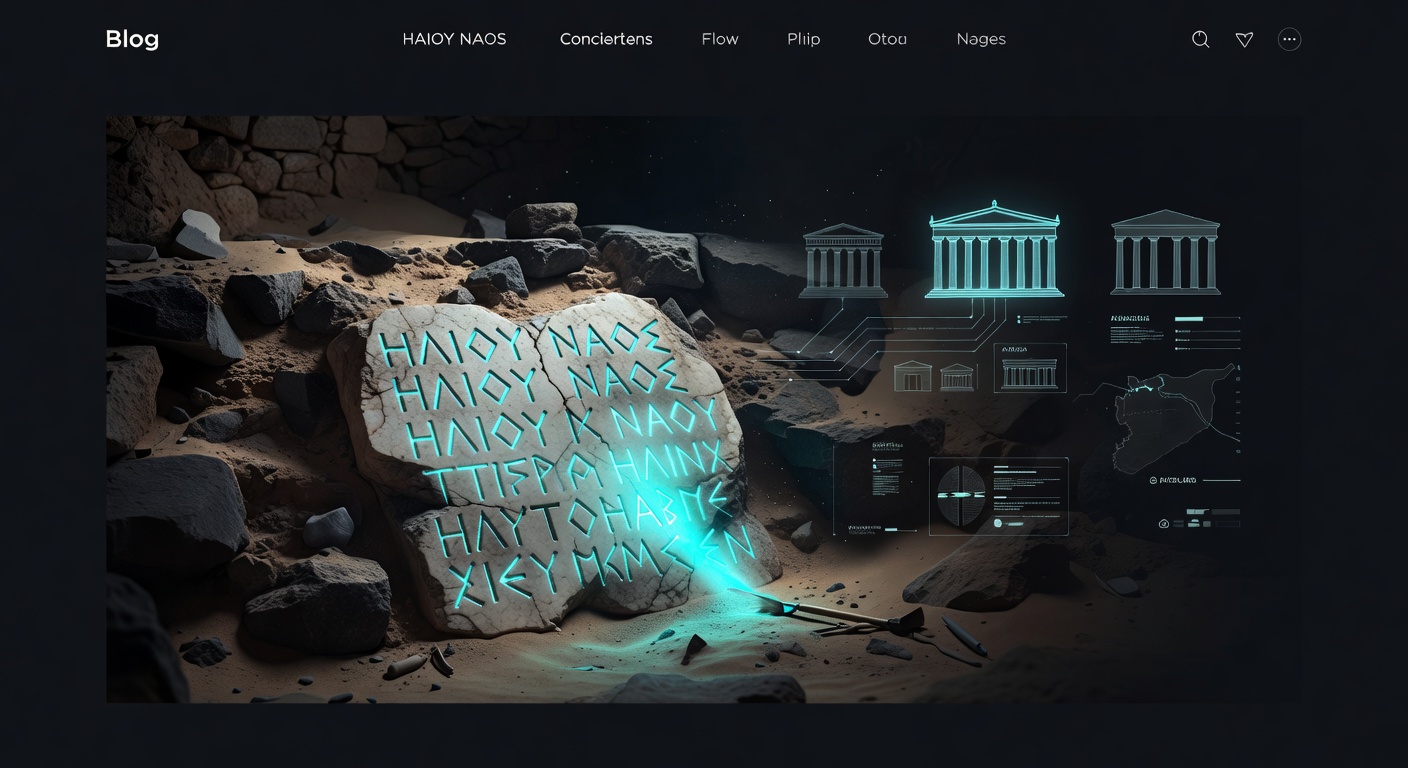
Picture this: workers are doing routine maintenance inside the Great Mosque of Homs, with its distinctive oval shape and deep cultural roots, when they spot something carved into the base of a stone column. It's not recent—far from it. This Greek inscription, etched into granite, has been buried beneath the mosque floor for centuries, just waiting for someone to find it.
The funny thing is, this inscription was actually unearthed back in 2016, but Syria's ongoing conflicts meant nobody got around to properly studying it until now. Talk about a delayed discovery!
A Name That Sounds Like Fiction
Let me introduce you to Elagabalus, probably one of the wildest figures in Roman history. This guy started his career as a high priest of a solar temple and somehow managed to climb all the way to becoming emperor in the 3rd century AD. Historians have long debated whether his temple was hidden right under the Great Mosque, but they've never had solid proof.
Until now, maybe.
Layers Upon Layers: A Religious Archaeology Puzzle
Here's what makes this so fascinating: the Great Mosque wasn't built on empty land. Medieval records suggest it was constructed over an earlier Christian church dedicated to St. John the Baptist. And that church? It might have been built directly on top of an even older pagan temple.
It's like a spiritual game of Jenga, with each generation of worshippers building their sacred space on the foundation of their predecessors' beliefs.
Dr. Maamoun Saleh Abdulkarim, an archaeology professor studying this inscription, sees it as potentially the missing puzzle piece. "This inscription could help us understand whether the temple of Elagabalus was actually located beneath the current mosque, or whether it was somewhere else entirely," he explains.
What the Stone Actually Says
The inscription itself is pretty impressive from a design perspective. It's carved onto a stone block measuring about 1 meter by 1 meter, with the actual text taking up roughly 75 centimeters of space. The lettering is formal and symmetrical, arranged in neat horizontal lines—the kind of thing you'd use for important dedications or commemorative messages.
According to historians who've analyzed the text, it describes a warrior ruler using absolutely wild comparisons. We're talking about descriptions involving wind, storms, and leopards—basically, nature's most powerful and fierce forces. The inscription uses military language, talking about defeating enemies and imposing tributes, all written in Greek with some grammatical quirks that were typical of Roman-era Syria, where Aramaic was the everyday language.
Why This Matters More Than You'd Think
This discovery isn't just about solving a historical trivia question. It's actually about understanding how different religions and cultures have coexisted and transformed in the same places over time.
The research shows Emesa went through three major religious transformations: first as a pagan city worshipping local gods like Elagabalus, then converting to Christianity in the 4th century AD, and finally becoming Islamic. But here's the thing—these weren't abrupt changes. Instead, it looks like each religion adapted what came before it, layering new beliefs over old foundations.
"If this inscription really does connect to solar cult symbolism, it suggests that religious continuity happened through architectural layering and reinterpretation," Dr. Abdulkarim notes. Rather than completely destroying what came before, later religions seem to have incorporated earlier sacred sites into their own worship practices.
The Bigger Picture
What I find genuinely cool about this research is how it challenges our assumptions about how religions replace each other. We often think of religious change as sudden and absolute—one belief system completely erases another. But the evidence from Emesa suggests something more nuanced and, honestly, more human: people would adapt sacred spaces rather than abandoning them entirely.
The inscription might be small and worn, hidden for centuries under a mosque floor, but it could fundamentally shift how we understand the religious history of the entire Middle East.
That's the kind of thing that gets archaeologists excited—not flashy treasures or dramatic discoveries, but small pieces of evidence that help us see the past with greater clarity.
Source: https://www.sciencedaily.com/releases/2026/04/260401071947.htm