
The Original Mystery
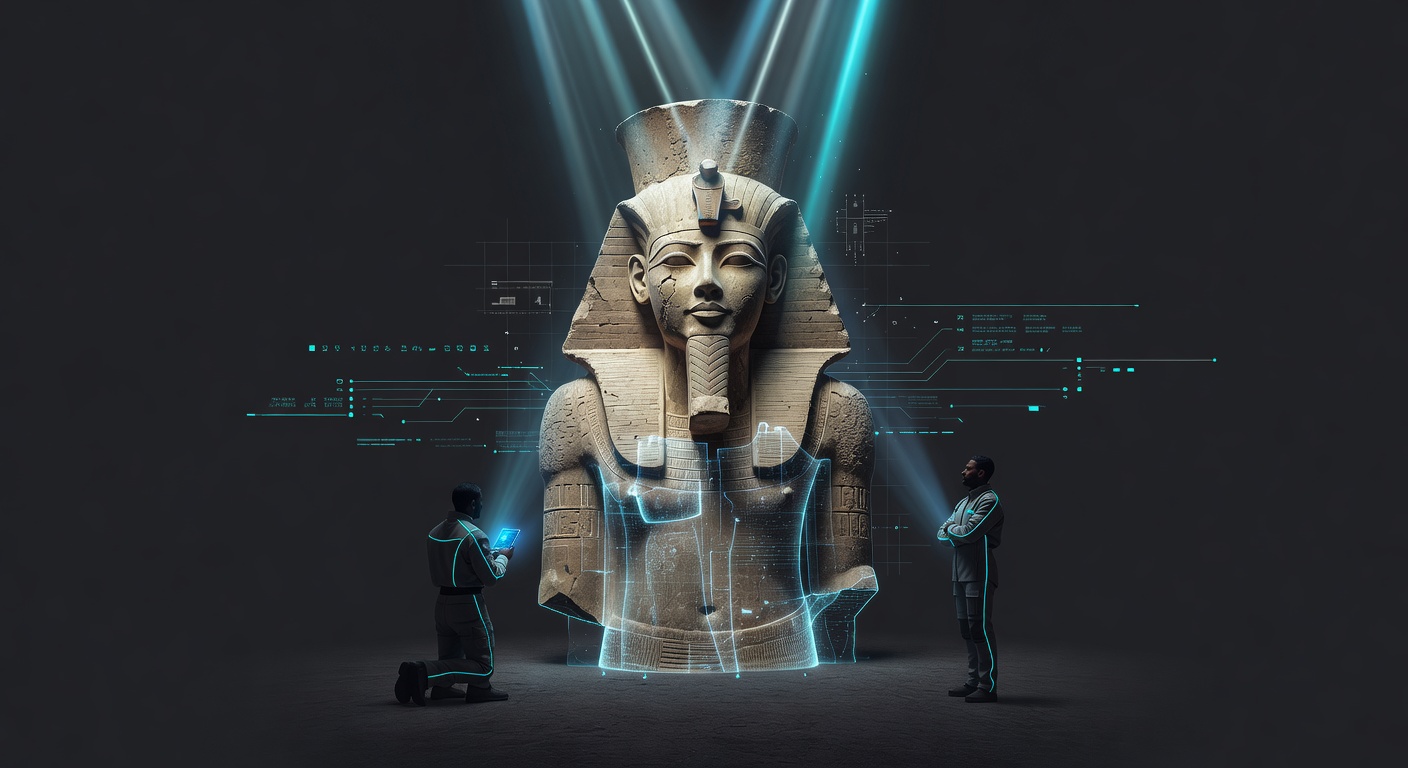
Picture this: it's 1928, and a German archaeologist named Günther Roeder is excavating near the ancient city of Hermopolis (modern-day El Ashmunein in Egypt). He unearths something extraordinary—the lower half of a colossal statue depicting Ramesses II, one of Egypt's most legendary pharaohs. We're talking about a statue that originally stood 23 feet tall. That's taller than a two-story building.
But here's the kicker—he only found the bottom half. The rest? Gone. Lost to time, sand, and the desert. For nearly a century, nobody knew what happened to the top portion.
Fast Forward to 2024
Then comes March 2024, and a team of Egyptian archaeologists working alongside American experts make an announcement that sends shivers through the archaeology world: they found it. After 96 years of wondering, the missing upper half finally resurfaced.
I love that this discovery happened almost accidentally. The team wasn't even specifically searching for the statue's top half—they just had a hunch that it might be buried nearby. And somehow, they were right.
The Real Challenge: Preservation
Here's where things get genuinely nerve-wracking. Finding an ancient artifact is one thing. But keeping it in one piece? That's a whole different challenge.
Hermopolis sits dangerously close to the Nile River, and ever since the Aswan Low Dam was built, the water table in the region has been a major headache for archaeologists. Sandstone buried in such conditions often turns into basically... sand. Or degraded mush. When the team first discovered the upper half lying face-down in January 2024, there was absolutely no guarantee it would survive intact.
"Sometimes sandstone is uncovered that is basically just sand," explains Yvona Trnka-Amrhein, one of the project leads. I find this so humbling—imagine waiting 96 years only to discover the statue crumbled to dust.
But fortune smiled on them. The stone was remarkably well-preserved.
The Bonus Discovery
Here's where it gets even cooler. When they carefully excavated the upper portion—which measured about 12.5 feet tall and depicted Ramesses II wearing a royal cobra headdress—they found something unexpected: traces of blue and yellow pigment still clinging to the surface.
This might sound like a small detail, but it's actually huge for researchers. These pigment remnants could help unlock secrets about how the statue was originally created, what it looked like when it was new, and the context of its construction. Ancient Egypt's color palette is something we don't fully understand yet, so discovering original paint is like finding a key to the past.
Putting It All Together (Literally)
The exciting part? The team isn't just going to leave these two halves separated after all this time. Egyptian co-leader Basem Gehad has already submitted a formal proposal to reunite the upper and lower portions. And Trnka-Amrhein is confident it'll be approved.
Imagine that moment when they finally bring the two pieces together after nearly a century of separation. A 23-foot-tall statue of one of Egypt's greatest pharaohs, whole again, telling its story to the modern world.
Why This Matters
This discovery reminds me why archaeology is so thrilling. It's not just about finding old stuff—it's about solving puzzles, preserving history against impossible odds, and connecting us to civilizations that thrived thousands of years ago. The fact that this statue survived the elements, the flooding, and 96 years of obscurity feels almost miraculous.
Plus, there's something deeply satisfying about seeing a mystery finally resolved. Sometimes all it takes is dedication, the right team, and a lucky hunch.