
When Rhinos Ruled (Almost) Everywhere
Here's a wild thought: there was a time when you could theoretically find rhinos on multiple continents. Not just Africa and Asia, where we see them struggling to survive today, but across Europe, North America, and apparently even the Arctic. We're talking about a time when the planet looked completely different, and these surprisingly adaptable animals were thriving in environments we'd never associate with them.
But the fossil record has been frustratingly incomplete. Scientists have documented around 50 extinct rhino species, yet there were always gaps—missing puzzle pieces that didn't quite fit into the evolutionary story. That is, until someone looked more carefully at rocks from the Canadian Arctic.
Meet the Smallest Rhino You've Never Heard Of
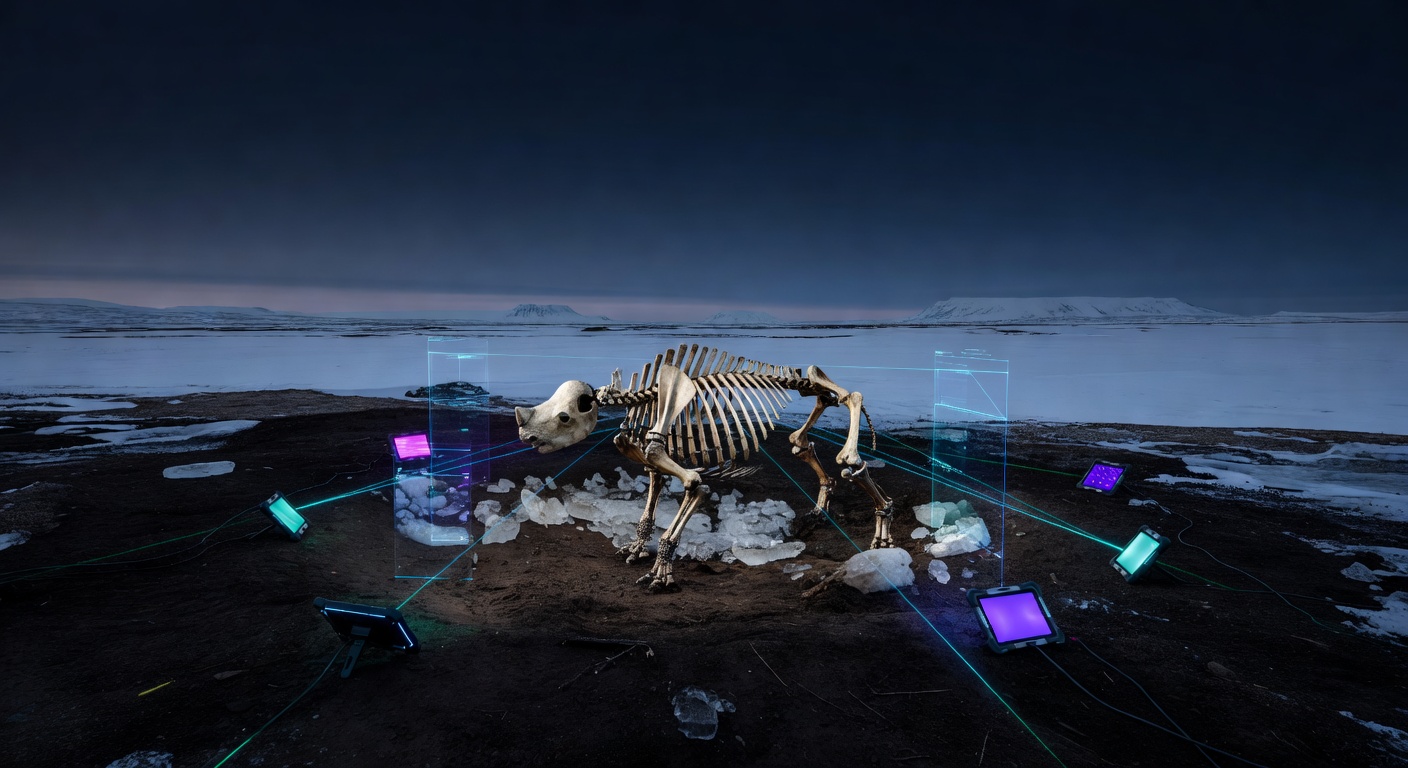
In 2024, researchers from the Canadian Museum of Nature announced the discovery of Epiatheracerium itjilik—a rhino so different from what we typically imagine that it barely looks like a rhino at all. This wasn't some massive, horned beast. It was actually pretty modest in size, roughly comparable to a modern Indian rhino but without any horn. Think of it as the diminutive cousin of the iconic rhinos we picture in our heads.
What makes this finding even cooler is where they found it: Haughton Crater on Devon Island in Nunavut. That's really far north. The fossil came from ancient lakebed sediments, which means this little rhino was hanging out in Arctic regions roughly 23 million years ago during the Early Miocene period. The specimen was so well-preserved that scientists recovered about 75% of the skeleton—an absolutely incredible amount of material for a fossil this old.
The researchers named it "itjilik," which means "frosty" in Inuktitut, a beautiful nod to the species' Arctic home. Even better, they partnered with Jarloo Kiguktak, an Inuit Elder and former mayor of Grise Fiord, to honor the location and its indigenous significance.
The Ancient Highway Nobody Was Supposed to Know About
Here's where this gets genuinely interesting from a geological perspective. The discovery forced scientists to completely re-examine how rhinos spread across the planet. A team led by Dr. Danielle Fraser analyzed 57 different rhinocerotid species—most of them extinct—and mapped where they lived across five continental regions.
What they discovered suggests something remarkable: rhinos might have traveled between North America and Europe via Greenland using what's called the North Atlantic Land Bridge. This wasn't new thinking, exactly, but the timeline needed serious revision.
Previous research suggested this land bridge became impassable around 56 million years ago. But the Arctic rhino lived 23 million years ago, which means these animals continued hopping between continents for millions of years longer than anyone expected. It's like discovering that a highway everyone thought was closed down actually stayed open for way longer than the historical records indicated.
Ancient Proteins Are Changing the Game
Here's the truly cutting-edge part: in 2025, a completely separate study published in Nature revealed something almost impossible to believe. Researchers managed to extract proteins from the Arctic rhino's tooth enamel. Not DNA—proteins. And this is significant because proteins can survive far longer than DNA in fossil records, potentially opening windows into evolutionary history stretching back millions of additional years.
This discovery, led by researcher Ryan Sinclair Paterson at the University of Copenhagen, essentially extends our ability to study ancient biomolecules by millions of years. It's like upgrading your archaeological toolkit from looking at blurry photographs to suddenly having high-definition video.
Why This Matters More Than You'd Think
You might be wondering: okay, so there was a small, hornless rhino in the Arctic 23 million years ago. Why should I care?
Because this discovery completely changes how we understand extinction, migration, and adaptation. Rhinos went from being found on nearly every continent (except South America and Antarctica) to being limited to just five species in Africa and Asia today. Understanding how they spread across the ancient world and why they failed to survive the transitions happening over millions of years tells us something profound about evolution itself.
It also reminds us that we're constantly revising our understanding of Earth's history. Every fossil we find has the potential to rewrite the textbooks we wrote just years before. The Arctic rhino was waiting patiently in the frozen ground for millions of years, and it took until 2024 for us to finally recognize it was there.
The next time you think about how well we understand our planet's history, remember: we might be standing on top of dozens more discoveries we haven't even found yet.