
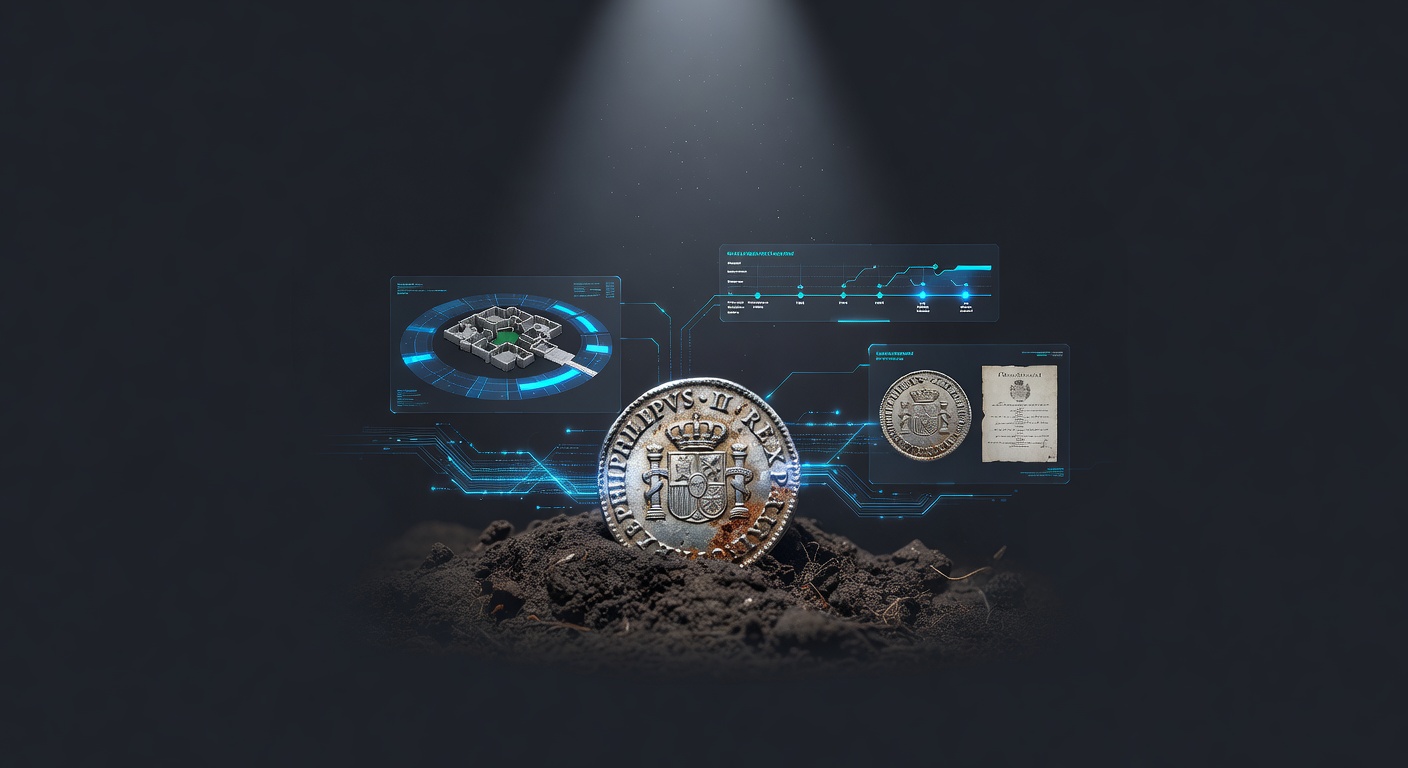
When a Coin Becomes a Time Machine
Imagine burying something important, writing down exactly where you put it, and then 440 years later, archaeologists dig it up from that exact spot. That's not fantasy—it actually just happened in Chile, and it's one of those rare archaeological moments that gives us goosebumps.
In March of 1584, a Spanish navigator named Pedro Sarmiento de Gamboa founded a colony called Rey Don Felipe at the southern tip of South America. To mark this momentous occasion, he placed a silver coin in the foundation of the colony's church and documented the whole thing in writing. Then, life happened, the colony fell apart, and that coin was forgotten by nearly everyone—until very recently.
Why This Colony Was Basically Doomed From the Start
Here's the thing about colonizing "the ends of the Earth" (which is basically what the southern tip of Chile was called back then): it's really difficult. The Spanish and English were both scrambling to control strategic positions in South America, and this colony was supposed to be Spain's answer to securing the Strait of Magellan.
But here's what nobody told the 350 settlers: the conditions were absolutely brutal. Within just three years, most of them were dead. When English navigator Thomas Cavendish sailed through a few years later and saw what remained, he renamed the place "Puerto del Hambre"—which translates to "Port of Famine." If that doesn't paint a picture of desperation, I'm not sure what does.
The settlement basically vanished from living memory. For centuries, people only knew about it from old documents and historical accounts. Nobody even knew exactly where it was.
High-Tech Archaeology Meets Old Documents
Fast forward to the present day. A team of archaeologists decided to see if they could actually find this place using modern technology. They brought in GPS systems with incredible precision and metal detectors that could sense buried artifacts from beneath the earth.
And you know what? It worked. They found the colony, and more importantly, they found that coin—still sitting right where Sarmiento said he'd left it, on a stone inside the church he'd built.
Why One Coin Matters So Much
This isn't just a cool treasure hunt moment. That silver coin, called a "real de a ocho," is actually a pretty big deal. It was minted in Potosí (in what's now Bolivia) and features a Jerusalem cross and the coat of arms of King Philip II. These coins were genuinely international currency—they circulated in Europe, the Americas, and Asia. For its time, this was basically the equivalent of finding a piece of Bitcoin hardware on the beach.
But more importantly for historians, finding this coin where the old documents said it would be proves something crucial: the written records from 1584 were accurate. That might sound obvious, but it's huge for archaeology. When you can match historical documentation with physical evidence, suddenly all those other descriptions in those old documents become more trustworthy.
Unlocking an Entire Lost World
Because of this coin, researchers can now use Sarmiento's writings as a reliable roadmap. He described other structures in the colony, and sure enough, some of them match a surviving 16th-century map of the settlement. Now archaeologists know where to look for houses, storage areas, and other buildings.
Soledad Gonzalez Diaz, the lead historian on the project, explained it perfectly: this discovery creates "a rare and powerful point of convergence between written sources and archaeological evidence." In other words, they've got both the story and the proof.
What This Tells Us
There's something genuinely moving about archaeology like this. A man placed a coin in a foundation in 1584, wrote down what he did, and then died without knowing what would happen to his colony. Nearly half a millennium later, someone dug it up exactly where he said it would be.
It reminds us that history isn't just something that happens to other people in dusty textbooks. It's real. It's tangible. And sometimes, a single silver coin can unlock the secrets of an entire world that vanished centuries ago.