
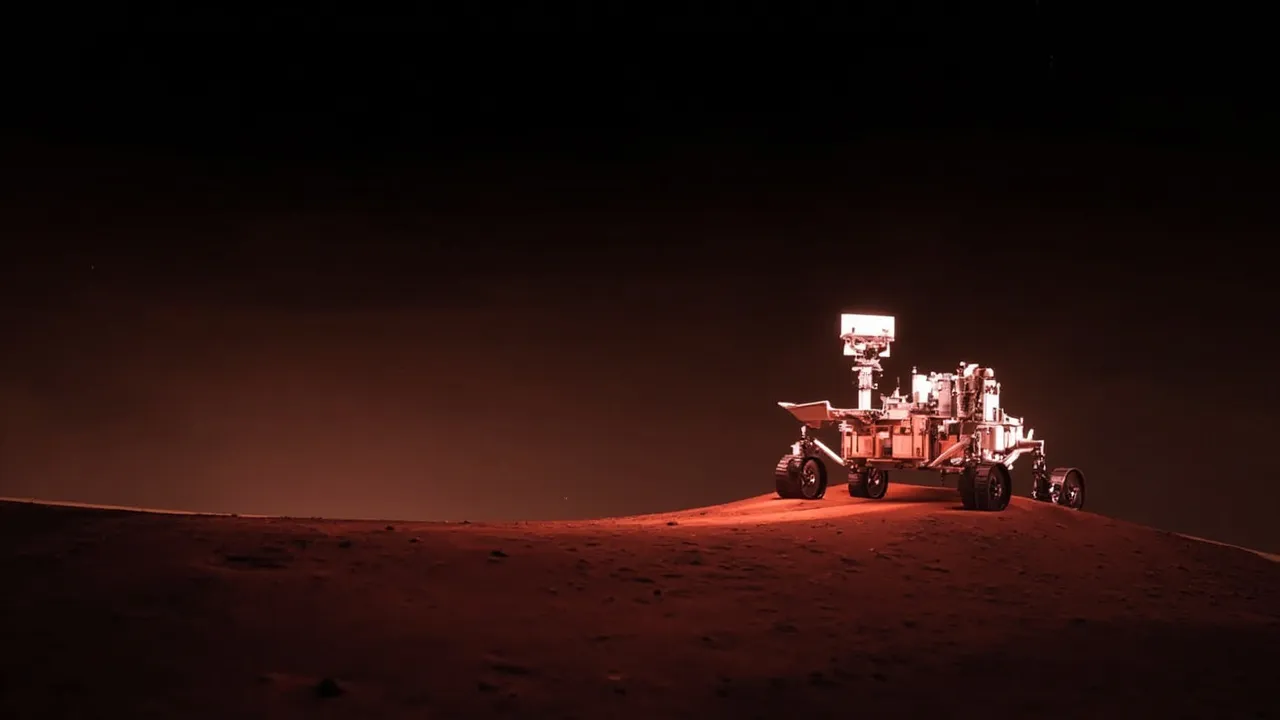
A Rover That's Outrunning Expectations
Okay, I have to admit—I didn't expect to get excited about a robot's running stats, but here we are. NASA's Perseverance rover has officially crossed the 26.2-mile mark on Mars. That's a full marathon, people. And no, it didn't train for months or complain about chafing. It just... drove.
On June 13, 2026, the Mars Reconnaissance Orbiter caught an incredible image of Perseverance looking like an absolute speck of dust against the vast Martian landscape. You can barely see it—just a tiny greenish point in a sea of rust and ochre. But that little dot has logged serious miles.
Five Years vs. Eleven Years
Here's what really gets me about this story. Perseverance covered its marathon distance in just five years and four months. That works out to the 1,890th Martian day, or "sol," of its mission.
Now, consider this: NASA's previous record holder, the Opportunity rover, needed eleven years and two months to travel that same distance. Eleven years! That's basically an entire presidency plus a little extra. Perseverance managed it in roughly half the time.
This isn't just about speed, though. It's about what the rover has been doing while covering all that ground—collecting samples, searching for signs of ancient microbial life, and generally being an overachiever on another planet.
That Incredible Satellite Selfie
The image that captured this moment? It came from the HiRISE camera aboard the Mars Reconnaissance Orbiter. This thing is basically the Hubble Telescope of Mars, and it caught Perseverance trundling along in a region scientists have nicknamed "Arbot," located west of Jezero Crater.
You can actually see the rover's tire tracks stretching behind it in the image. It makes you realize just how far this little machine has traveled, leaving a trail across an alien world. Pretty humbling when you think about it.
The Team Back Home
Of course, none of this happens without some seriously dedicated folks back on Earth. NASA's Jet Propulsion Laboratory manages operations from Southern California, while Lockheed Martin built and continues supporting the orbiter that took that stunning photo. The HiRISE camera itself was built by BAE Systems and is operated out of the University of Arizona.
Thousands of engineers, scientists, and support staff have poured their expertise into making these missions happen. They're the real marathon runners here—just running the race from their desks instead of the Martian surface.
Why This Matters
I know what you might be thinking: "Cool, a robot drove somewhere. Why should I care?"
Here's why: Every mile Perseverance covers teaches us more about whether life could have existed on Mars—and whether humans might one day walk there ourselves. Each track in that Martian dust represents data, discoveries, and one step closer to understanding our place in the solar system.
Plus, let's be honest—it's just genuinely awesome that we've got a rover out there casually logging distances that would make most of us proud. Perseverance doesn't complain about gas prices, doesn't need rest stops, and definitely doesn't get carsick on bumpy terrain.
Here's to the little rover that could. May it keep on rolling.