
The Plot Twist Nobody Saw Coming
Remember when Ozempic and Wegovy became household names? Everyone was talking about these weight-loss wonder drugs, and honestly, they do some impressive things. But here's the thing: they could be even better. Scientists at the University of Utah just discovered that a tiny enzyme might be the missing ingredient that could make these medications work harder and stay in your system longer.
This isn't some far-off theoretical stuff either. It's practical, testable science that could hit the real world in the not-too-distant future.
What's This Enzyme Actually Doing?
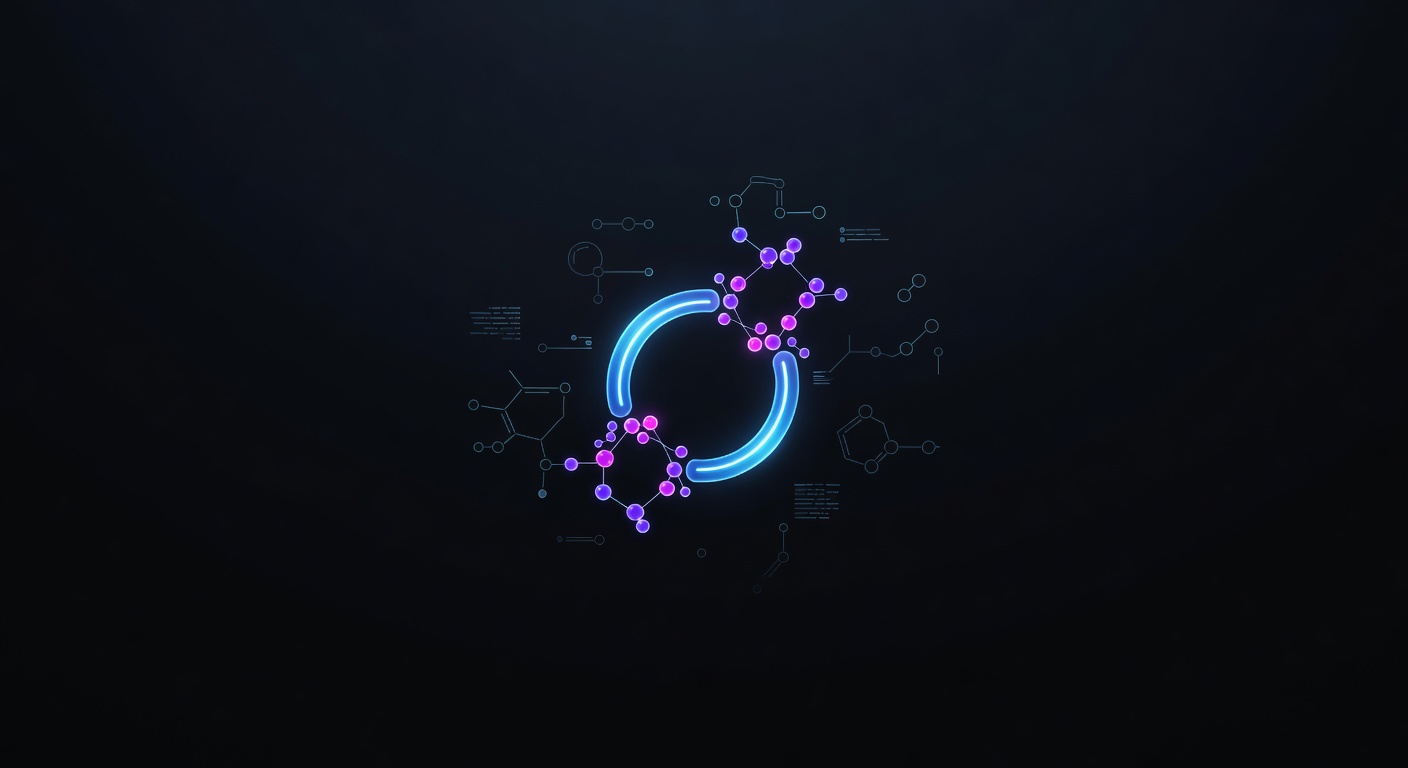
So there's this enzyme called PapB (I know, not the catchiest name), and it does something pretty wild: it takes peptide drugs — those protein-like molecules that do the heavy lifting in medicines like Ozempic — and reshapes them into tight rings.
Think of it like this. Imagine a necklace with the clasp undone. PapB is basically closing that clasp, creating a loop. This ring-shaped structure is actually way better at hanging around in your body and doing its job than the open-ended version.
Why Rings Are Better Than Lines
Here's where it gets interesting. Open-chain peptides (the straight-line versions) have a real problem: they're basically sitting ducks in your body. Your natural enzymes called proteases are constantly looking for these molecules, breaking them down into pieces, and recycling them. It's good for your body's overall health, but terrible for drugs trying to do their job.
When you turn a peptide into a ring? You're essentially creating a disguise. The ring shape is more compact, more stable, and — here's the kicker — harder for your body's cleanup crew to recognize and destroy.
This means the drug can stick around longer, giving it more time to work its magic. Instead of a medication that's effective for minutes, you could have one that lasts hours or longer. That's huge for treatment effectiveness.
The Traditional Way Was a Total Mess
Up until now, if scientists wanted to create these ring-shaped peptides, they had to use complicated, expensive, and finicky chemical processes. We're talking about lab procedures that required special conditions, extra steps, and a lot of trial and error.
The beauty of PapB? It's basically nature's way of doing this job cleanly and efficiently. The enzyme does the work of multiple chemical steps in one elegant move, and it creates a precise, reliable result. It's like comparing a hand-written essay to a perfectly typed one — both get the message across, but one is just cleaner.
A Surprise Discovery: The Enzyme Is More Flexible Than Expected
One of the coolest parts of this research? The scientists were genuinely surprised by how adaptable PapB turned out to be.
Jake Pedigo, the lead researcher on the study, explained that the enzyme didn't need all the usual "helper sequences" that other enzyme-based methods typically require. It just... worked. And it worked even when they threw unusual building blocks at it — modifications that modern drugs often use.
That's the kind of flexibility that gets researchers excited. It means this isn't some ultra-specialized tool that only works in one specific situation. It's more like a Swiss Army knife — useful for various challenges.
Real-World Testing Proves the Concept
The team didn't just theorize. They actually tested PapB on multiple GLP-1-like peptides (the same class of drugs as Ozempic), and in every case, the enzyme successfully converted the linear molecules into ring shapes.
Three different peptides. Three successes. That's the kind of consistency that suggests this could actually make it into real medications.
The Bigger Picture: Faster Drug Development
Here's something that might get overlooked: this technique could speed up drug development itself. Because you can do this ring-forming process late in development (even after most of the drug is already created), it opens new doors for modifying existing, proven medications.
In other words, scientists might be able to take drugs that already work and make them better without starting completely from scratch. That's a game-changer for how quickly new treatments can reach patients.
What This Means for You (Eventually)
If this technology makes it into clinical use, the practical benefits could be pretty significant. Better-lasting medications mean fewer injections, more consistent treatment, and potentially fewer side effects because you're not having to adjust dosing as frequently.
For people managing diabetes or obesity, that translates to simpler, more manageable treatment routines.
The Reality Check
Of course, there's a gap between "promising lab discovery" and "available at your pharmacy." This research is exciting, but it's still early days. The company founded by the researchers (Sethera Therapeutics) will need to move this through testing, regulatory approval, and manufacturing scale-up.
But here's the encouraging part: these aren't theoretical physicists dreaming about the future. These are chemists who've already proven the concept works, founded a company to commercialize it, and are getting backing from the National Institutes of Health.
That's the kind of momentum that suggests this might actually happen.
The Bottom Line
A tiny molecular machine that can transform existing drugs into better versions of themselves? That's the kind of innovation that makes the science world buzz with excitement.
Whether you're someone managing diabetes, struggling with weight, or just interested in how medicine gets better, this discovery is worth paying attention to. The future of GLP-1 drugs just got a little bit more interesting.