
The Day the Earth Cracked Open
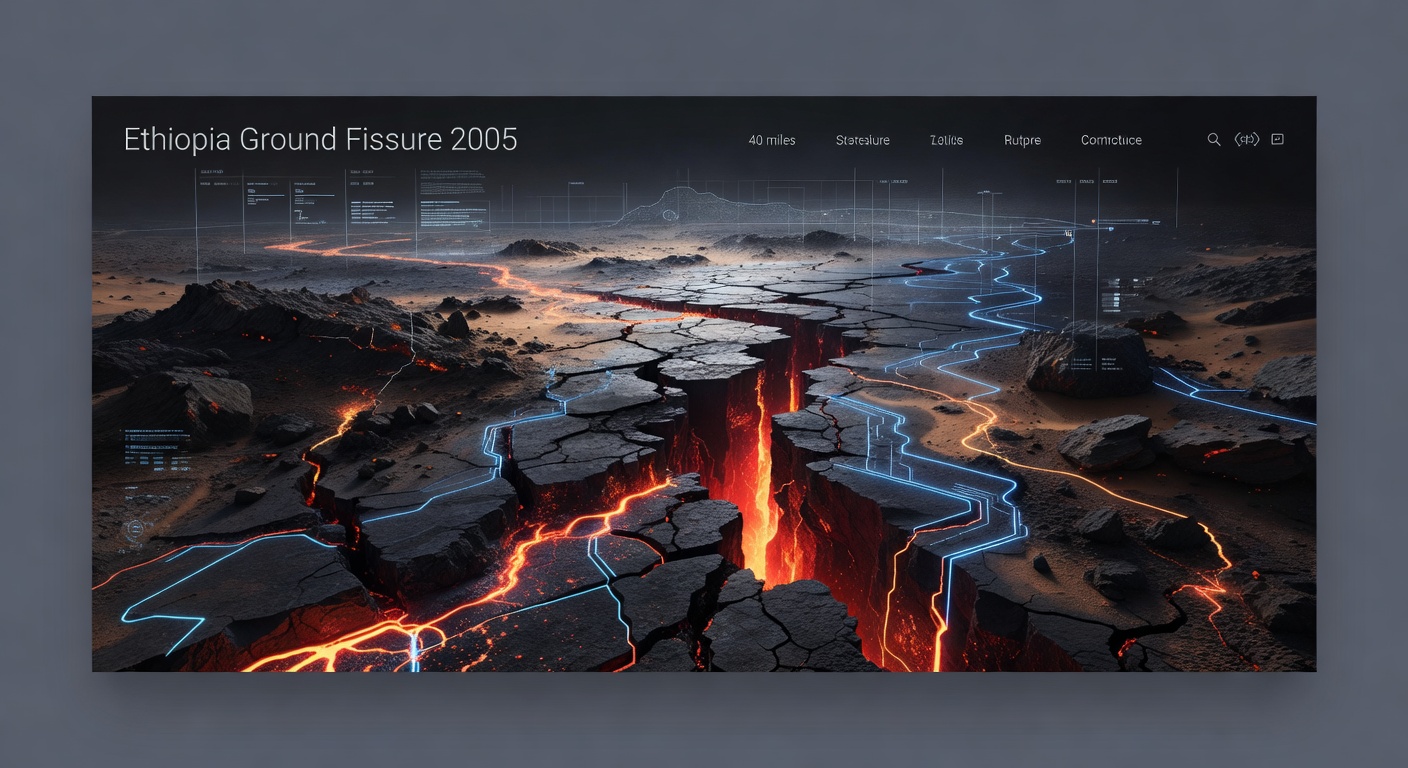
Picture this: you're living in one of the most hostile places on Earth — the Afar Desert in Ethiopia, where summer temperatures can hit a scorching 120°F. Then one day in September 2005, the ground literally splits open beneath your feet, creating a chasm nearly 40 miles long and 25 feet wide. It sounds like something out of a disaster movie, but this actually happened — and it might be the beginning of something extraordinary.
When Mother Nature Shows Off
What happened in the Afar Depression wasn't just any ordinary earthquake. For millions of years, a massive bubble of molten rock had been slowly building up underground, like a geological pressure cooker waiting to blow. When it finally reached the surface, it created what scientists now call the Dabbahu Fissure — and completely rewrote our understanding of how continents break apart.
Dr. Cynthia Ebinger, a geologist who rushed to the scene, put it perfectly: "We had never seen something like this." The kind of dramatic splitting that created this fissure usually happens on the ocean floor, hidden from view. But here it was, happening right before our eyes on land.
Africa's Great Breakup
Here's where things get really mind-blowing: this crack in the desert might be the beginning of Africa splitting into two separate continents. The entire region sits on what's called the East African Rift System — basically a massive network of fractures that's been slowly tearing the continent apart for about 25 million years.
Think of it like a very, very slow-motion breakup. The Arabian, Nubian, and Somali tectonic plates are drifting apart at roughly the same speed your fingernails grow. Not exactly fast, but in geological time, that's actually pretty speedy!
The Birth of a New Ocean
What fascinates me most about this story is the sheer scale of what might happen next. Scientists believe that in about 500,000 years (which is basically tomorrow in geological terms), the Afar Depression could sink below sea level and get flooded by seawater. Fast forward a few million more years, and we might have a brand new ocean splitting Africa in two.
Imagine future geography textbooks showing two separate African continents with a sea running between them. It's like watching the birth of a new world, just in super slow motion.
But Wait — There's a Plot Twist
Of course, geology loves to keep us guessing. Not every continental rift becomes an ocean. Sometimes these massive cracks just... stop. North America actually has its own failed rift that stretches from Detroit to Kansas — it spent 30 million years creating volcanic rock before mysteriously giving up.
The Afar region has already shown some surprising behavior. After that dramatic 2005 event, there were 13 more similar (but smaller) episodes over the next five years. Now things have quieted down to their normal pace, but Ebinger predicts we'll see more dramatic events every 50 to 100 years.
Why This Matters
Beyond the pure coolness factor of watching continents split apart, this research helps us understand how our planet works. The Afar region is like a natural laboratory where we can observe processes that usually happen hidden beneath miles of ocean water.
It's also a reminder of just how dynamic and alive our planet really is. We tend to think of continents as permanent fixtures, but they're actually constantly moving, shifting, and reshaping themselves — just on timescales that make human lifespans feel like blinks of an eye.
The Long Game
Will Africa actually split in two? Maybe. Will it create a new ocean? Possibly. The honest answer is that we won't know for hundreds of thousands of years, and that's part of what makes this so fascinating. We're witnessing the opening chapter of a geological story that will unfold long after our great-great-great (add a few hundred more "greats") grandchildren are gone.
But that's the beauty of science — sometimes the most amazing discoveries are the ones that remind us just how much we still don't know about our incredible planet.