
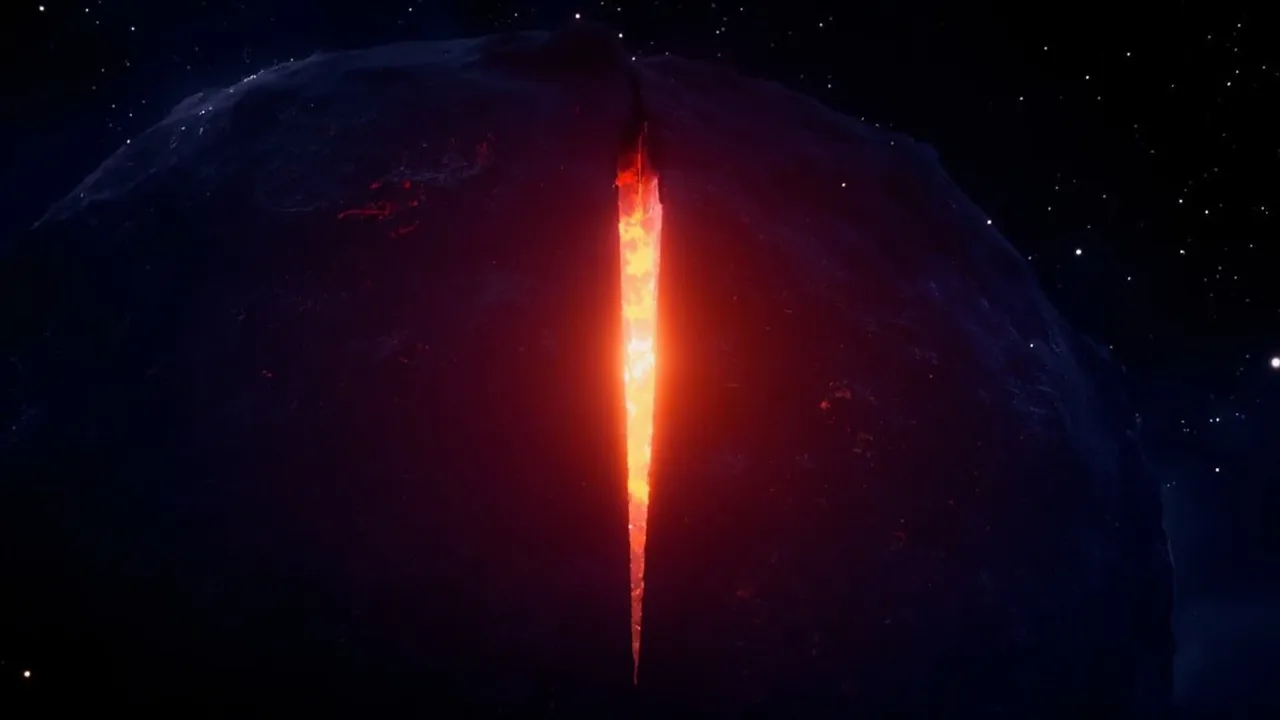
Have you ever noticed how Africa has this weird crack running through it? No, I'm not talking about a metaphor for social issues — I mean an actual, physical crack in the planet. The East African Rift System is a massive geological wound stretching over 6,000 kilometers from Ethiopia all the way down to Mozambique. And here's the wild part: Africa is literally splitting in two.
Scientists have known about this rift for decades, but here's what they couldn't quite figure out — and this is where it gets interesting.
The Silly Putty Problem
Think about what happens when you pull something apart slowly. You might expect it to stretch in one direction, right? The direction you're pulling? That's the straightforward explanation for how continental rifts usually work. The ground gets tugged apart perpendicular to the rift, kind of like when you pull apart a piece of taffy.
But when geophysicist D. Sarah Stamps and her team spent over 12 years setting up GPS stations across East Africa, they noticed something strange. Parts of the region weren't just moving in the direction you'd expect. Some areas were sliding along the rift, parallel to it, rather than perpendicular.
To explain why this matters, let me borrow Stamps's brilliant analogy. She compares Earth's lithosphere — that's the rigid outer shell including the crust and upper mantle — to Silly Putty.
"If you hit Silly Putty with a hammer, it can actually crack and break," Stamps explained. "But if you slowly pull it apart, the Silly Putty stretches."
So at different depths and timescales, the same material behaves in completely different ways. Near the surface, things fracture and break. Deeper down, rock can bend and flow like something much more pliable. Understanding this was key to solving the mystery.
The African Superplume
Here's where it gets really cool. The researchers used sophisticated 3D computer models to test what could cause this unusual parallel-to-rift motion. What they found points to something absolutely massive happening deep beneath the continent.
Say hello to the African Superplume.
This isn't a tiny thing — we're talking about an enormous upwelling of hot mantle material that starts deep beneath southwest Africa and extends northeastward across the continent. The stuff is rising from incredibly deep within Earth, maybe thousands of kilometers down, and as it travels northward, it gradually gets closer to the surface.
The models show that this northward flow of superheated rock is essentially dragging the surface along with it, creating motion that runs parallel to the rift rather than perpendicular to it. It's like having a giant conveyor belt of molten rock miles beneath your feet, slowly but persistently pushing everything in one direction.
Two Giants Fighting for Control
This discovery adds a new piece to an ongoing debate among geologists: what's actually driving the East African Rift System?
There are two main theories. One focuses on relatively shallow forces — things happening in the lithosphere itself. The African Superswell, a broad region of unusually high elevation, creates its own gravitational forces that pull the crust apart. Think of it like a mountain slowly sliding downhill.
The other theory points to deeper forces — the movement of mantle material beneath the lithosphere. This is where the African Superplume comes in. The flowing rock can exert tremendous pressure on the rigid plate above it, essentially pushing and dragging it in different directions.
The older models from 2021 suggested both were important. The shallow buoyancy forces explained the expected perpendicular motion. But they couldn't account for the weird parallel motion that Stamps kept measuring with her GPS stations.
Now, with the newer models focusing specifically on that unexplained motion, scientists have stronger evidence that the mantle flow is indeed a major player.
What Seismic Waves Tell Us
The models also reproduced another fascinating feature: rift-parallel seismic anisotropy. That's a fancy way of saying that earthquake waves travel through the rocks differently depending on which direction they're going.
This makes sense if you imagine all those mantle minerals being slowly stretched and aligned by the northward flow, kind of like fibers in a piece of wood. The seismic waves essentially "see" different properties depending on which way they're traveling.
Why Should You Care?
Okay, I know what you're thinking — this is all fascinating, but why does it matter to me?
First, because it's genuinely amazing that our planet is alive in this way. We're talking about Africa, one of Earth's largest landmasses, actively splitting apart on human timescales. The Indian Ocean will eventually flood into the gap, creating a new ocean where dry land exists today. That's not science fiction — it's geology in action, just happening slowly enough that we need precise instruments to measure it.
Second, understanding how these deep mantle processes work helps us understand Earth as a whole. The same forces shaping Africa are at play everywhere, from the Himalayas to the Andes to the Atlantic Ocean's own gradual widening.
And honestly? Sometimes the best reason to learn about science is simply because it's cool. There's something almost humbling about realizing that beneath our feet, thousands of kilometers down, there's this vast river of rock slowly reshaping continents.
The African Superplume isn't going anywhere. It'll keep pushing and pulling for millions of years to come. But now, thanks to some clever GPS measurements and powerful computer models, we at least understand a little better what's going on in that geological kitchen beneath the cradle of humanity.
How cool is that?