
When Nature's Safety Net Becomes a Problem
Imagine you've been relying on your savings account to cover emergencies, only to discover it's been draining faster than you could refill it. That's essentially what's happening with Africa's forests right now, and honestly? It's terrifying.
For decades, we've counted on Africa's vast tropical forests to act like giant carbon vacuum cleaners. Trees absorb carbon dioxide from the atmosphere as they grow, storing it in their trunks and branches. It seemed like a win-win—forests thrived, and we got a natural ally in fighting climate change. But a new study published in Scientific Reports just revealed something we really didn't want to hear: that deal expired around 2010.
The Turning Point Nobody Noticed
Researchers from universities in Leicester, Sheffield, and Edinburgh decided to dig deep into what's actually happening in Africa's forests. They used satellite data combined with machine learning to track forest biomass—basically, how much carbon is sitting in those trees—over more than a decade.
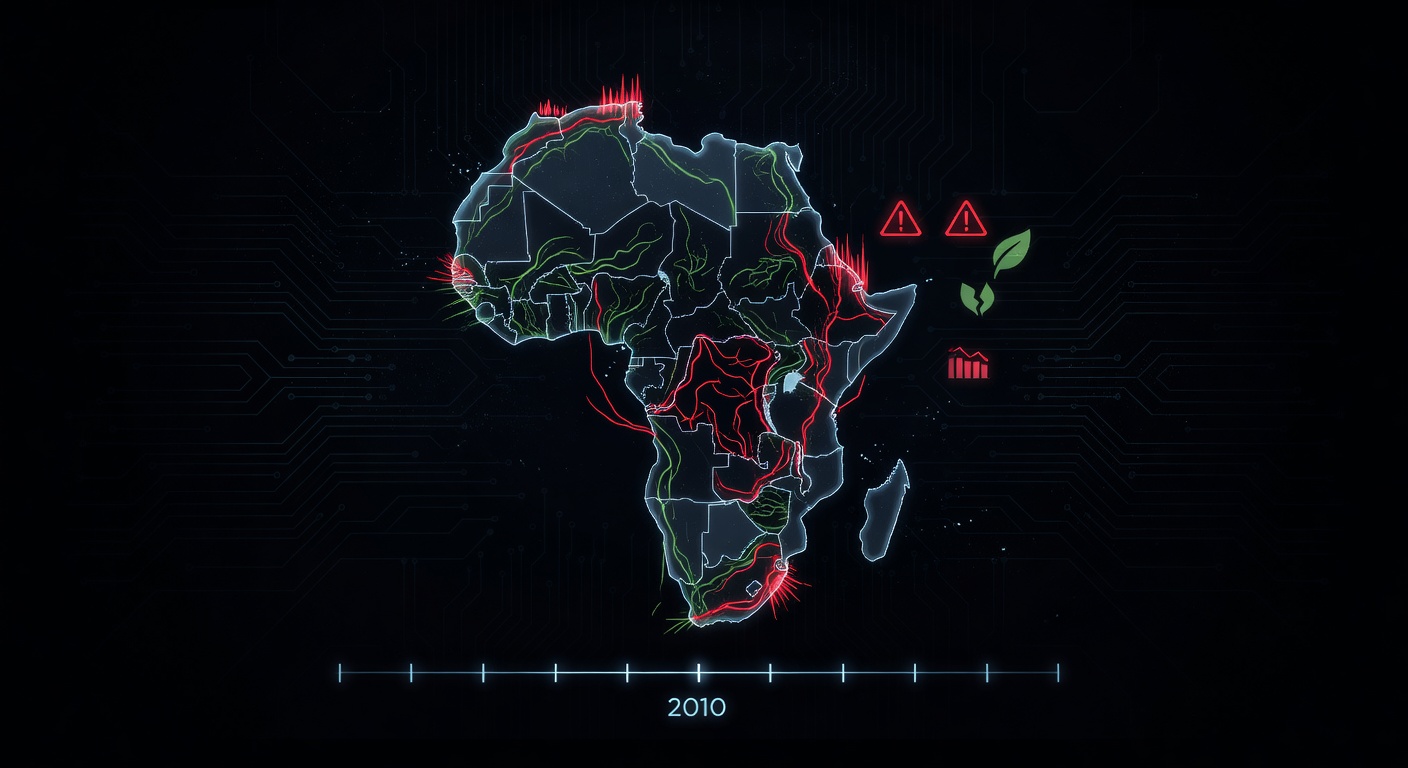
The numbers tell a grim story. Between 2007 and 2010, things looked good. Africa's forests were actually gaining carbon. Then something flipped. Since 2010, the continent has been losing roughly 106 billion kilograms of forest biomass every single year. To put that in perspective, that's equivalent to the weight of 106 million cars just... vanishing from the landscape annually.
The hardest hit? Tropical rainforests in places like the Democratic Republic of Congo, Madagascar, and parts of West Africa. These aren't small, replaceable forests—they're some of the most biodiverse places on Earth.
Why This Matters Beyond Africa
Here's what keeps me up at night about this research: it's not just an African problem. This is a global climate problem wearing an African face.
When scientists were planning our path to meet the Paris Agreement's goal of limiting warming to 2°C, they factored in Africa's forests as a significant carbon sink. Now that those forests have flipped to being carbon sources, it means every other country and region needs to cut emissions way more aggressively to make up the difference. We've essentially lost one of our most important tools in the climate toolkit.
As Professor Heiko Balzter from the University of Leicester put it: the world now needs to cut greenhouse gases even more deeply just to stay on track. No pressure, right?
What Actually Happened to These Forests?
The story isn't complicated—it's just depressing. Deforestation and forest degradation have accelerated dramatically. Trees are being cut down faster than they can regrow. Illegal logging continues despite regulations. Agricultural expansion keeps encroaching on forest land. And in many cases, the governance systems that could stop this simply aren't strong enough.
Now, I should mention that some savanna areas actually saw increases in vegetation thanks to shrub growth, but it's nowhere near enough to balance out the massive losses in the rainforests. It's like losing $1,000 from your bank account but getting $5 back—technically the account moved, but you're still way underwater.
So What Do We Actually Do About It?
Here's where I want to focus on something more hopeful: there are legitimate solutions on the table.
Dr. Nezha Acil from the National Centre for Earth Observation points to concrete steps that could help:
- Stronger forest governance - Actually enforcing the rules that exist
- Cracking down on illegal logging - This needs teeth and resources
- Large-scale restoration programs - Initiatives like AFR100 aim to restore 100 million hectares of African landscapes by 2030, which is genuinely ambitious
The COP30 Climate Summit in Brazil also launched something called the Tropical Forests Forever Facility, designed to channel billions toward countries that commit to protecting their forests. The idea is simple: pay countries to keep their forests instead of letting them be cleared.
But here's the thing—these solutions only work if they're actually funded and supported. And they need to happen now, not as a nice-to-have for some future climate conference.
The Real Urgency
What struck me most about this research is how it exposes a gap in our climate strategy. We've been operating under the assumption that nature would help us out of this crisis. That nature would absorb our excess carbon while we slowly transition away from fossil fuels. But nature is telling us: nope, that's not happening anymore.
The researchers used sophisticated satellite technology (NASA's GEDI laser instrument, Japan's ALOS radar satellites) combined with machine learning and ground measurements to create the most detailed map ever of biomass changes across Africa. This isn't guesswork—it's hard data that's impossible to ignore.
The Uncomfortable Truth
What really gets to me is that this situation is entirely human-caused and entirely preventable. Nobody woke up one day and decided "let's destroy the very forests that help keep our planet habitable." But through a combination of short-term economic thinking, insufficient enforcement, and competing priorities, we've managed to turn one of Earth's greatest assets into a liability.
The silver lining—if there is one—is that we know what's happening and we know how to fix it. It just requires the kind of global cooperation, political will, and funding that we've struggled to muster so far.
Africa's forests didn't have to flip from carbon sink to carbon source. They can be restored. But it requires action now, not promises for tomorrow. Because if we lose this battle with deforestation, every other climate goal becomes exponentially harder.
Source: https://www.sciencedaily.com/releases/2026/04/260413043135.htm