
The Quiet Geological Drama Unfolding Beneath Africa
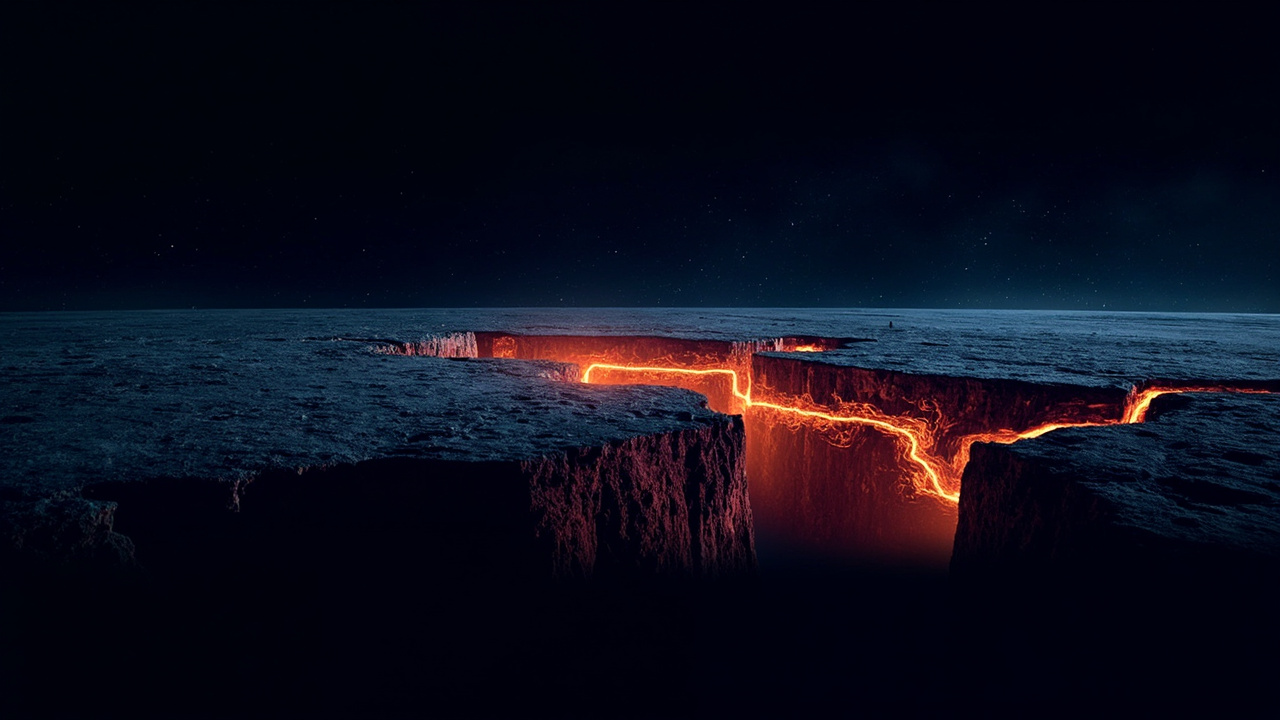
Imagine if you could watch a continent slowly rip itself apart in real time. Sounds like science fiction, right? Well, that's essentially what's happening right now in Eastern Africa, and scientists have just realized it's much further along than they thought. Researchers from Columbia University recently published findings showing that the Turkana Rift—a massive geological feature stretching across Kenya and Ethiopia—is experiencing crustal thinning far more extreme than previously understood.
Here's the wild part: we might actually be witnessing a critical moment in how continents break apart, something that's shaped Earth's geography for billions of years.
So What Exactly Is This Rift?
Think of the Turkana Rift as part of a giant wound in the Earth's crust. It's one section of the even larger East African Rift System, which stretches like a massive scar from Ethiopia all the way down to Mozambique. This whole system is caused by two of Earth's tectonic plates—the African and Somali plates—slowly pushing away from each other. We're talking about just 4.7 millimeters per year, which sounds tiny until you realize that's been happening for millions of years.
When tectonic plates move apart like this, it triggers a process called "rifting." The crust gets stretched sideways, kind of like pulling taffy. The ground fractures and buckles, and magma from deep inside Earth starts bubbling up through the cracks. This is why the region has so much volcanic activity.
The Discovery: Crust That's Surprisingly Thin
Here's where things get interesting. Lead researcher Christian Rowan and his team analyzed incredibly detailed seismic data—basically, they listened to how sound waves travel through the ground to map what's happening underground. What they found was shocking: at the center of the Turkana Rift, the Earth's crust is only about 13 kilometers thick.
To give you perspective, that's roughly the cruising altitude of a commercial airplane.
Compare that to areas farther away from the rift center, where the crust is over 35 kilometers thick. That's a dramatic difference—more than a threefold decrease in some places. This kind of extreme thinning told the scientists that the Turkana Rift is much further along in its "life cycle" than anyone realized.
The Taffy Problem: What "Necking" Really Means
Scientists use a pretty perfect metaphor to describe what's happening: they call it "necking." If you've ever pulled a piece of salt-water taffy, you know how it stretches in the middle and becomes thinner and narrower right where you're pulling it hardest. That's exactly what the Earth's crust is doing in the Turkana Rift.
And here's the troubling part (from a geological perspective): the thinner the crust gets, the weaker it becomes. It's like pulling taffy to the breaking point. At some threshold, it just snaps.
Rowan's team believes the Turkana Rift has reached that critical threshold. The crust is so thin and weak now that the rifting process is practically self-reinforcing. The weaker it gets, the easier it is for the plates to keep pulling apart. Eventually—and we're talking millions of years in the future—this could lead to a complete continental split.
An Utterly Rare Geological Laboratory
Here's what makes this discovery genuinely exciting for scientists: the Turkana Rift is the first known active continental rift currently undergoing this "necking" phase. It's like having a front-row seat to one of Earth's most fundamental geological processes. Usually, scientists only get to study these things after they've already happened, by looking at ancient rifted margins on opposite sides of oceans.
Not here. They can watch it in progress.
This gives researchers an unprecedented opportunity to understand how continents actually break apart—and it's apparently more complicated than textbooks suggest. The old models might not tell the whole story.
Why This Place Has So Many Ancient Human Bones
Now here's the fascinating part that connects this to us. The Turkana Rift is famous among paleontologists because it's yielded more than 1,200 hominin fossils—that's about one-third of all human ancestor remains found in Africa. It's basically the greatest hits collection for human evolution.
But why this place specifically? Scientists have long wondered.
The new research offers a compelling explanation. About 4 million years ago, the necking process kicked into high gear after a period of intense volcanic activity. As the crust thinned even further, the land in the rift valley started to sink. This subsidence created the perfect conditions for fine-grained sediments to accumulate rapidly in low-lying areas.
Think of it like this: as the land dropped, it became a natural trap for bones, ash from volcanic eruptions, and other organic material. These fine sediments buried everything quickly, preserving the fossil record in extraordinary detail. The same geological process that's tearing Africa apart is the reason we have such an incredible window into our own evolutionary past.
The Timescale That Humbles Us
It's important to remember that even though we're talking about dramatic continental splitting, this happens incredibly slowly. The Turkana Rift started opening about 45 million years ago. The necking phase began around 4 million years ago. Scientists estimate it could take several million more years before the next phase—called "oceanization"—begins, when the crust breaks completely and seawater floods in to form a new ocean basin.
That's a timeline that makes human history look like a blink of an eye.
What This Teaches Us About Earth's Past and Future
The real value of understanding this process is that it helps us reconstruct what Earth looked like at different points in its history. By studying how continents break apart, we can understand how ancient climates worked, how vegetation patterns shifted, and how the landscape evolved. All of that tells us something about how the world might change in the future—even on shorter timescales that actually matter to human civilization.
It's a reminder that our planet is constantly changing on scales we can barely perceive. The ground beneath our feet might seem solid and permanent, but it's actually engaged in this ancient, slow-motion dance of creation and destruction that shapes everything.
Pretty humbling when you think about it.