
When Scientists Get Creative, Amazing Things Happen
Picture this: You're a marine biologist trying to understand how ocean ecosystems have changed over the last four decades. But here's the problem — you don't have convenient samples from 1979. So what do you do?
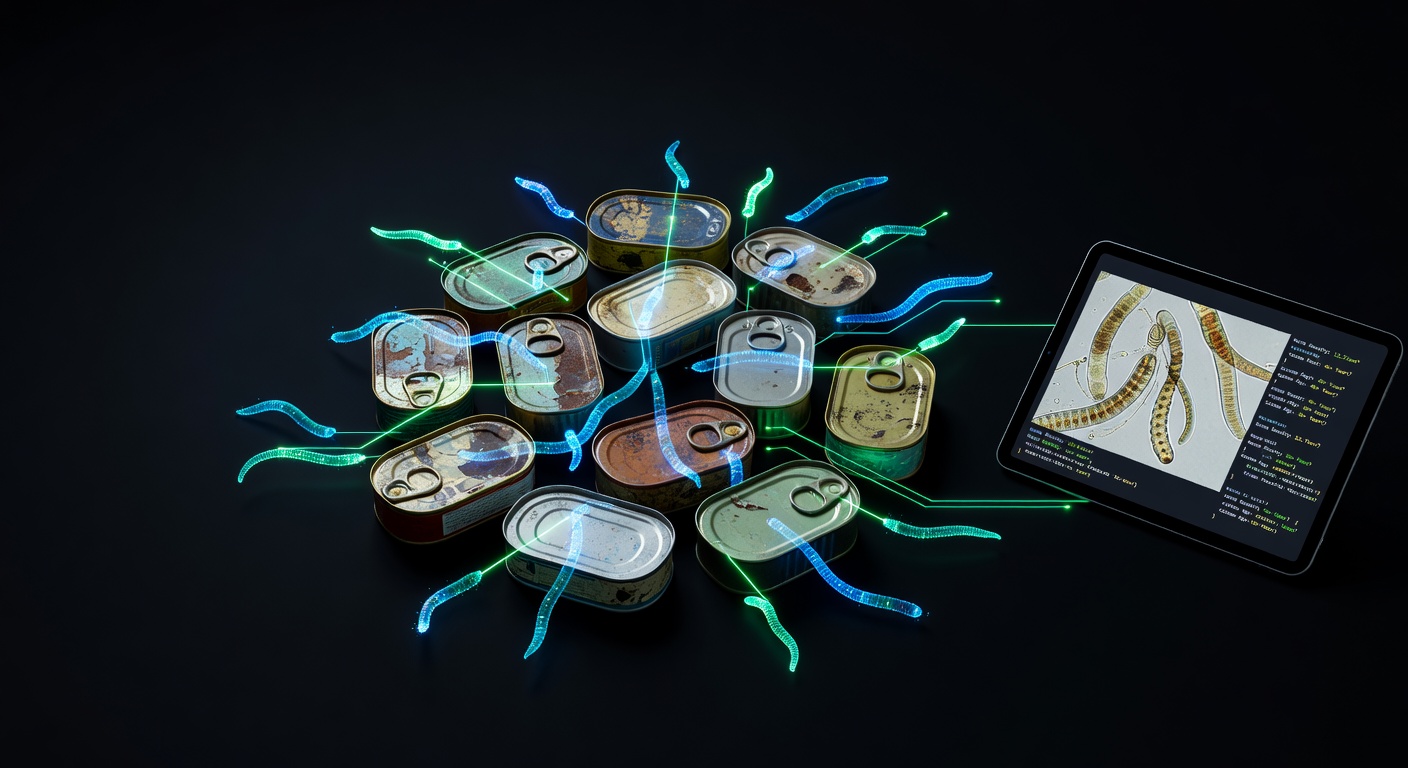
If you're Natalie Mastick from Yale University, you raid the pantry. Specifically, you ask a trade organization for their old inventory of preserved salmon cans and start dissecting 42-year-old fish fillets.
Honestly, this is the kind of out-of-the-box thinking that makes science genuinely fun.
Why This Matters More Than You'd Think
The Gulf of Alaska and Bristol Bay are home to some of the world's most crucial salmon fisheries. These areas feed thousands of people and support entire ecosystems. But like everything else on our planet, these waters are changing — and not always for the better.
The challenge is that you can't just rewind time and collect data from the 1970s. So scientists have to get creative. And that's where four decades of canned salmon came in handy.
The Unexpected Heroes: Tiny Parasitic Worms
Now, I know what you're thinking: "Worms? Gross. Why would anyone care about that?"
Here's where it gets interesting. These aren't just any worms. They're called anisakids — little parasitic creatures about the size of a grain of rice that live in fish muscle. People often call them "sushi worms" because they're the reason raw fish can occasionally make you sick if it's not handled properly.
But here's the thing that flipped the script: finding these worms might actually be a good sign.
The Surprising Connection to a Healthy Ocean
Chelsea Wood, a fisheries scientist at the University of Washington, explains this beautifully: "Everyone assumes that worms in your salmon is a sign that things have gone awry. But the anisakid life cycle integrates many components of the food web."
Think of it like this — these parasites are basically a biological report card for the entire ocean ecosystem. They don't just need salmon to survive. They need krill, small fish, large fish, and marine mammals all to be present and thriving. It's like a complex dance where every dancer has to show up, or the whole performance falls apart.
If anisakids are increasing in salmon, that means all those different pieces of the food web are functioning properly. It's like the ocean is saying, "Yeah, my ecosystem is intact."
The 42-Year Investigation
Mastick and her team were serious about this project. They opened 178 cans of salmon — some from 1979, others from more recent decades — and carefully dissected the fillets. Using forceps and a dissecting microscope, they counted thousands of tiny worms.
The results? Between 1979 and 2021, anisakid levels increased in pink and chum salmon. In coho and sockeye salmon, the parasite numbers stayed fairly stable.
What does this mean? For pink and chum salmon at least, it suggests the ocean environment has either remained stable or even improved over the past 40+ years.
The Marine Mammal Comeback Story
One major reason for increasing parasite levels might be surprisingly wholesome: marine mammals are making a comeback.
The Marine Mammal Protection Act of 1972 helped populations of seals, sea lions, whales, and orcas recover from centuries of overhunting. Here's the connection — anisakids actually need to reproduce in the intestines of marine mammals. No marine mammals, no parasite reproduction.
So more anisakids could mean more seals and sea lions in the Gulf of Alaska. And honestly? That's a win for ocean conservation.
Other factors might be at play too — ocean warming, water quality improvements from the Clean Water Act, and shifts in how the whole food web is structured.
Wait, Are These Worms Actually Dangerous?
Let me address the elephant in the room: Should you be worried about eating salmon?
Not really. The salmon in those cans had been processed through canning, which kills any parasites. And even if you ate raw salmon with live anisakids, the parasites only infect your stomach lining if they're still alive — it's treatable, uncomfortable, but not a disaster.
Basically, properly prepared salmon is safe. Which is good news, because it means we can keep enjoying this delicious, healthy food.
Why This Matters Beyond Fish and Worms
What I love about this research is how it shows us that sometimes the most unexpected data sources can tell us something important about our world.
We often assume that understanding long-term environmental change requires fancy modern technology or consistent monitoring programs. But sometimes, all you need is some old cans of fish, curiosity, and a willingness to look at parasites as ecological indicators instead of just gross invaders.
The ocean is changing. Climate change is real. But studies like this suggest that at least in some regions, and in some measurable ways, recovery and stability are possible. Marine mammal populations are rebounding. Food webs are functioning. And sometimes that's worth celebrating.
Plus, it's a pretty cool reminder that science isn't always glamorous or high-tech. Sometimes it's just a researcher patiently opening old cans and counting worms under a microscope. And somehow, that's exactly what we needed.