
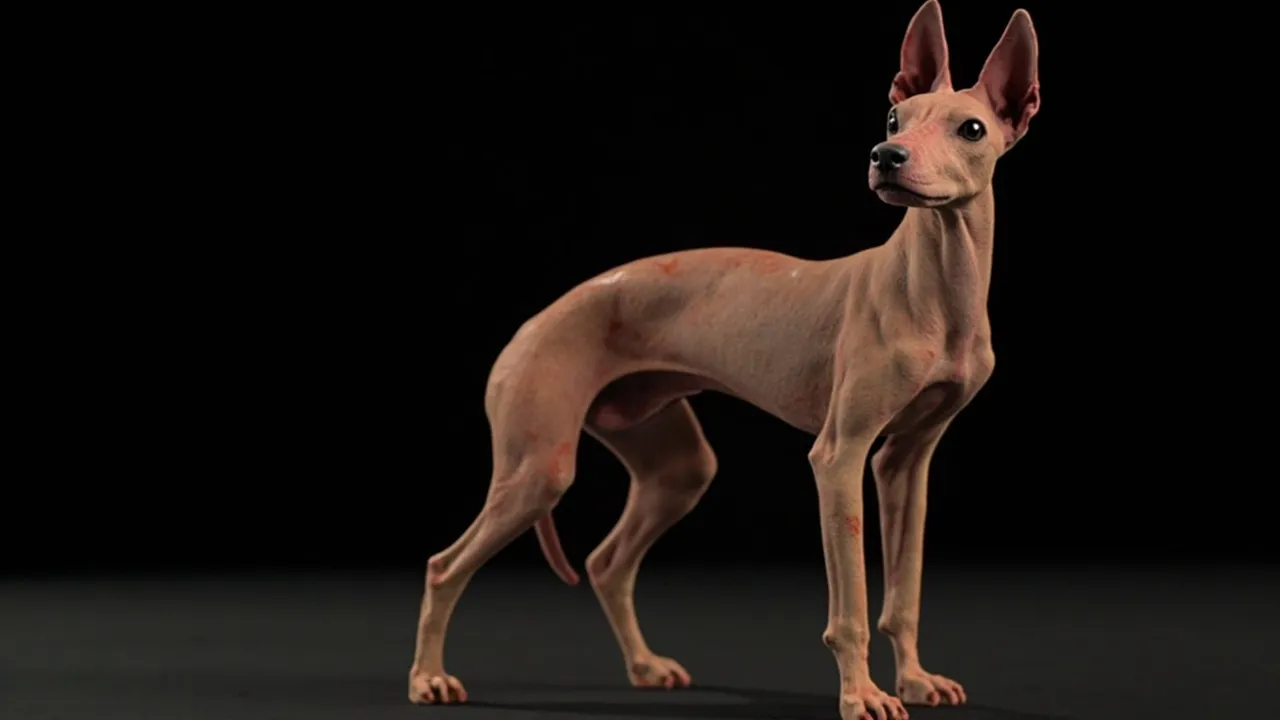
When Archaeology Gets a Little... Hairy
Okay, I'll admit it—when I first read about this discovery, I had questions. Like, what exactly is a hairless dog doing buried in the Peruvian desert for 1,200 years? And why did someone paint its skull bright red?
Turns out, these aren't just any ancient mutts. They're the ancestors of the Peruvian Inca Orchid, a breed still recognized by the American Kennel Club today. And according to a new study published in the Journal of Anthropological Archaeology, these hairless pups were living it up (or at least being buried) at a place called Castillo de Huarmey, a Wari Empire site on Peru's northern coast.
The Desert's Amazing Preservation Magic
Here's what really blew my mind: the desert where these dogs were found is SO dry that materials that would normally rot away have stayed intact for centuries. We're talking hair, bones, leather, clothing, and even pigments that still look vibrant today.
The archaeologists uncovered three sets of dog remains, and one of them stopped everyone in their tracks—a naturally mummified dog skeleton that was almost complete, missing only the lower parts of its front legs. The creature still had its skin attached. Its ears were there. And get this: someone had colored its skull with cinnabar, a bright red pigment that was super important in ancient Peruvian burial traditions.
At first, researchers thought the mummified dog might be relatively recent—maybe only about 50 years old, left behind during periods of looting at the site. But then one of the researchers, Weronika Tomczyk from Dartmouth, noticed something interesting: all three dogs were hairless, and they were ALL missing their first premolar teeth.
That little detail? It basically confirmed these weren't random strays. These were bred dogs, with specific physical characteristics intentionally passed down through generations.
It's Complicated (Like All Pet Relationships)
Now here's where things get really fascinating—and honestly, kind of relatable.
The study authors make this point that really stuck with me: ancient humans had complicated relationships with dogs, just like we do today. They quote the researchers saying that "a pet for one group of people could at the same time be considered a pest by their closest neighbors."
Think about that for a second. Someone out there in 800 CE absolutely loved their hairless dog, maybe even painted its face red before burial. But their neighbor? Probably not a fan. Maybe the dog kept barking. Maybe it got into their food stores. Maybe it just had that annoying habit of staring at them with those soulful hairless eyes.
Archaeologists found the remains of South American camelids (probably llamas and alpacas) too, some clearly buried as ceremonial offerings, others just... tossed aside as garbage. It seems the Wari people had different relationships with different animals, sometimes simultaneously.
Why This Discovery Matters
Beyond the cool factor (and yes, ancient mummified dogs are objectively cool), this is actually significant for understanding the Wari Empire. See, Castillo de Huarmey was an administrative and burial center covering 110 acres—one of the only Wari sites discovered on Peru's northern coast.
Previous discoveries there have included an undisturbed elite tomb with 58 high-status women, human sacrifices, and over 1,300 artifacts. But those findings tell us about power structures and politics. The dog remains? They tell us about everyday life. About the little moments. About a person, maybe a child, who loved their hairless dog and wanted to remember it forever.
That connection across 1,200 years—someone's affection for their pet preserved in the dry desert air—kind of gets you right in the feels, doesn't it?