
Imagine a Valley as Long as Italy
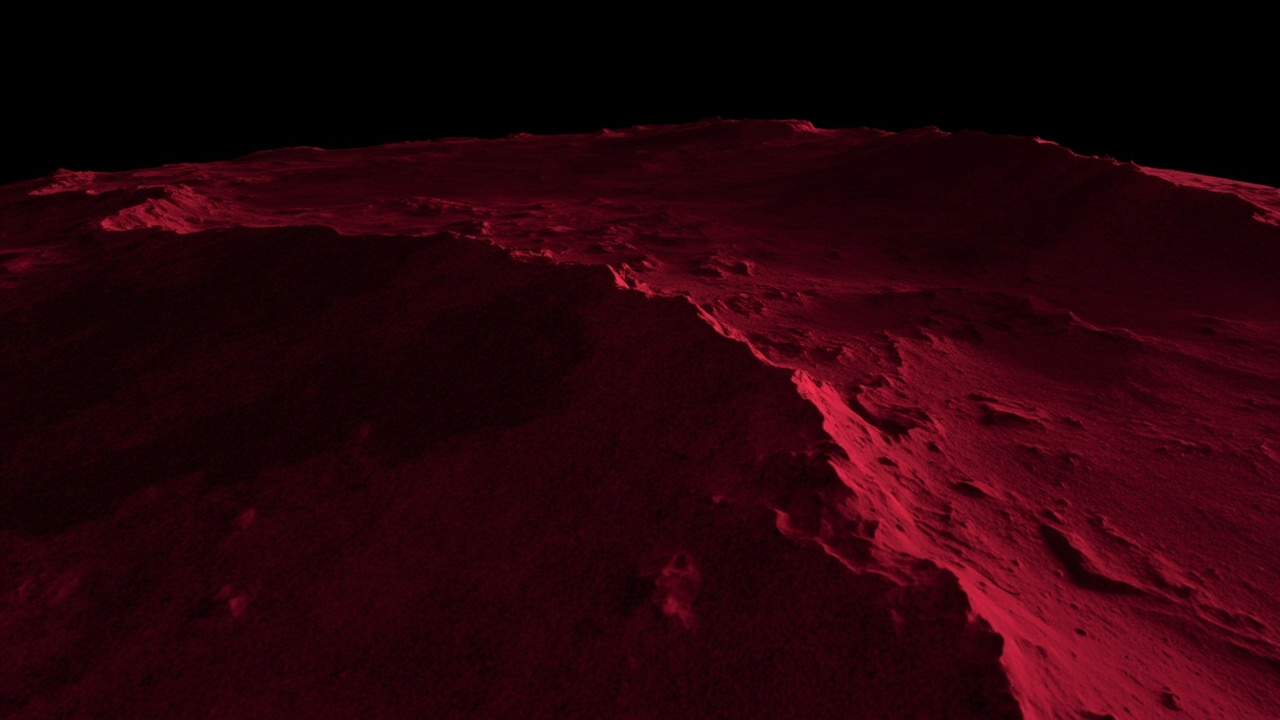
Picture this: a massive valley stretching across an entire planet, carved not by patient rivers over millions of years, but by catastrophic floods that happened billions of years ago. That's Shalbatana Vallis, and it's genuinely one of the most interesting geological features we've found on Mars.
Thanks to the Mars Express spacecraft—which has been hanging around the Red Planet since 2003—we're getting stunning new close-up images of this valley. And honestly, the more you learn about it, the more mind-blowing it becomes.
When Mars Got Literally Flooded
Here's where it gets wild: about 3.5 billion years ago, Mars experienced what scientists think was an absolutely insane amount of groundwater suddenly exploding onto the surface. We're talking about water literally bursting out of the ground and tearing through the landscape like nature's most powerful bulldozer.
This wasn't some gentle trickle. Imagine a tsunami of water carving through rock and soil at massive speeds. The result? A valley that's roughly 10 kilometers wide and 500 meters deep. But get this—scientists believe it was actually even deeper than what we see today. Over billions of years, wind, dust, and other materials gradually filled in parts of the channel, kind of like how a riverbed gets buried over time.
The Blue-Black Mystery
One of the coolest features in the latest images is this really striking blue-black patch in the valley. Researchers think this is volcanic ash that got redistributed by Martian winds over countless millennia. It's like finding an ancient fingerprint that tells us exactly how much volcanic activity was happening in this region way back when.
A Clue to Ancient Oceans
Here's the really exciting part: Shalbatana Vallis isn't alone. The region is dotted with other outflow channels, and many of them all seem to funnel toward a place called Chryse Planitia—basically one of the lowest-lying areas on all of Mars.
Some scientists think that all this water from these ancient megafloods had to go somewhere. Their hypothesis? Mars might have once had a substantial ocean sitting in these low-lying regions. Not a small lake—we're talking about a genuine planetary ocean during a time when Mars was warmer and way wetter than it is today.
Broken Ground Tells a Story
Another tell-tale sign that something dramatic happened here is the "chaotic terrain." Sounds ominous, right? It basically means the ground is all jumbled up—broken blocks of rock, random ridges, and irregular lumps scattered everywhere.
Scientists think this chaos happened when underground ice started melting (probably because the planet was warmer back then). As the ice vanished, the ground above it literally collapsed and shifted, creating this fractured, messy landscape. It's like when the foundation of a house fails and everything above it sinks and cracks. We've seen similar chaotic terrain in several other Martian regions, which suggests this was actually a pretty common process all over the planet during that ancient period.
Layer Upon Layer of History
The valley also shows massive impact craters, some looking fresh and sharp, others nearly erased by billions of years of erosion. You can even see the debris blankets—the material that was blown outward when asteroids smashed into Mars.
And then there's evidence of ancient lava flows. As the lava cooled and shrank, it created wavy, wrinkled patterns on the surface (scientists call them "wrinkle ridges," which is actually kind of cute). There are also isolated hills called mesas—basically mountains that used to be part of a bigger elevated surface before erosion wore most of it away.
The Perfect Time Machine
What I find genuinely incredible about Shalbatana Vallis is that it's basically a geological museum. In one location, you can read the entire story of what Mars was like billions of years ago: the water events, the volcanic activity, the asteroid impacts, the climate change. It's all written in the rocks and terrain.
Mars Express has been circling the Red Planet for over two decades now, and it's still giving us these jaw-dropping insights. The High Resolution Stereo Camera aboard the spacecraft keeps sending back data that helps us understand not just how Mars looks today, but how it became the cold, dry desert world we know.
Why This Matters
Understanding places like Shalbatana Vallis isn't just about satisfying our curiosity about Mars (though that's definitely part of it). It helps us understand planetary geology in general. It tells us how planets evolve, how water behaves in different environments, and what happens when climates change dramatically.
Plus, if we're ever going to send humans to Mars or set up long-term colonies there, understanding the planet's geology and ancient water history becomes pretty important. Shalbatana Vallis is one massive hint that Mars used to be a very different world—and that's a story worth understanding.