
When Your Weapon Comes With a Burn
Imagine this: you're defending your ancient city, and suddenly a lead projectile whistles past your head. You pick it up to examine it, and etched into the metal are the Greek words basically telling you to "learn your lesson." Yeah—ancient warfare had memes, and they hurt.
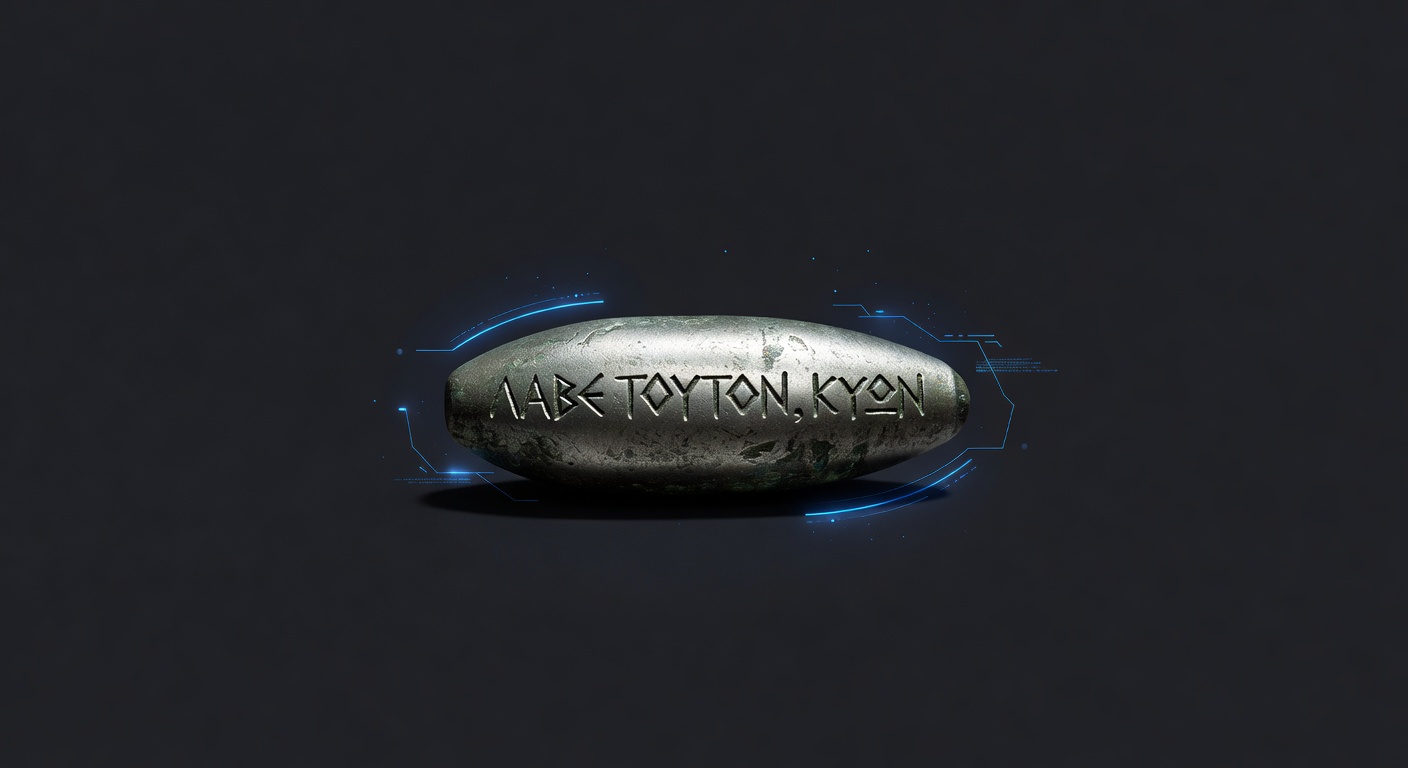
This is exactly what researchers found during a dig at Antiochia Hippos, an ancient city in the Holy Land. While excavating a necropolis, they uncovered a slingshot bullet with a message so perfectly preserved that it reads like it was fired yesterday. Except, you know, it's been sitting in the ground for about 2,000 years.
The Archaeology of Sass
Here's what absolutely fascinates me about this discovery: these weren't random insults scratched by angry soldiers. These projectiles were intentionally crafted with personalized messages. The ancient Greeks would take the time to inscribe their sling bullets before battle, knowing some enemy warrior might actually read their final words.
Talk about psychological warfare!
The message itself—written in ancient Greek letters and translating roughly to "learn your lesson"—is particularly interesting because it uses an older form of command that's different from modern Greek. This wasn't just someone being clever; this was someone with actual knowledge of language, making sure their taunt was grammatically correct. If you're going to roast someone, you might as well do it properly.
Lead Bullets, Maximum Attitude
Slingshot ammunition in the ancient world was serious business. These weren't your average rocks or clay balls. The Greeks cast specialized lead projectiles that could reach distances over 1,300 feet—imagine getting hit by something traveling that far with someone's insult on it. (Okay, you probably wouldn't survive to read it, but still.)
Soldiers would decorate these bullets in different ways. Some featured images of thunderbolts to honor Zeus, others showed scorpions. But inscriptions? That was next-level psychological warfare. Archaeologists have found previous examples with messages like "Taste it!" and "Take that!"—basically the ancient equivalent of "Git rekt."
The difference with this newly discovered bullet is that it's the only one from Hippos ever found with actual words on it, making it pretty unique in the archaeological record.
Where Did This Thing Come From?
The researchers aren't entirely sure which specific battle this projectile saw action in. Antiochia Hippos went through several conflicts during the Hellenistic period. It could've been fired during a battle around 199 BCE when Seleucid forces conquered the city, or maybe during one of the attacks by Maccabean king Alexander Jannaeus a century later.
What's remarkable is where they found it—along an ancient Roman road that followed an older Greek pathway leading straight toward the city's main gate. This was probably a natural chokepoint for attacks. The projectile's location strongly suggests it was fired by defenders trying to repel forces climbing toward the fortifications.
Michael Eisenberg, the team leader from the University of Haifa, believes this wasn't wasted ammunition used for practice. Ancient armies would have carefully stockpiled inscribed projectiles for actual combat. So someone deliberately chose to fire this particular bullet knowing it carried their message of defiance.
We're Just Now Learning About These
Over 26 years of excavation at this site, archaeologists have uncovered 69 lead projectiles in total. But only a handful have any decoration at all, and this is the sole one with written words. That makes it legitimately significant—not just as a cool artifact, but as a window into how ancient warriors thought about combat and psychological intimidation.
Other inscribed bullets have been found from different periods and regions, particularly from the era of Diodotus Tryphon in Bactria. So this wasn't an isolated practice—warriors across the ancient world apparently loved adding insult to injury.
What Gets Me About This
Here's what I find genuinely moving about this discovery: someone cast this bullet expecting it might never deliver its message. But they did it anyway. Maybe it killed someone. Maybe it hit the ground and got lost for two millennia. But the person who made it decided that their defiance—carefully formed into metal and Greek letters—was worth the effort.
And they were right. Two thousand years later, their message still hit exactly as intended. It might not have reached its original target, but it reached us, across centuries, reminding us that humans have always found creative ways to talk trash.
Even ancient warriors knew: the best weapon is sometimes just the right words.