
The Antarctic Mystery That Haunted Scientists for Decades
Picture this: you're exploring the pristine white landscape of Antarctica when suddenly you stumble upon what looks like a glacier literally bleeding. That's exactly what explorer Griffith Taylor discovered back in 1911, and it's been keeping scientists up at night ever since.
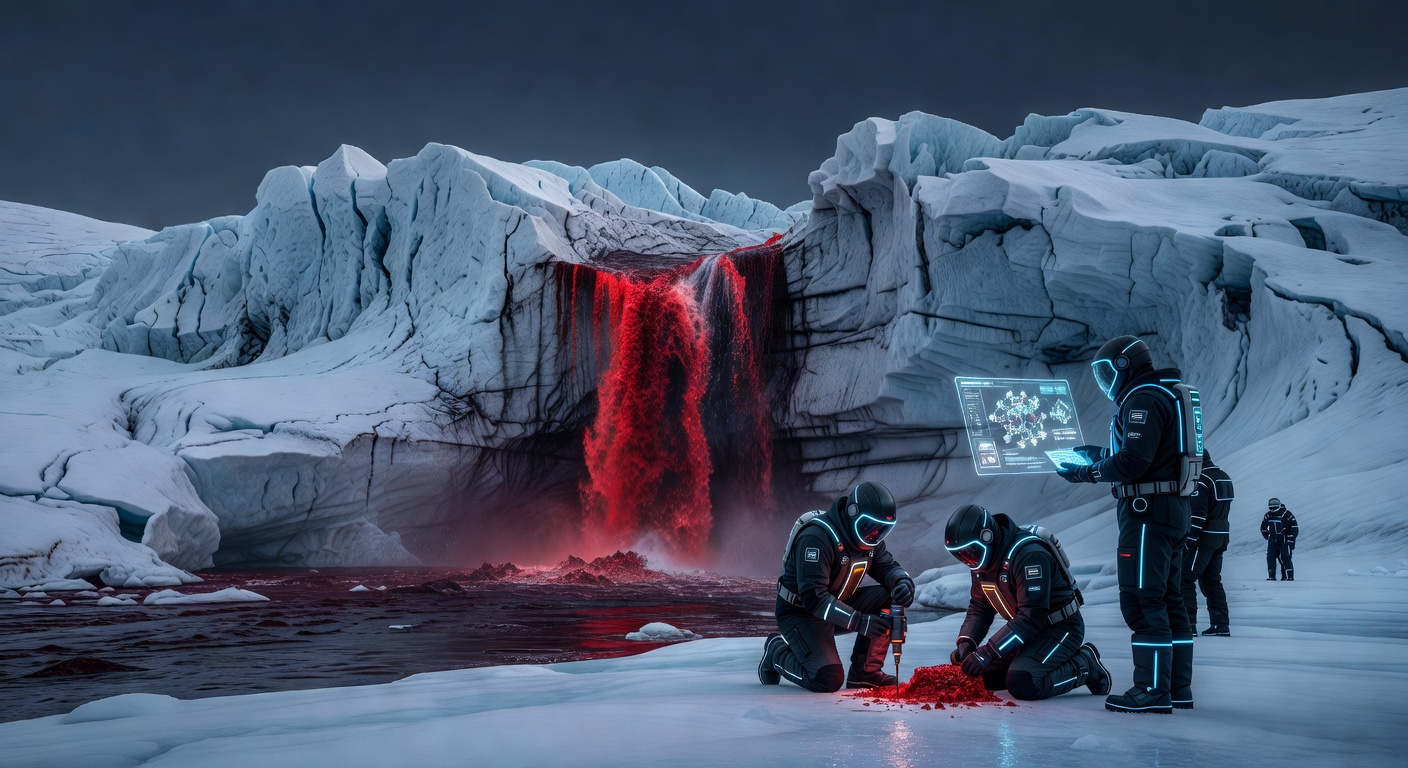
Blood Falls isn't just a cool name someone made up for Instagram - this five-story-tall waterfall genuinely looks like blood cascading down the Taylor Glacier in Antarctica's McMurdo Dry Valleys. And trust me, when you see photos of this thing, it's both beautiful and deeply unsettling.
What We Thought We Knew (Spoiler: We Were Only Half Right)
For the longest time, scientists figured they had this mystery mostly solved. The red color? That was easy - iron oxide, basically rust, from ancient seawater trapped beneath the glacier for millions of years. When this iron-rich water meets oxygen at the surface, it oxidizes and turns that distinctive blood-red color.
But here's where it gets interesting: how the heck does liquid water flow in Antarctica? We're talking about a place where temperatures can drop to -40°F (-40°C). That brine should be frozen solid!
The Final Piece of the Puzzle
Here's what blew my mind when I first learned about the latest research: the water stays liquid because it's incredibly salty - about three times saltier than regular seawater. This underground brine is so concentrated that it acts like nature's own antifreeze.
But wait, there's more! (I feel like I'm selling a kitchen gadget, but bear with me.) The really cool part is how this water actually makes it to the surface. Scientists discovered that the glacier literally moves and cracks in ways that create pathways for this ancient brine to bubble up through the ice.
Think of it like a natural plumbing system that's been working for millions of years, hidden beneath tons of ice.
Why This Matters (Beyond Just Being Really Cool)
You might be thinking, "Okay, neat story about red water, but so what?" Well, here's why this discovery is actually huge:
Astrobiology implications: If life can exist in this extreme, isolated environment beneath Antarctic ice, what does that tell us about the possibility of life on frozen moons like Europa or Enceladus? Suddenly, those icy worlds don't seem so lifeless.
Climate science: Understanding how these ancient water systems work helps us better comprehend how ice sheets behave and respond to changing temperatures - pretty important for predicting sea level rise.
Extreme life research: The microorganisms living in this brine have been isolated for potentially millions of years. They're like a biological time capsule that could teach us about evolution and survival in impossible conditions.
The Beauty of Scientific Persistence
What I love most about this story is how it perfectly captures the nature of scientific discovery. For over 100 years, researchers kept chipping away at this mystery (pun totally intended). Each generation of scientists built on the work of those before them, gradually piecing together this incredible puzzle.
It's a reminder that some of Earth's most amazing phenomena are hiding in plain sight, just waiting for us to develop the right tools and ask the right questions to unlock their secrets.
The next time you're feeling like you've seen everything the world has to offer, just remember: there's a waterfall in Antarctica that bleeds ancient seawater, and we're still learning new things about it. Our planet is absolutely wild.
Source: https://www.wired.com/story/the-last-mystery-of-antarcticas-blood-falls-has-finally-been-solved