
When Gravity Gets Weird
Okay, let me blow your mind for a second. You know how we always think of gravity as this constant, reliable force that keeps us glued to Earth? Well, it turns out our planet is way more wonky than we give it credit for.
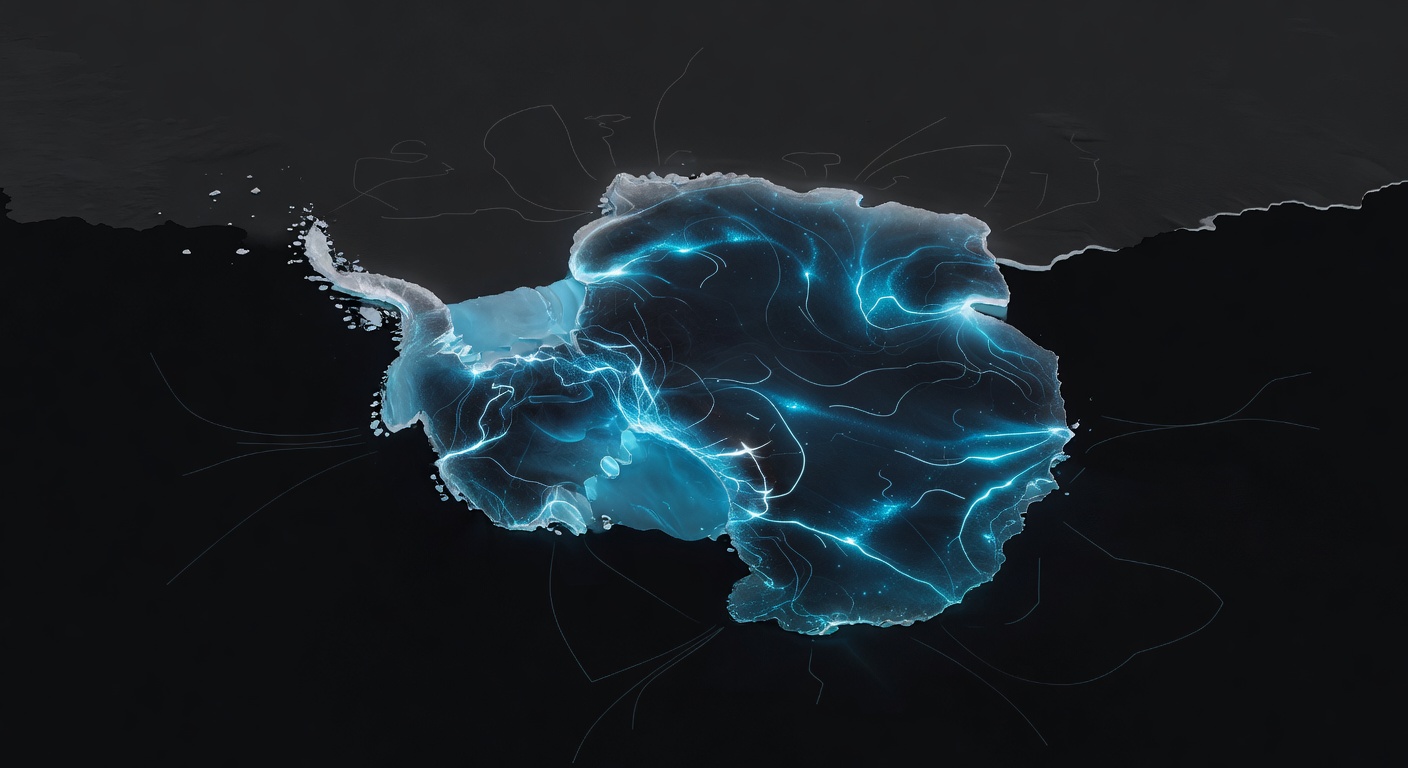
There's this absolutely massive area under East Antarctica where gravity is significantly weaker than anywhere else on Earth. We're talking about a "gravity hole" so big and mysterious that scientists have been scratching their heads about it for years.
A 70-Million-Year Mystery
Here's where it gets really wild. New research shows this gravitational weirdness didn't just pop up overnight — it's been brewing since the late Cretaceous period. That means this thing was already forming when T-Rex was stomping around!
Two brilliant researchers, Alessandro Forte and Petar Glišović from the Paris Institute of Earth Physics, basically became time travelers (virtually, of course). They used earthquake data to create a gravitational map showing what Earth looked like 70 million years ago. Think of it like a planetary MRI that can see through time.
The Plot Thickens Underground
What they discovered is fascinating. The gravity hole started because of something called mantle convection — basically, hot and cold rocks doing a super slow-motion dance deep inside our planet.
Picture this: cold, dense rock was already sinking down into Earth's depths when something interesting happened around 30-50 million years ago. Our planet had a slight wobble in its rotation (don't worry, we didn't fall off!), which caused warmer, less dense material that was trapped deep down to start rising up.
As the cold stuff kept sinking and the warm stuff kept rising, the overall mass beneath Antarctica decreased, creating this gravitational weak spot.
Why This Matters Today
Now, you might be thinking, "Cool story, but so what?" Well, here's the kicker — this isn't just ancient history. This gravity hole is still evolving and could actually affect our future.
The researchers think these deep Earth processes might be connected to sea level changes and the behavior of Antarctic ice sheets. Remember, around 30 million years ago (right when this mantle shift was happening), Antarctica started freezing over. Coincidence? Probably not.
The Climate Connection
This is where things get really relevant to our modern world. As climate change continues to mess with Antarctic ice, understanding these deep gravitational processes becomes crucial. The gravity hole doesn't just sit there doing nothing — it actively influences nearby sea levels and ice dynamics.
Think of it like discovering that your house sits on ground that's been slowly shifting for millions of years, and that shift might affect how your foundation handles future storms.
What Blows My Mind About This
As someone who loves digging into scientific discoveries, what absolutely amazes me about this research is how they pieced together such an ancient puzzle. Using earthquake data to recreate Earth's gravitational field from 70 million years ago? That's like using echoes to figure out what a room looked like before it was built.
It also highlights something I find endlessly fascinating: our planet is this incredibly dynamic, living system where processes that started when dinosaurs roamed the Earth are still influencing what happens today. That's both humbling and kind of terrifying when you think about the timescales involved.
The Big Picture
This discovery reminds us that Earth is way more complex and interconnected than we often realize. Deep mantle processes, surface ice sheets, sea levels, and even climate change are all part of one giant, slowly churning system that's been evolving for millions of years.
And honestly? We're just starting to understand how all these pieces fit together. Every discovery like this opens up new questions about our planet's past and future. The gravity hole under Antarctica isn't just a cool scientific curiosity — it's a window into understanding how our entire planet works.
Pretty wild to think that something invisible beneath the ice at the bottom of the world has been quietly shaping our planet since before the dinosaurs went extinct, isn't it?