
The Plot Thickens (Literally, in Reverse)
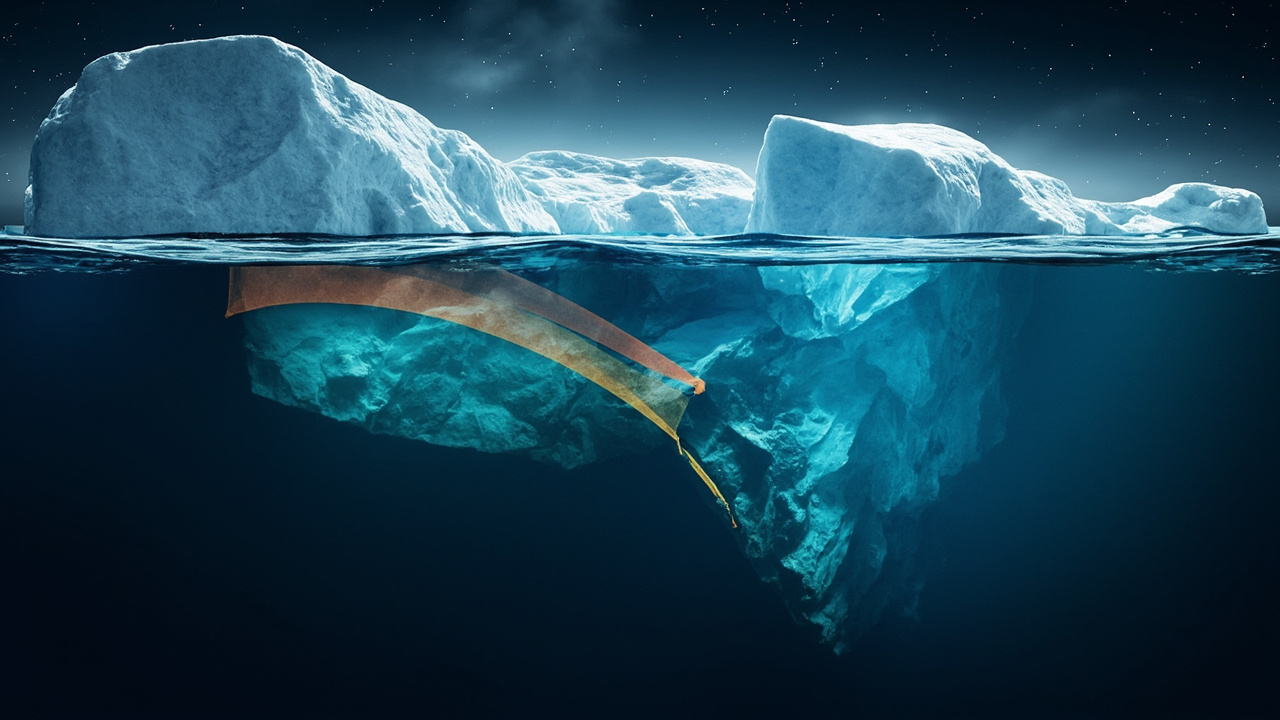
Picture this: you're looking at Antarctica from above, thinking you understand the ice melt situation. But underneath those massive floating ice shelves, there's an entire underwater world you can't see — and it's way more complicated than we realized.
For years, scientists have been worried about Antarctic ice shelves (those giant floating extensions of glaciers that act like corks in a bottle, holding back ice from sliding into the ocean). But new research reveals these ice shelves are being attacked from an angle nobody fully appreciated: from below, by cunning underwater geography.
When Ocean Channels Become Ice Killers
Here's where it gets interesting. Researchers studying the Fimbulisen Ice Shelf in East Antarctica discovered something counterintuitive: the shape of the ice shelf's underside actually matters — a lot.
Think of it like this: imagine you have a bathtub with a smooth bottom versus one with ridges and grooves. The grooves are where water pools and concentrates. Now replace "bathtub" with "ice shelf" and "water" with "warm ocean currents," and you've got the problem.
Where deep channels carve into the underside of the ice, ocean water gets trapped in circulating patterns. Warmer water that would normally flow away stays put instead, concentrating its heat exactly where it causes the most damage. The result? Melting can increase by roughly ten times in these channel zones.
It's like the ice shelf is accidentally creating its own melt accelerators.
A Cold Place With a Warm Secret
What makes this discovery particularly unsettling is where it's happening. East Antarctica, including the Fimbulisen Ice Shelf, has always been considered the "safer" region — colder, more stable, less vulnerable than its Western counterparts.
But that assumption might be dangerously wrong.
According to the research team, even modest amounts of warmer deep water can trigger substantial melting when the ice shelf base is channeled. So those "cold" ice shelves? They might be way more fragile than anyone thought.
Tore Hattermann, the lead researcher, puts it plainly: the ice shelf structure isn't just a passive feature sitting there. It's actively working against itself, concentrating heat in the exact spots where that heat matters most.
Why This Gets Scary Pretty Fast
Here's the feedback loop problem: as channels deepen and widen from melting, the ice shelf thins unevenly. The structure weakens. And when an ice shelf weakens, it loses its ability to act as a giant brake on the glaciers behind it.
Lose the brake, and more land-based ice slides into the ocean. More ice in the ocean means sea levels rise faster. A lot faster than current climate models predict.
And that's the kicker — most climate models don't account for this channel-trapping effect. Scientists have been underestimating how sensitive these supposedly-cold ice shelves actually are to even small changes in ocean temperature.
How Did They Figure This Out?
The researchers didn't just speculate. They combined incredibly detailed maps of the Fimbulisen Ice Shelf's underside with advanced computer models simulating ocean circulation. Then they ran various scenarios — smoother ice surfaces versus realistic channeled ones, cooler versus slightly warmer ocean conditions.
By comparing what happened in each scenario, they isolated the channels' specific impact. To add credibility, they also incorporated actual field measurements from the region. Hattermann himself has spent hundreds of days on Antarctic ice doing this research in person, which honestly makes the findings hit harder.
What This Means Beyond Antarctica
This matters globally, and not just in abstract "sea level rise" way. Better sea level projections affect coastal city planning, infrastructure decisions, adaptation strategies — the real-world stuff that governments and communities depend on.
Plus, the meltwater pouring into the Southern Ocean could reshape ocean circulation patterns and marine ecosystems in ways we're only beginning to understand.
The Bottom Line
Antarctica is melting from below in ways we didn't fully appreciate, and it's probably happening faster than our models suggest. The ice sheets aren't just victims of global warming — they're helping accelerate their own demise through geological quirks we're only now discovering.
It's a good reminder that climate science keeps finding new complications hiding in plain sight. And every time we find a new complication, the stakes feel a little higher.