
When Ancient Mysteries Get a High-Tech Makeover
Here's something cool: we're living in a time when we can peer inside ancient pyramids without so much as scratching the surface. No pickaxes. No damage. Just clever technology doing the detective work for us. And it just paid off in a big way.
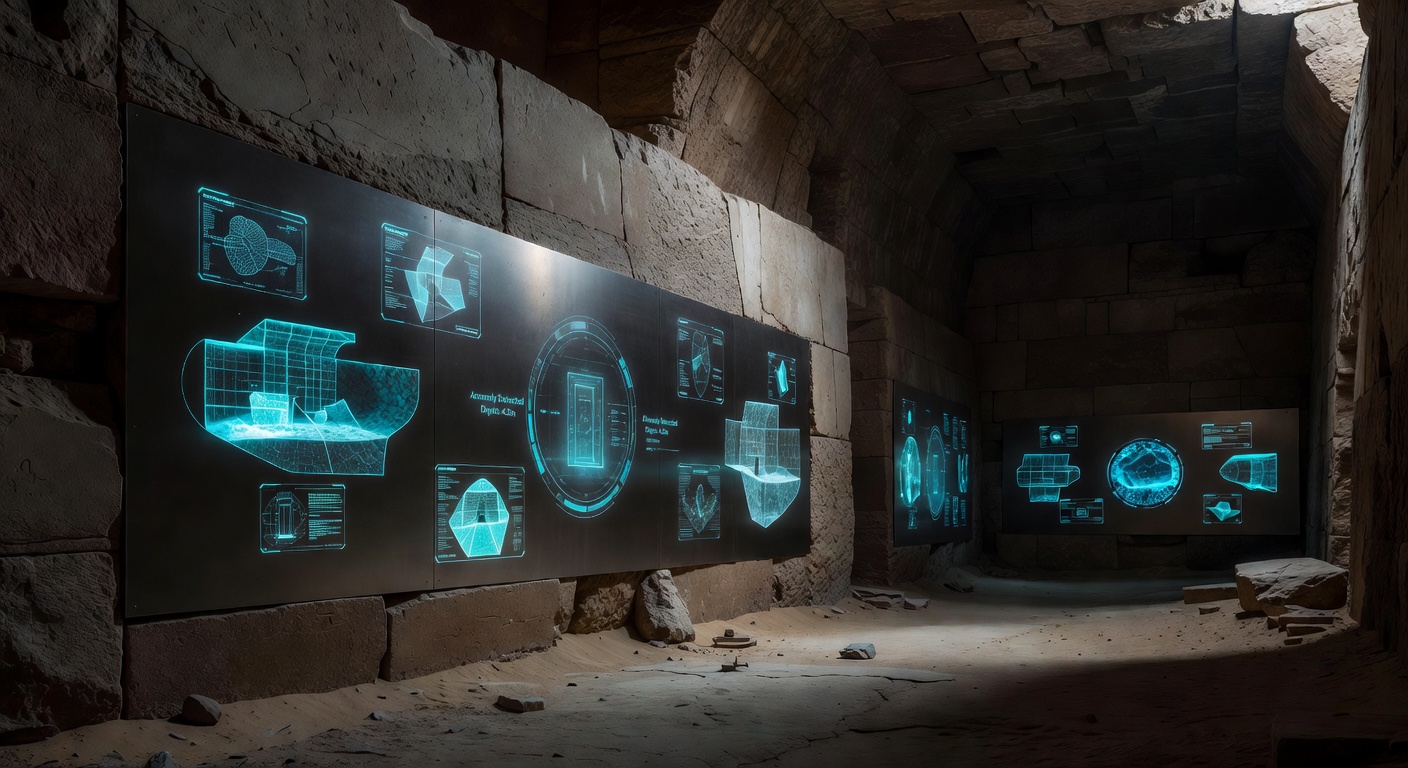
Researchers exploring Egypt's Menkaure pyramid—the third-largest one at Giza—have finally found physical evidence of something archaeologists have been theorizing about for years. Using a combo of ground-penetrating radar, ultrasound, and something called electrical resistivity tomography (fancy way of saying they measure how electricity moves through rock), they've confirmed the existence of two hidden air-filled spaces tucked behind the pyramid's eastern wall.
The Suspicious Polished Wall That Started It All
Let me paint you a picture. The eastern face of Menkaure's pyramid has always looked... off. There's a section of granite blocks that's incredibly smooth and polished—almost unnaturally so. If you've seen the pyramid's known entrance on the north side, you'll recognize that same pristine finish. That's not random. That's intentional.
One researcher named Stijn van den Hoven spotted this oddity back in 2019 and basically said, "Hey, that looks like where a door should be." Most people probably shrugged. But the idea stuck around, and now, years later, the data is backing him up.
Two Tiny Rooms, One Big Discovery
The scanning team found two distinct voids hiding behind that polished facade. One measures about 1 by 1.5 meters (think: roughly the size of a closet), and the other is slightly smaller at 0.9 by 0.7 meters. They're sitting at depths of 1.4 and 1.13 meters behind the outer wall—basically right there, practically within arm's reach if you could get through.
What's impressive here isn't just that they found empty spaces (old buildings always have weird gaps and air pockets). It's that they found them in exactly the spot where historical clues suggested they should be. That's the difference between random luck and actual evidence.
The Technology That Made It Possible
This wouldn't have been possible five or ten years ago. The researchers had to combine multiple scanning techniques and use something called "image fusion" to cross-check their findings. Think of it like how your GPS works better when it's using satellite, cellular, and WiFi signals together rather than just one source. Each scanning method alone might have shown blurry or ambiguous results, but together, they paint a clear picture.
Christian Grosse, a professor at Munich's Technical University, put it perfectly: they can now draw "very precise conclusions about the nature of the pyramid's interior without damaging the valuable structure." That's the whole ballgame in modern archaeology. We're moving away from sledgehammers and toward stethoscopes.
So... Is There Really a Secret Entrance?
Here's where I need to be honest with you: they haven't opened anything yet. They haven't confirmed an actual doorway. But two perfectly-placed voids behind a suspiciously polished wall? That's as close to a "smoking gun" as archaeology gets without actually breaking through.
The hypothesis is plausible. The evidence is real. And the researchers involved sound genuinely excited, which tells you something. They've seen this kind of pattern before—remember when this same team confirmed a hidden corridor in the Great Pyramid just a couple years ago? History repeating itself.
What Happens Next?
That's the question everyone's asking. Do they drill through? Do they scan more? Do they wait for permission from Egyptian authorities (which, by the way, are supervising this whole operation)?
I'd guess more scanning comes first. Maybe some careful exploration. But the door—literal or figurative—might finally be about to open on a section of history that's been locked away for literally thousands of years.
It's a good reminder that some of humanity's greatest mysteries don't require dramatic excavations or Hollywood adventures. Sometimes they just need patience, smart people, and technology that can see through stone.