
The main blog content
Okay, I need to tell you about something that recently made me sit up and go "wait, WHAT?" in the middle of reading about ocean science. Because honestly? This discovery is one of those stories that makes you realize just how much mystery is still lurking in the deep.
The Hunt for the Unknown
Picture this: researchers from Tokyo University and Hokkaido University in Japan are controlling a remotely operated vehicle (basically a fancy underwater robot) through the Pacific Ocean. They're going deep—really deep—around 6,200 meters down. For context, that's nearly 4 miles below the surface. We're talking about a place where sunlight has never reached, where pressure would crush an unprotected human in seconds, and where most of us probably assume not much is going on.
But oh, how wrong that assumption would be.
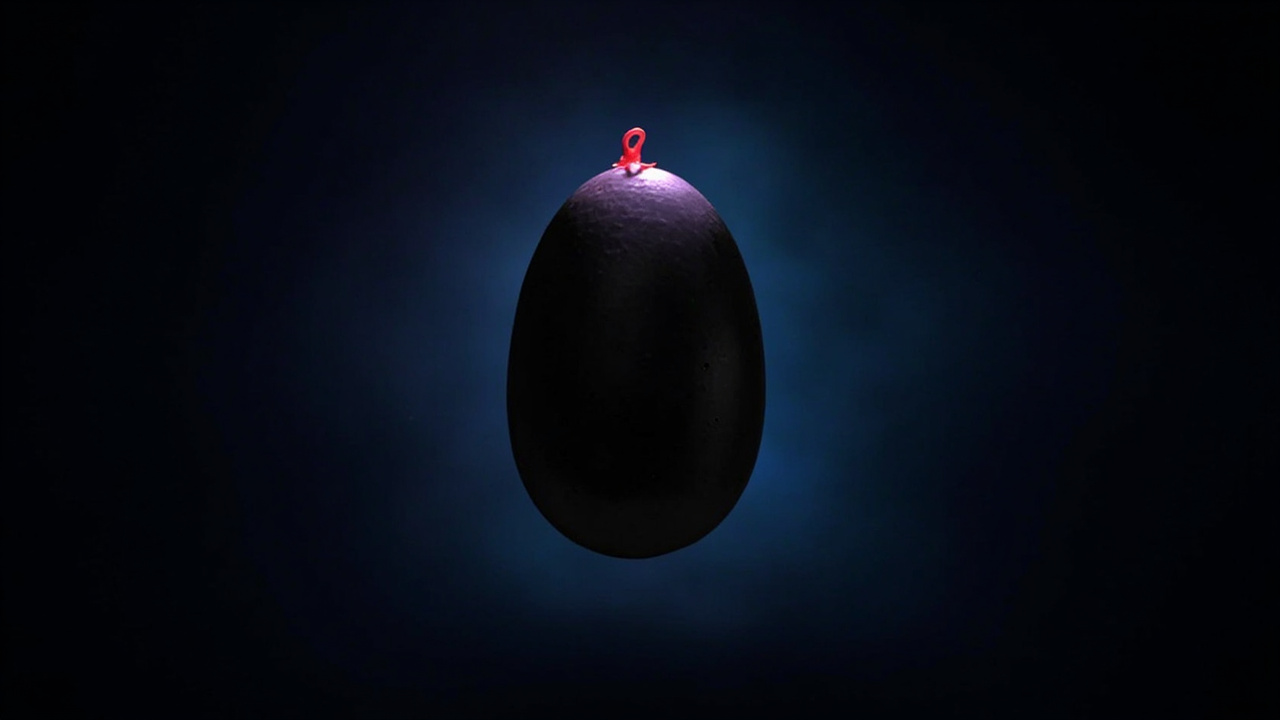
During this robotic dive, the team spotted something unexpected attached to a rock: jet-black eggs. Not fish eggs, not some familiar marine creature—just... eggs. Mysterious ones that nobody could immediately identify.
What Fresh Heck Is This?
Now here's where it gets interesting. The researcher controlling the ROV, Yasunori Kano from the University of Tokyo, made a judgment call: he grabbed a sample. Most of the eggs were damaged, but four remained intact. Those little guys got shipped off to the invertebrate biology team at Hokkaido University for closer inspection.
Dr. Keiichi Kakui, one of the researchers who later co-authored a study about this discovery, admitted something pretty relatable: "When I first saw them, I thought they may be protists or something." Translation: even the experts had no idea what they were looking at.
So he did what any good scientist would do—he cut one open. (Don't worry, there were several more to study.) What leaked out? A milky liquid. And inside that liquid? Fragile little white bodies. Tiny, squirmy, unmistakable.
Flatworms. Specifically, these were cocoons containing flatworms.
Why Does This Matter?
Here's where you might be thinking "cool, but why should I care about some tiny worms?" Fair question! But stick with me for a second.
Before this discovery, the deepest flatworm anyone had ever documented was found around 5,200 meters down—and that one was clinging to a piece of wood, which made scientists wonder if it had actually lived there or just sunk to that depth. Before that? Flatworms had never been found deeper than about 2 miles.
So we're talking about a significant depth record here. These little guys are officially the deepest free-living flatworms ever discovered.
But here's the really wild part: after DNA analysis confirmed these were indeed a previously unknown species of Platyhelminthes (the phylum that includes all flatworms), the researchers found something surprising. Despite living in an environment that would kill most surface creatures, these deep-sea residents looked strikingly similar to their shallow-water cousins. No extreme adaptations, no drastically different developmental stages. They're just... flatworms doing their thing, even in the crushing darkness of the abyss.
We're Still Learning
There's an old saying among ocean scientists that we know the surface of Mars better than our own ocean floors. I used to think that was a bit dramatic, but stories like this make me wonder if it's actually an understatement.
The deep ocean covers more than 70% of Earth's surface, yet we've barely scratched the surface (pun absolutely intended) of understanding what lives there. Every now and then, something completely unexpected pops up—like black eggs containing flatworms that挑战 everything we thought we knew about where these creatures could survive.
And honestly? I find that both humbling and exhilarating. There's still so much left to discover, right here on our own planet. In a world where it sometimes feels like everything has already been found and done, the deep ocean reminds us that adventure is still out there.
I don't know about you, but I'm absolutely here for whatever weird and wonderful creatures surface next.