
The Future of Work Just Got a Lot More... Human?
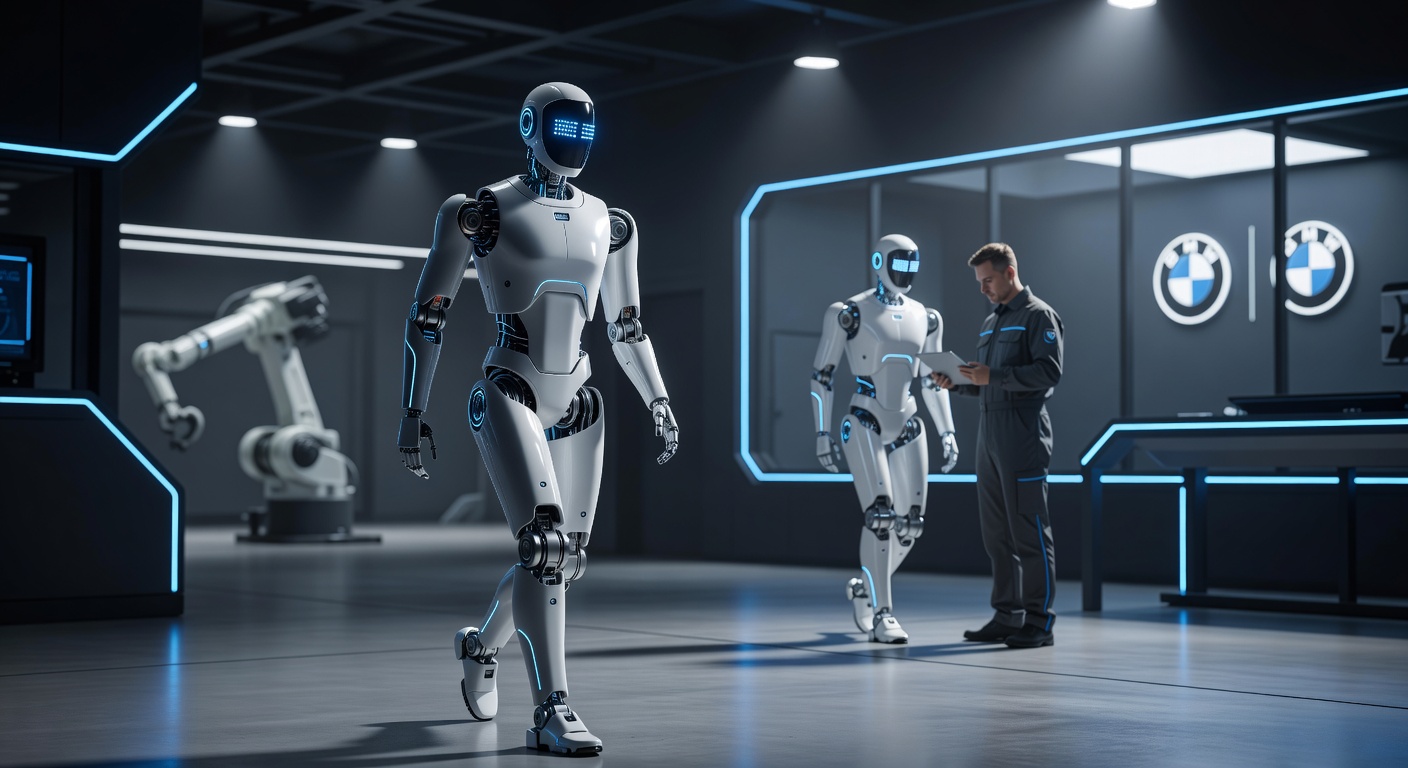
I've been following robotics for years, but BMW's latest announcement genuinely caught me off guard. They're not just adding more robots to their production lines — they're bringing in humanoid robots that look and move like people. And honestly? The numbers from their first pilot are kind of incredible.
What Makes These Robots Different
Let's talk about what sets humanoid robots apart from traditional factory automation. You know those massive robotic arms you see in car commercials? They're amazing at doing one specific task over and over. But humanoid robots? They're designed to work in spaces built for humans, using tools made for human hands.
BMW's approach is fascinating because they're calling it "Physical AI" — basically combining artificial intelligence with robots that can actually interact with the physical world. Think of it as giving AI a body that can walk, grab things, and adapt to different situations.
The Numbers Tell an Amazing Story
Here's where things get really interesting. BMW's pilot program in South Carolina used a humanoid robot called Figure 02, and the results were pretty remarkable:
- 30,000+ BMW X3s were built with robot assistance
- 90,000+ components moved with millimeter precision
- 1.2 million steps taken during 1,250 operating hours
- 10-hour shifts daily, Monday through Friday
What blows my mind is that this robot was handling sheet metal positioning for welding — a job that requires incredible precision while being physically demanding for human workers. And it did this consistently, day after day.
Why Germany Matters
BMW's decision to bring this technology to their Leipzig plant in Germany is a big deal. European manufacturing has different regulations, work cultures, and expectations compared to the US. If they can make humanoid robots work smoothly in Germany's highly regulated manufacturing environment, it proves this technology is truly ready for global deployment.
The German pilot will focus on high-voltage battery assembly and component manufacturing — areas that are becoming increasingly important as BMW ramps up electric vehicle production.
The Human Element (Literally)
What I find most compelling about BMW's approach is how thoughtfully they're handling the human side of this transition. They're not trying to replace workers wholesale. Instead, they're targeting tasks that are:
- Physically demanding
- Repetitive and monotonous
- Safety-critical
- Ergonomically challenging
The goal is to make human workers' jobs better, not eliminate them entirely. From what BMW reports, their employees have been genuinely curious and accepting of their robot coworkers, which speaks volumes about how they've managed this transition.
The Tech Behind the Magic
BMW's success here isn't just about the robots themselves — it's about their data infrastructure. They've spent years breaking down "data silos" and creating a unified system where all their production data is consistent and accessible. This foundation is what makes it possible for AI to learn and adapt across different parts of their manufacturing process.
This unified approach means insights from one robot deployment can quickly benefit robots elsewhere in their network. It's like having a shared brain across all their facilities.
What This Means for the Rest of Us
BMW isn't the only company exploring humanoid robotics in manufacturing. Tesla has their Optimus robot, and other automakers are watching these pilots closely. If BMW's approach proves successful across multiple locations and use cases, we could see a rapid shift across the entire manufacturing industry.
For workers, this could mean fewer back-breaking, repetitive jobs and more focus on complex problem-solving and oversight roles. For consumers, it might mean more consistent quality and potentially lower costs as production becomes more efficient.
The Road Ahead
BMW is taking a methodical approach with their "Center of Competence for Physical AI in Production." They're not rushing to deploy robots everywhere at once. Instead, they're carefully evaluating technology partners, running lab tests, and conducting real-world pilots before scaling up.
Their partnership with Hexagon for the German pilot shows they're working with established players rather than betting everything on unproven startups. This conservative approach might be slower, but it's probably smarter for a company that needs to maintain consistent quality and safety standards.
My Take
As someone who's been skeptical of humanoid robots in the past (remember all those Boston Dynamics videos that looked cool but seemed impractical?), BMW's real-world results have changed my perspective. When a robot can consistently help build 30,000 cars while working 10-hour shifts, we're clearly past the "cool demo" phase and into genuine industrial utility.
The fact that this transition happened faster than BMW expected, and that workers embraced rather than feared their robot colleagues, suggests we might be at a tipping point. The next few years are going to be fascinating to watch.
Source: https://www.press.bmwgroup.com/global/article/detail/T0455864EN/bmw-group-to-deploy-humanoid-robots-in-production-in-germany-for-the-first-time?language=en