
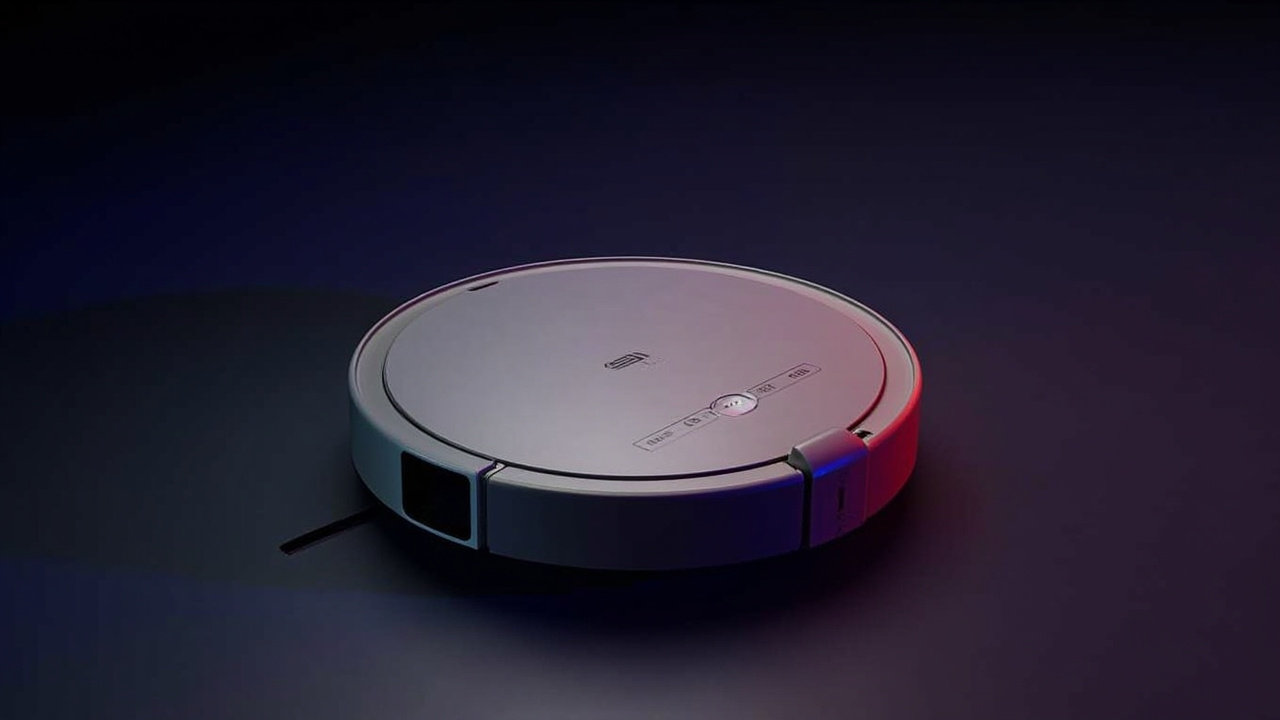
Budget Robot Vacuums Just Got Seriously Good (And This $230 One Might Surprise You)
The "Budget" Doesn't Mean "Bad"
Here's the thing about budget tech—the word makes people nervous. We automatically assume we're compromising on quality, settling for something that'll break in six months, or getting a product that does 60% of what the expensive version does.
Not this time.
I've been skeptical of robot vacuums for years. They seemed gimmicky—cute little robots that mostly just pushed dirt around while you hoped they didn't eat your houseplant. But after testing the Tapo RV30 Max Plus, I'm eating my words. For the price of a decent dinner for two (well, maybe four if you're not being fancy), you get a vacuum that actually works.
And I mean actually works.
Getting It Running (Spoiler: It's Easier Than You'd Think)
Setting up a robot vacuum sounds intimidating. You've got a dock, a vacuum, probably multiple apps to download, WiFi connections to manage... it feels like it should require an engineering degree.
It doesn't.
The physical setup was straightforward—dock it, charge it, hit home. The real complexity was the app integration, which, full transparency, wasn't perfect on the first try. The app couldn't auto-detect the vacuum from a few feet away (awkward), so I had to manually select it from the menu. But honestly? That took about 60 seconds. Not exactly a dealbreaker.
Once I got it connected to WiFi, I could control the vacuum from literally anywhere. I tested it from my office across town, and yeah, it worked. It's a small thing, but there's something satisfying about starting your vacuuming from your car.
The Mapping Dance
The RV30 spent about five minutes mapping my first floor—a modest 500 square feet that I share with a toddler's play area, a kitchen table, chairs, a laundry drying rack, and what I can only describe as an architectural nightmare of a toy car collection.
The vacuum handled it pretty well. It didn't panic at the furniture obstacle course, identified most areas accurately, and only got confused in a couple of bathroom corners (which, let's be honest, my robot vacuum getting cornered in a bathroom is not my biggest life problem).
Here's where I have to be honest though: the initial map was rough. I had to manually draw borders between rooms and label spaces. It took some fiddling. Some fancier vacuums can automatically detect floor types and separate rooms without your help, so this is one place where the RV30 shows its budget roots.
But—and this is important—it's totally manageable. I wasn't frustrated or overwhelmed. It just required about 10 minutes of tweaking.
The nice part? Once you've done that initial setup, you're basically done. The app lets you adjust suction power, set up custom cleaning schedules for specific rooms, and fine-tune everything through a pretty intuitive interface. I set it to focus more on my pantry (which, thanks to a litter box situation, needs extra attention) and less on my relatively tidy living room.
The Real Test: Does It Actually Clean?
This is where the RV30 really impressed me.
I ran several supervised cleaning sessions, watching how it handled different floor types—hardwood, tile, area rugs. It picked up crumbs, pet hair, litter, and all the general chaos that comes with living in a home with pets and kids.
The moment that sold me? I scheduled a full cleaning while I was at work, came home, and my wife asked if she'd swept. She hadn't. The vacuum had cleaned that well.
The little spinning brush arms on the sides are particularly clever—they reach into corners and funnel dirt toward the main brush roll. That's where a lot of budget vacuums fail, but the RV30 handled it well.
One small lip between the pantry tile and kitchen hardwood gave the vacuum pause once, but it backed up and came at it from a different angle. Problem solved. It's handled curled area rug corners, adapted when I rearranged furniture, and generally just... did its job.
Where It Shows Its Budget Status
Nothing's perfect, and the RV30 isn't pretending to be.
The obstacle avoidance needs improvement. A couple times it got itself into tight spots and needed a human rescue mission. It's not a dealbreaker—you're not leaving this to run 24/7 unsupervised for weeks—but it's something to know going in. You'll probably need to rescue it occasionally, especially if you've got a furniture-dense home like mine.
The mopping function exists and does its job, but it's not spectacular. I wouldn't buy this vacuum just for mopping. It's a nice bonus feature, but manage your expectations.
The Real Take
Look, I went into this skeptical. Robot vacuums seemed like a compromise between convenience and actual cleaning power, and I assumed the cheaper ones were mostly paperweights.
The Tapo RV30 Max Plus changed my mind.
Is it perfect? No. Will you need to babysit it occasionally? Yes. Will you have to spend 15 minutes initially mapping your space? Probably.
But for $230, you get a vacuum that legitimately cleans well, lets you schedule cleaning runs from your phone, adapts to your home, and does it all without requiring constant attention. That's not a budget compromise—that's actually a pretty great deal.
The expensive robots have more sophisticated obstacle avoidance and fancier features, sure. But if you're looking for a robot vacuum that does the core job really well without spending $1,000+, the RV30 is worth your attention.
Sometimes the best tech isn't the flashiest tech. Sometimes it's just the one that works.
Source: https://www.popularmechanics.com/home/a71319703/tapo-rv30-max-plus-review