
The Plastic Problem We Can't Ignore
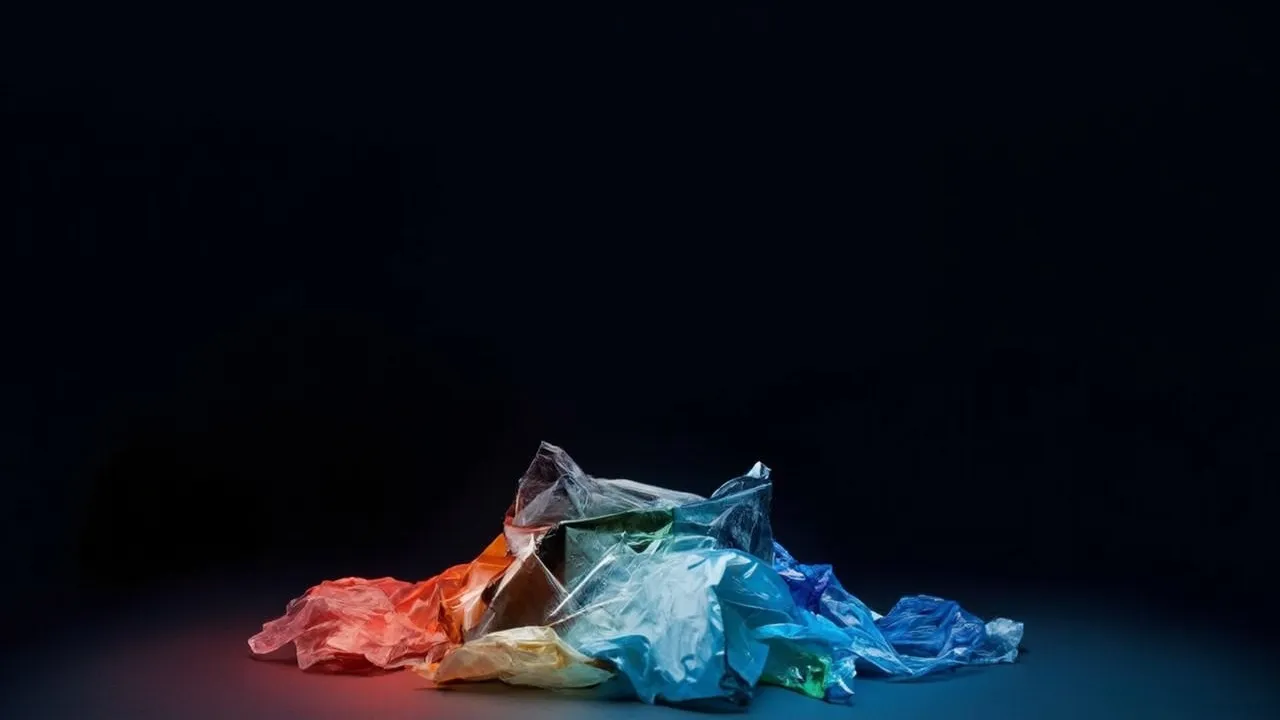
Let's be honest: plastic waste is a nightmare we've been ignoring for too long. Those shopping bags, milk jugs, and that white cutting board you bought ten years ago? Most of it ends up somewhere it shouldn't — landfills, oceans, or just floating around the environment for centuries.
Polyethylene is one of the most common plastics out there. You find it in everything from grocery bags to food containers. And here's the thing — it's incredibly hard to break down naturally. We've been producing hundreds of millions of tons of it every single year, and most of it just... sits there. Taking up space. Polluting our planet.
But what if I told you that scientists might have found a way to give all that "waste" a second life?
The Breakthrough That Made Me Do a Double-Take
When I first heard about this research from Oak Ridge National Laboratory, I honestly thought it sounded too good to be true. They're talking about converting polyethylene directly into gasoline and diesel fuel — using a process that's surprisingly simple.
The key ingredient? Molten salts. Specifically, aluminum chloride salts that do double duty. They act as both the medium where the reaction happens AND the catalyst that drives the whole conversion. No fancy noble-metal catalysts. No toxic solvents. No external hydrogen required.
What really got me excited was the temperature. This process works at under 200 degrees Celsius — that's about the temperature inside a regular oven. Compare that to older plastic-to-fuel methods that need to heat things up to a scorching 450-500 degrees Celsius. That's a huge difference in energy requirements.
How Does It Actually Work?
Okay, let me break this down in simple terms because the chemistry is pretty cool.
The researchers used some seriously sophisticated tools — soft X-ray spectroscopy and nuclear magnetic resonance — to watch exactly what happens during the reaction. What they found was fascinating.
Those charged aluminum atoms in the molten salt? They bind with three other atoms, creating what scientists call "highly acidic catalytic sites." Think of these sites like molecular scissors that can snip apart the long polymer chains that make up plastic. Once those chains are cut into smaller pieces, you get hydrocarbon molecules that look a lot like the stuff in gasoline and diesel.
Here's another interesting detail: the structure of the starting plastic actually matters. Simpler polymer chains tend to produce gasoline-like compounds, while more complex chains generate diesel-like fuels. It's like the plastic itself is telling you what it wants to become.
The team, led by Liqi Qiu and including researchers like Zhenzhen Yang and Sheng Dai, managed to achieve about a 60% gasoline yield in their experiments. That's not perfect, but it's pretty impressive for a first-generation process.
Why This Matters Beyond Just the Science
Let me put on my "thinking about the bigger picture" glasses for a moment.
If this technology can be scaled up — and that's a big "if" that researchers are still working on — it could genuinely help with energy security. We're talking about turning waste into something useful instead of just burying it or burning it.
The researchers are quick to point out that this could strengthen industrial competitiveness too. A process that's simpler, uses less energy, and avoids expensive catalysts has real economic appeal.
Dr. Sheng Dai put it well: "The ORNL system solves two fundamental issues. One, for a stable system, the process can be radically easier to scale up. Two, the previous system needed an initiator to kick off catalytic reactions. However, the ORNL system does not need one."
A History of Molten Salt Innovation
Here's something I found genuinely interesting: Oak Ridge has been working with molten salts for decades. Back in the 1960s, their Molten Salt Reactor Experiment showed that these compounds could work as both nuclear fuel and reactor coolant. Now they're applying that expertise to a completely different problem.
It's a great reminder that scientific breakthroughs often build on years — sometimes decades — of accumulated knowledge. You can't just throw money at a problem and expect instant results. Sometimes you need patient, sustained research that gradually builds toward something transformative.
My Take on This
I'm cautiously optimistic about this one. The science looks solid, and the team has taken a smart approach by using common, inexpensive materials rather than exotic catalysts. The fact that they achieved such a dramatic temperature reduction compared to existing methods is genuinely significant.
But let's not get ahead of ourselves. This is still early-stage research. Scaling up from laboratory experiments to industrial applications is notoriously difficult. There will be challenges we haven't even thought of yet.
Still, when I read about research like this, I feel a small spark of hope. We're not just resigned to drowning in plastic waste. Smart people are working on solutions, and some of them just might work.
The patent application has been filed, and the findings were published in the Journal of the American Chemical Society. I'll be keeping an eye on this one.
What do you think? Is this the kind of technology that could help us address our plastic addiction, or are there other approaches that seem more promising to you? I'd love to hear your thoughts.
Source: ScienceDaily — https://www.sciencedaily.com/releases/2026/09/260920222405.htm